
Medicaid Treatment for Addiction and Anxiety in Rhode Island
You will do odd things if your smoke detector keeps chirping. You’ll probably pull the battery out with a butter knife at 2 am just to make the noise stop, never mind that the wiring underneath is still live. Anxiety works the same way on a nervous system. It won’t let up, and eventually you reach for whatever quiets it fastest. It can be a drink, a pill that wasn’t prescribed to you, anything that pulls the battery out for a few hours. That’s not weakness. That’s a person trying to sleep.
The trouble is, pulling the battery doesn’t fix the wiring. It just buys silence, and the silence gets more expensive every time you pay for it. This is how anxiety and substance use end up tangled together so often, not because someone made a bad choice once, but because the relief worked, and the brain remembers what worked.
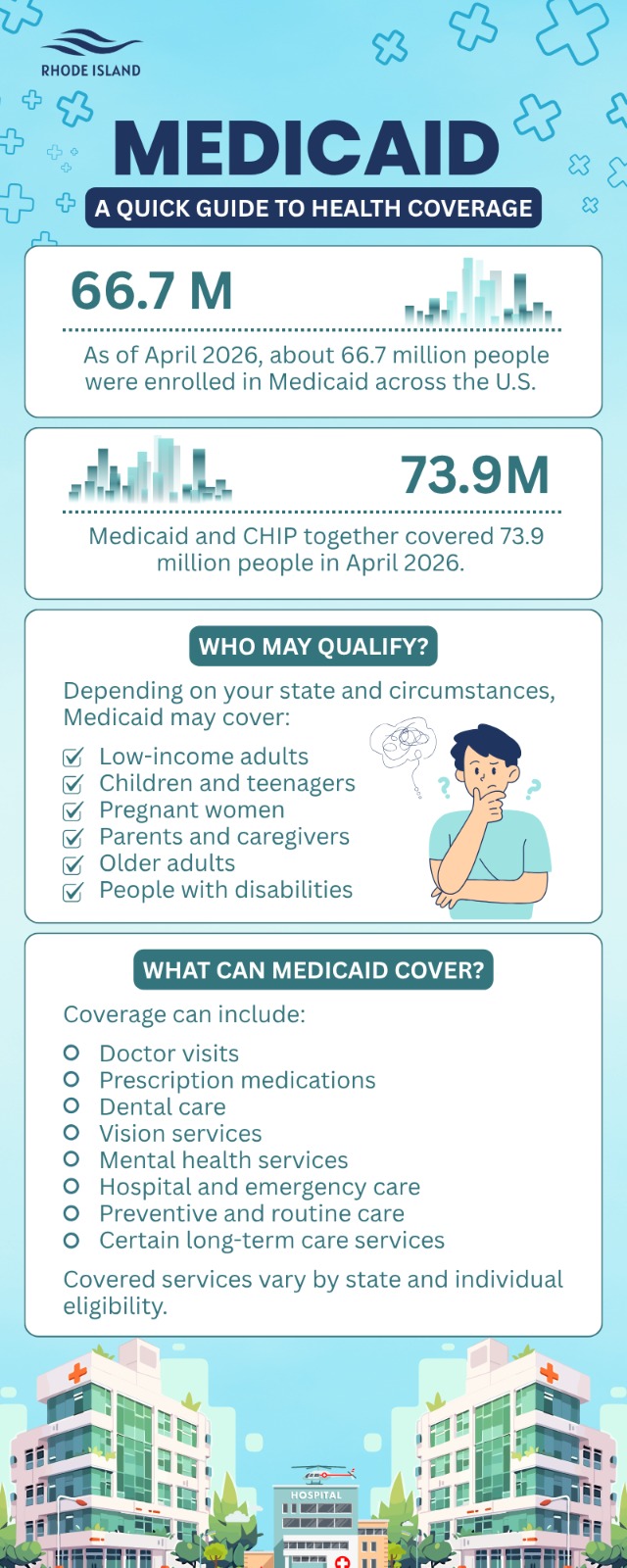
If money has ever been the reason you didn’t call anyone about it, here’s the part worth saying plainly: using Medicaid addiction and anxiety treatment RI for this isn’t a lesser form of care. It’s not the backup plan. It’s the plan, and in Rhode Island, it covers more of this road than most people expect.
Understanding Rhode Island Medicaid
Rhode Island Medicaid isn’t one office with one rulebook. Rather, it runs through managed care organizations, mainly Neighborhood Health Plan of RI, UnitedHealthcare Community Plan, and Tufts Health Plan. Your specific provider list is determined by which one you are enrolled in, but it has no bearing on whether mental health and addiction treatment are covered at all.
Eligibility is largely income-based, and Rhode Island’s Medicaid expansion opened coverage to a much wider range of adults than people assume. Hence, it’s worth checking even if you’ve written yourself off as “probably not eligible” before.
One legal detail matters more than it gets credit for: the federal Mental Health Parity Act. In plain terms, your insurer legally cannot make it harder to get approved for anxiety or addiction treatment than it would be to get approved for a broken arm. That protection exists whether or not anyone ever tells you about it.
Medicaid Coverage for Anxiety in Rhode Island
Talk therapy is the backbone here. CBT for the thought spirals and DBT for the moments when the anxiety turns physical and paralyzing. Medicaid also covers the psychiatric side: the initial evaluation, ongoing medication management appointments, and none of it is gatekept behind private-pay pricing.
On medication, SSRIs and SNRIs, the standard, non-addictive first-line options, are well covered. Benzodiazepines are a different story. They work fast, which is exactly why they’re handled more carefully. You will need to expect prior authorization, especially once a substance use history is in your chart. That’s not the system being difficult. It’s the system trying not to hand someone a second addiction while treating the first condition. For anxiety severe enough to interrupt daily life, Intensive Outpatient Programs are also covered, giving you real clinical hours without checking out of your week entirely.
What Rhode Island Medicaid Will Cover for Addiction
Detox is covered, medically managed, for individuals whose withdrawal needs more than just sheer willpower and a locked door. Medication-assisted treatment, like Suboxone, methadone, and Vivitrol, is one of the more consistently supported parts of the whole setup because it really saves lives, and the evidence for that isn’t subtle at all.
Residential treatment is also there, though it usually arrives with pre-authorization, and the stay length is tied to clinical need rather than something open-ended. Also, for long-range recovery, Rhode Island leans hard into Certified Peer Recovery Specialists (CPRS) inside its behavioral health structure. These are people with real personal lived experience in addiction or mental health recovery who provide guidance, mentoring, and advocacy, not just a theory. Since peer services are covered under Rhode Island Medicaid, residents can access this support in a variety of settings. For instance, hospital emergency departments (such as the AnchorED program), community recovery centers, court programs, and clinics. You are connected with mentors who truly understand the recovery process firsthand.
The Reasons Medicaid Focuses on Treating Both at Once
Treating anxiety without addressing addiction means substance use remains a default coping mechanism. Conversely, treating addiction while ignoring anxiety leaves the original trigger waiting to cause a relapse during the first high-stress situation.
Rhode Island providers increasingly build integrated care plans for exactly this reason, as it creates a single, coordinated team sharing notes and treatment plans. On top of that, this eliminates contradictory advice, prevents missed medical interactions, and keeps patients from falling through the cracks between separate mental health and addiction clinics.
Finally, integrated treatment of co-occurring disorders reduces emergency room visits, decreases hospitalization rates, and greatly improves long-term recovery retention as opposed to sequential or fragmented care.
How to Find and Access Care in RI
Start with BH Link, Rhode Island’s 24/7 behavioral health triage line. It exists so you don’t have to figure out where to go while you’re the least equipped to figure anything out. From there, your MCO’s provider directory or HealthSource RI can point you toward clinicians actually accepting new Medicaid patients. This saves you the specific misery of getting excited about a provider and then hitting a wall.
If a claim gets denied, that is not the end of it. Appeals exist; they work more often than people expect, and a provider’s office can usually walk you through filing one.
Rhode Island addiction treatment centers play an important part within this system by offering structured outpatient and intensive outpatient treatment for adults dealing with drug or alcohol dependence. The program is a short drive from Providence, and it helps clients get individualized treatment regimens plus evidence-based therapies, so the healing process can start to feel a bit more steady.
Final Words
Money shouldn’t be the reason someone keeps white-knuckling both of these conditions alone. Rhode Island Medicaid was built to cover this exact intersection. The anxiety and what you’ve been using to survive it. Together. Under one plan, without you having to prove you deserve it twice.
If you’re ready to take that step, call Rhode Island Addiction Treatment Center’s team at (888) 541-4028 or fill out our online form to check your coverage and talk through what integrated care could look like for you.