
Managing Co-Occurring Anxiety and Depression during Addiction Recovery in Coventry, RI
The road to recovery from addiction is not necessarily easy. Anxiety and depression can make life challenging after alcohol and/or drug use has stopped.
Constant anxiety, unhappiness, and emotional fatigue can make it more tempting to use again.
Adding mental health care to addiction treatment can help Coventry, RI residents have healthier coping mechanisms and long-term recovery.
Understanding Co-Occurring Anxiety, Depression, and Addiction
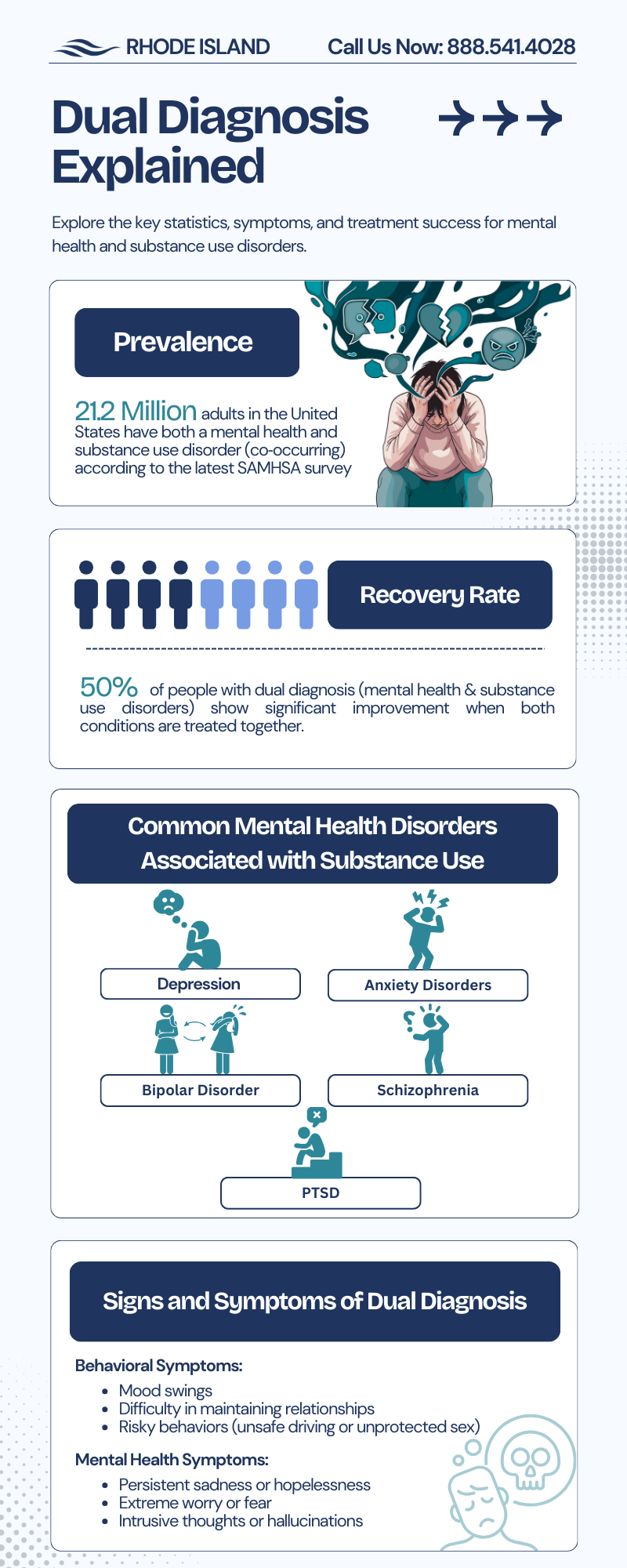
A co-occurring disorder is when a person has a substance use disorder and a mental disorder at the same time.
A person might use alcohol to make him or herself feel better in times of anxiety. Someone else might be using drugs to avoid feeling sad or experiencing emotional pain.
But drug use can exacerbate sleep disturbances, mood, and anxiety. This makes it harder to get better.
Focusing on addiction alone may not address important psychological needs.
Mental Health and Substance Use: What the Statistics Show
Mental health issues continue to be a serious issue in Rhode Island.
CDC Behavioral Risk Factor Surveillance System data show that 25.6% of adults in Rhode Island have been diagnosed with depression in 2025. Also, 15.9% had mental distress often.
Another worry is alcohol consumption.
According to the same state data, the percentage of Rhode Island adults who binge drink in 2025 is 16.1%.
The 2024 study published in Psychiatric Services included over two million adults being treated for mental health services in the community.
About 30% had co-occurring high-risk substance use or a substance use disorder with anxiety and/or depressive disorders.
The findings emphasize the importance of mental health screening in addiction treatment.
How Anxiety and Depression Can Affect Recovery
Anxiety and depression may disrupt emotional regulation, day-to-day functioning, and relapse prevention.
Anxiety and the Urge to Use Substances
Anxiety can lead to worry, racing thoughts, and physical tension. In the past, individuals used to use chemicals to suppress such emotions.
Social events, financial challenges, and relationship issues can cause cravings during recovery.
If healthy coping strategies are not learned, these situations could add to the likelihood of relapse.
Depression and Low Motivation
Depression may involve a loss of interest in daily activities, changes in energy, concentration, and sleep.
It might be difficult for a depressed person to go to appointments or follow other recovery programs.
Hopelessness and isolation can make it hard to make progress, too.
Being supported consistently can aid in the maintenance of treatment.
Recognising When Additional Support Is Needed
Symptoms of mental health issues can be more apparent during early recovery.
Warning signs include:
- Lack of enthusiasm or enjoyment in life.
- Overwhelming anxiety and/or recurrent panic attacks.
- Disturbed sleep and/or changes in appetite.
- Difficulty focusing and/or duties.
- Isolating from family and friends.
- High urges when upset.
A qualified provider can determine if the symptoms are due to an underlying mental health disorder, substance use, or withdrawal.
Why Integrated Treatment Matters
Addressing addiction, anxiety, and depression together addresses the factors that impact recovery.
Treatment will involve:
Cognitive Behavioral Therapy (CBT)
CBT enables people to identify unhelpful thoughts and behaviours.
It also educates on how to deal with anxiety and substance use triggers.
Individual and Group Counseling
In individual therapy, there is room for discussing one’s personal experience.
In group counseling, connection and accountability are promoted.
Medication Management
A few people find it helpful to use medication for depression or anxiety.
A qualified clinician may have a look at appropriate alternatives and dangers. Some anxiety medications need scrutiny as they can lead to dependence and interactions.
Relapse Prevention Planning
A relapse plan outlines the triggers and the steps to take when they happen.
This can involve coping strategies, contact with support persons, and continued therapy.
Managing Everyday Triggers during Early Recovery
There may be emotional and practical problems with early recovery.
Things such as work stress, disagreements with family, financial issues, and social events can cause anxiety or cravings.
Having a consistent routine can help with making these times easier to handle. Structure through regular sleep, balanced meals, physical activity and therapy sessions.
Breathing exercises can also be useful to control anxious thoughts.
A solid support system is also crucial. Friends, family, therapists, and recovery groups can provide support during challenging times.
Identifying personal triggers and creating healthier reactions will help people progress and further build into their long-term recovery.
Finding Support in Coventry, RI
Among Coventry’s local sites are the General Nathanael Greene Homestead on Taft Street, the Paine House Museum, and the historic Waterman Tavern site.
Nicholas Farm Management Area and the Arkwright Riverwalk are also popular among residents.
The familiar environment can be a comforting place to meet with fellow members of the community while in recovery.
The BH Link is Rhode Island’s 24/7 access to behavioral healthcare at its facility in East Providence.
Building a Sustainable Recovery Plan
Emotional well-being and substance use are important for long-term recovery.
People can become better equipped to deal with difficulties with therapy, healthy habits, supportive relationships, and continuing clinical treatment.
In Rhode Island Addiction Treatment Centers, you and your family can learn more about information of substance use treatment and the options for treatment.
If considering treatment, inquire if treatment includes consideration for co-occurring mental health conditions and support for ongoing treatment.
Take the Next Step toward Recovery
While anxiety and depression can complicate the path of addiction recovery, proper treatment can help people learn to regulate their emotions and develop healthier habits.
For those and their loved ones who are experiencing anxiety and depression with addiction in Coventry, RI, consider a Rhode Island Addiction Treatment Center.
A more positive environment for recovery may be established by addressing the whole person.