
Medicaid Treatment for Addiction and Depression in Rhode Island
A Silent Voice spends most of its runtime on two people who’ve each built a wall out of shame. One carrying guilt from something he did as a kid, the other having spent years unable to speak up for herself at all. Neither says what they truly mean until very late in the story. That kind of silence isn’t unique to anime. It’s what depression and addiction do to a person in real life, long before anyone around them notices anything is wrong.
Depression levels everything: motivation, appetite, and the ability to feel much of anything at all. Nevertheless, addiction has its own time, and it will come for you no matter how little energy you have left to fight it. Most of the people who have both don’t feel like they are fighting two separate wars. They experience them as one long war fought mostly in silence, because saying it out loud feels harder than just carrying it alone.
Rhode Island Medicaid doesn’t ask you to pick a side of that loop to treat first or to find the words before you’re ready. Coverage exists for both, together, under the same benefit. This matters more than it sounds, because for a long time, “treat them together” wasn’t how the system worked at all.
Why Depression and Addiction Have to Be Treated as One Problem
People don’t usually start using alcohol, stimulants, or opioids because addiction seems appealing. They start because something quiets down. The fatigue lifts briefly. The numbness that depression wraps around a person loosens its grip for an hour or two. The relief is real, and that’s the problem; it’s borrowed too.
Substances mimic the brain’s natural dopamine response instead of producing it, and the brain, over time, produces less and less on its own to compensate. The relief gets shorter. The depression underneath gets worse. The cycle tightens.
Chronic substance use rewires the brain’s reward chemistry directly, and clinical depression can show up in people with no prior psychiatric history at all. That’s not as a consequence of circumstance but as a direct result of what the substance did to the brain over months or years of use.
For decades, the standard approach was sequential: get sober first, deal with the depression later, usually at a different facility, often with a provider who never sees the addiction treatment record. Relapse rates under that model were high, and it’s not hard to see why.
Medicaid Addiction and Depression Treatment RI
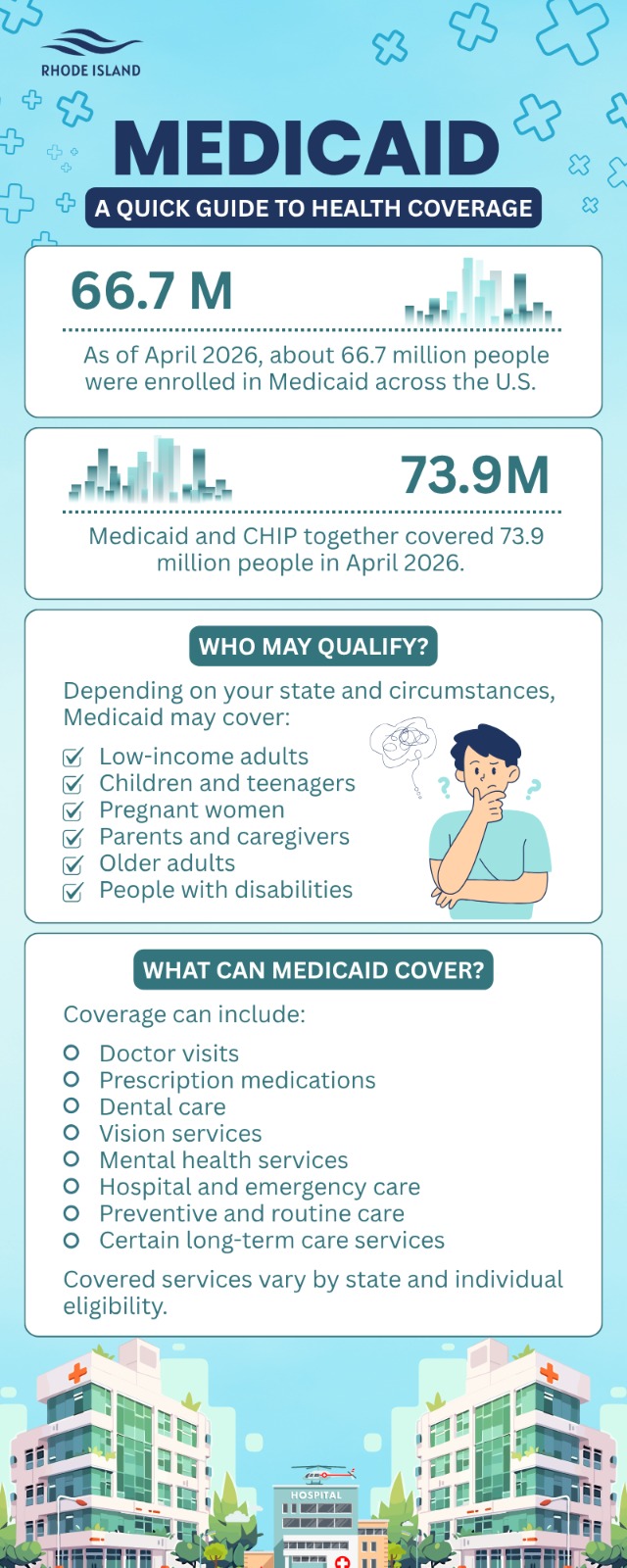
Coverage isn’t a single service. It follows a person across whatever level of care their condition requires, from an emergency evaluation down to weekly outpatient sessions.
Crisis Stabilization and Assessment
Medicaid pays for emergency psychiatric evaluation when depression escalates into suicidal thoughts or when a person is unable to take care of themselves. Rhode Island’s BH Link triage system exists specifically for this moment as a 24/7 entry point that routes people to the right level of care.
Medically Monitored Detoxification
Withdrawal is tough enough, but when a wave of depression hits suddenly, it can be even more dangerous. This often happens when you stop drinking alcohol or taking drugs. That’s why insurance covers specialized detox programs and hospital care to safely manage both physical and emotional symptoms together.
Residential and Inpatient Dual Diagnosis Treatment
For people who need a structured, substance-free environment to let brain chemistry settle before outpatient treatment can do much good, Medicaid covers stays at licensed facilities built specifically around co-occurring disorders.
Outpatient Step-Down: PHP and IOP
Partial Hospitalization Programs (PHP) are intensive day treatments, but you still go home to sleep at night. Intensive Outpatient Programs (IOP) are a less intensive form, providing 9 to 19 hours of therapy weekly. This way, you can continue working or spend time with your family while getting real medical help.
Therapies Covered for Depression and Co-Occurring Substance Use
Medicaid-funded dual diagnosis programs frequently employ a few strategies, each of which targets a slightly different aspect of the issue:
Cognitive Behavioral Therapy (CBT)
It targets the thought patterns underneath both conditions. “I’m a failure.” “Nothing gets better.” Those aren’t just symptoms of depression; they’re also the exact thoughts that precede a lot of cravings.
Behavioral Activation (BA)
Depression convinces people that nothing is worth doing, and then not doing it makes the depression worse. BA breaks that by structuring small, deliberate re-engagement with activities that rebuild the brain’s reward response the slow way, without a substance doing it artificially.
Dialectical Behavior Therapy (DBT)
It’s for the days when depression isn’t simply low but physically paralyzing, and the whole task is to bear distress without reaching for a substance. DBT does not ask you to change your feelings right away; it gives you concrete, physical tools to get through the moment until the intensity passes.
Peer Support and Group Therapy
Medicaid reimburses peer recovery specialists, people who’ve lived through dual diagnosis themselves. Depression isolates. Sitting across from someone who’s actually been there tends to do what a textbook can’t.
Medication Management: Antidepressants and MAT, Together
Medication Assisted Treatment (MAT) can be used in the treatment of opioid and alcohol problems and includes some of the following medications: methadone, naltrexone (Vivitrol), and buprenorphine (Suboxone). In addition, some basic non-addictive antidepressants, such as SSRIs like sertraline (Zoloft), SNRIs like duloxetine (Cymbalta), and other medications that a psychiatrist might prescribe depending on the patient’s needs, are all included.
One practical note: while the bulk of behavioral health medications are covered, the preferred drug list can shift slightly depending on which managed care plan someone’s enrolled in: Neighborhood Health, Tufts, or UnitedHealthcare.
How to Access This Care in Rhode Island
Knowing coverage exists is one thing. Getting into it is a separate, smaller set of steps worth having in order before you need them.
Start with BH Link. Available 24/7 at 401-414-LINK (5465), it’s the fastest way into the system, especially in a crisis, and it’s built to route people toward dual diagnosis-capable care rather than a general referral.
Check your MCO’s provider directory. Logging into the Neighborhood Health, Tufts, or UnitedHealthcare portal and filtering specifically for “dual diagnosis” or “co-occurring disorders” narrows the search to facilities actually equipped for both conditions, rather than ones that treat addiction and mention depression as an afterthought.
Get a clinical assessment. A licensed clinician needs to document medical necessity for both conditions to authorize the full length of treatment Medicaid allows. Skipping this step, or getting evaluated for only the addiction, is one of the more common ways people end up under-authorized for the care they actually need.
Take the Next Step Today
Rhode Island Addiction Treatment Centers are here to help you or a loved one take the first step toward integrated care. Call our team at (888) 541-4028 or fill out our online form to check your insurance and learn about personalized dual diagnosis treatment options.