
Does Rhode Island Medicaid Cover Drug Rehab?
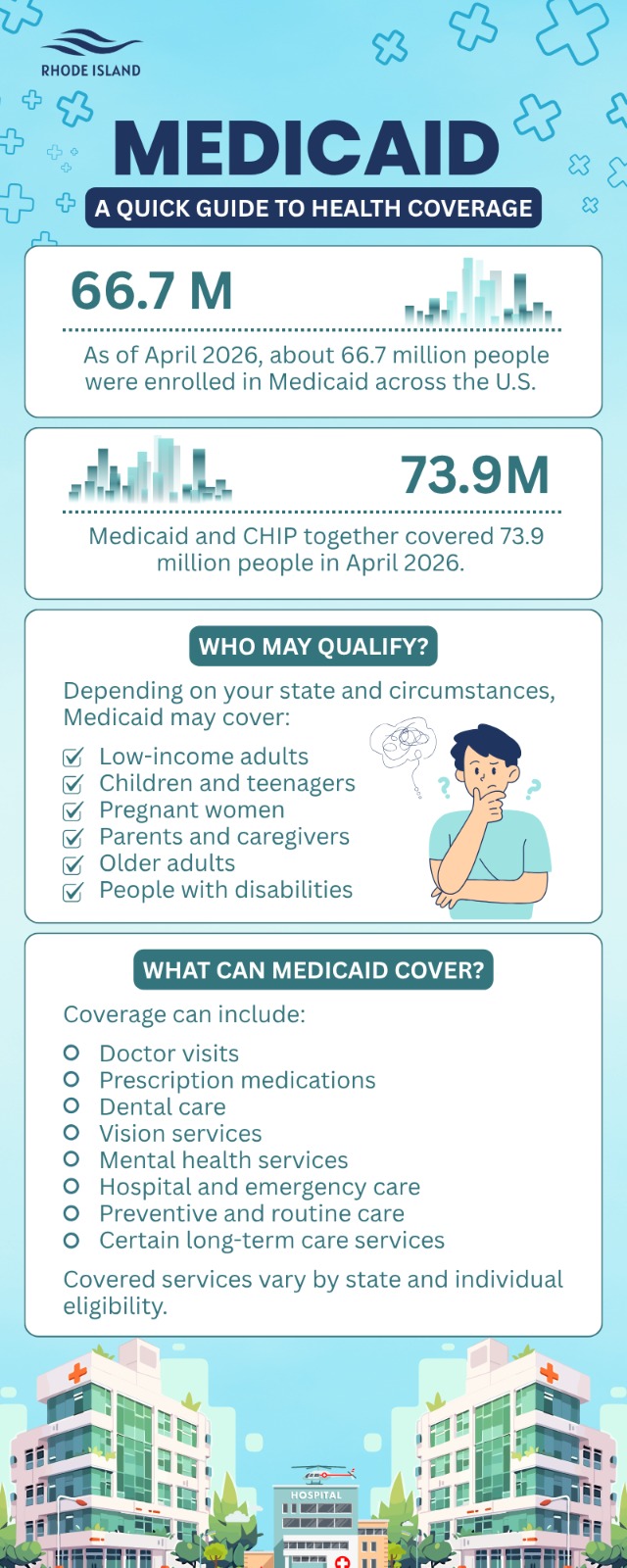
Medicaid is the US government’s health insurance program for people with low income, and is run jointly by the federal government and each state. If your annual household income is within the state-set threshold, you qualify for Medicaid assistance, and it helps you acquire healthcare services at affordable costs.
However, the whole insurance aspect of healthcare is confusing, and people are often shocked by medical bills. That’s why one must clearly understand whether their government-backed insurance plan will pay for the treatment, and if it does, what its total extent is.
And when it comes to drug rehab and mental health conditions, health insurance rules can feel even more confusing because these issues are somehow looked at differently. Hence, this article explains Rhode Island Medicaid drug rehab in detail so you can understand whether it’ll support your recovery journey.
Keep reading to better plan your finances regarding drug rehab.
Does Rhode Island Medicaid Cover Drug Rehab?
Substance abuse treatment as a low-income individual is extra challenging because hospital visits, therapy sessions, and medicines are expensive. But if you have a practical insurance plan, it takes many expenses off your shoulders and helps you complete drug rehab.
That said, Medicaid has included substance abuse treatment in its covered benefits since 2014, under the Affordable Care Act (ACA).
Now, Rhode Island Medicaid drug rehab coverage includes detox, inpatient treatment, outpatient programs, and medication-assisted treatment like Suboxone. If a treatment facility accepts Medicaid insurance (good news: Rhode Island Addiction Treatment Centers accept it), its coverage can reach over 90% of the costs. In simple words, your rehab therapy programs, aftercare, and some medications are covered by Medicaid.
Notably, not all addiction treatment centers accept patients with Medicaid plans because, according to them, filing these claims and chasing reimbursements is too much work. Hence, only some credible centers in RI offer rehab coverage, including Rhode Island Addiction Treatment Centers.
Another aspect worth explaining about this coverage is prior authorization. Medicaid will need proof that a treatment is medically necessary before approving any program. Hence, the facility will handle this before your treatment begins.
Who is Eligible to Use Rhode Island Medicaid Drug Rehab?
Medicaid uses the parameter of the Federal Poverty Line (FPL) to decide one’s eligibility. Put simply, FPL is a dollar amount set by the federal government, based on household size, to determine whether someone is considered “low income”. Also note that the threshold is set annually and changes based on the economy.
Therefore, eligibility for Rhode Island Medicaid drug rehab is based on this number. Adults qualify with income up to 138% of the FPL, pregnant women up to 253%, and children up to 261%. We know these numbers can be slightly confusing, so here are simple examples to make sense of them:
Suppose the current FPL set by the government is $15,000 for a single person.
- For adults, 138% of $15,000 is $20,700, so anyone earning at or below that qualifies.
- For pregnant women, 253% of $15,000 is $37,950, and a woman earning less than this will qualify for Medicaid. This cutoff is much higher because pregnancy coverage is meant to reach more people, i.e., the kid.
- For children, 261% of $15,000 is $39,150; the same principle applies here: kids get a wider income allowance.
Moreover, you must live in the state whose Medicaid program you want to benefit from; in this case, it’s Rhode Island. Besides, you must have a diagnosed substance use disorder and not only a habit, because otherwise, the treatment center also wouldn’t take you in.
When Should You Share the Insurance Details With the Treatment Facility?
Insurance verification happens before your drug rehab begins, so the treatment facility can plan accordingly. Rhode Island Addiction Treatment Centers also want to verify your insurance details beforehand to avoid any confusion.
That said, you share the Medicaid details at your first contact with the facility, before admission. You share your card and plan name, and they verify your coverage and submit prior authorization if your rehab needs it.
Also, most Medicaid recipients don’t pay the standard doctor visit price (which happens for most treatment services and is called the co-pay). But if the co-pay applies, it’s hardly $1 or $2 per visit and is capped at around $15.
How Much Rehab Cost Will Medicaid Ideally Cover?
Medicaid can cover close to 90% of rehab costs for medically necessary treatment, inpatient stay, and any prescribed medications. However, this much coverage isn’t guaranteed: the actual offer depends on your specific plan, prior authorization approval, and the facility’s Medicaid licensure.
Moreover, some Rhode Island Medicaid drug rehab services come with limits, such as a weekly cap on sessions for outpatient care. If a service falls outside what’s approved, you’d pay that portion out of pocket.
All in all, expect Medicaid to cover the bulk of your treatment, but confirm exact coverage with the facility’s billing team. Your desired treatment facility might not even be in-network with Medicaid, so discuss the financial details to ensure there are no surprises down the line.
The System is There to Help You
The US healthcare system tries to make all treatments accessible and practical for the masses. Medicaid coverage for drug rehab is like a ray of hope for those already struggling to make ends meet while also facing personal struggles. Luckily, this insurance can make substance abuse treatment a reality for many, but know that oftentimes there is too much paperwork and regulations involved.
So instead of feeling confused and not benefiting from a program the government has set up for you, talk to your healthcare provider beforehand. For your convenience, Rhode Island Addiction Treatment Centers have made insurance verification a quick process. Fill in your details and check how much your current package will support your recovery. We’re always a call away for further help!