
Healthy Habits That Support Long-Term Sobriety
People don’t just slip up out of nowhere. The tiny things are usually what pile up first – skipping lunch, staying up way too late, drifting away from friends, or letting worry simmer until it just feels like too much. That’s why the small stuff you do every day counts just as much as any milestone you hit along the way.
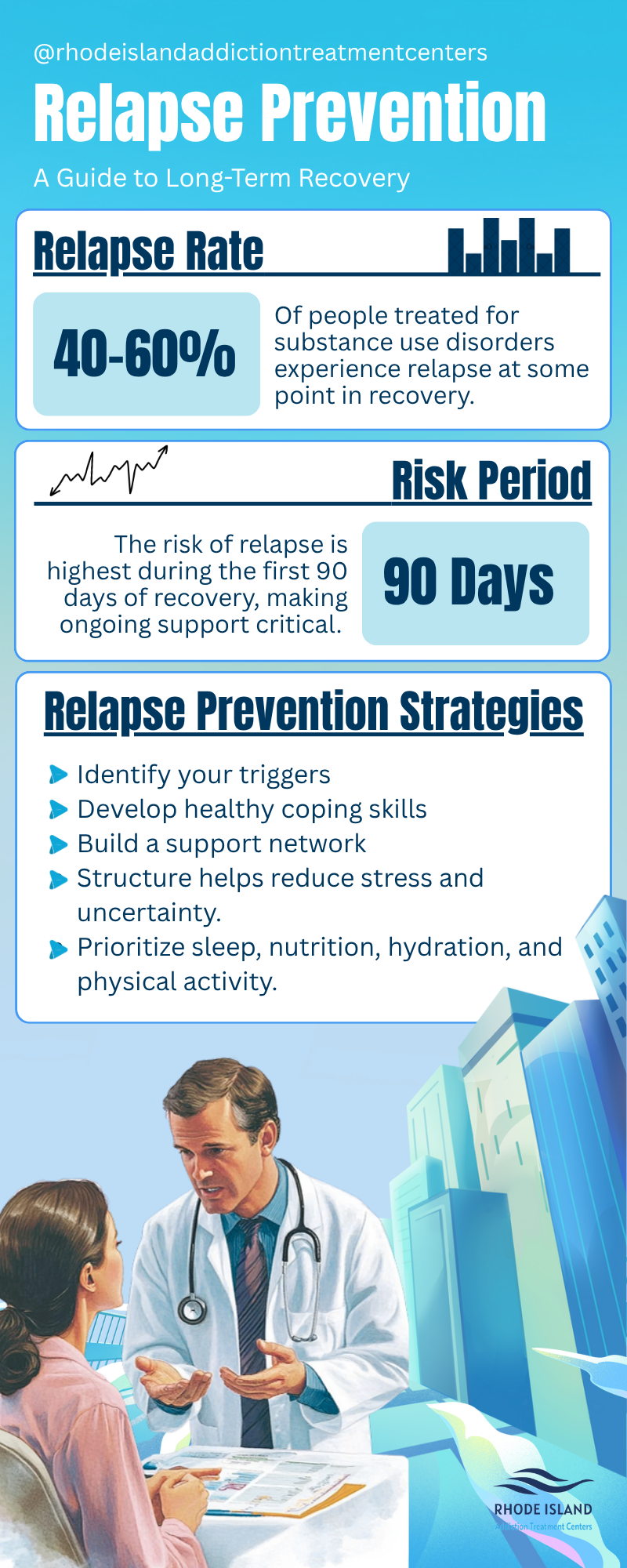
Studies show that somewhere between 40% and 60% of people slip up at least once after treatment, which shows that setbacks are common during recovery.
A slip-up doesn’t mean failure; it just means staying sober requires steady, daily self-care.
Taking care of the basics, getting decent sleep, eating real food, moving your body, chilling out, and leaning on your people keep you strong and drastically lower your relapse risk.
At Rhode Island Addiction Treatment Center, we help people build the coping skills and healthy habits needed to stay sober for good.
In this blog post, we’re going over the everyday routines that actually keep you on track and how to fit them into your life easily.
Why Are Healthy Habits in Recovery Crucial for Long-Term Success?
When someone is living with substance use, everyday life often starts to feel out of control. When stress piles up, you may stop eating well, sleep poorly, and experience mood changes.
But getting clean is way more than just putting down the bottle or drugs. It is about building a whole new life. Intentionally practicing healthy habits in recovery helps you manage anxiety, stay steady, avoid cravings, feel better about yourself, stay physically strong, and keep life normal when everything feels messy.
Your brain needs space to heal. An easy daily recovery routine gives your head the structure it needs to reset, making each day feel way easier.
What Healthy Habits Help You Stay Sober Long-Term?
Everyone’s recovery looks a little different, but a few habits tend to show up again and again in people who stay sober long-term.
Start Your Day With a Routine
One of the biggest adjustments after treatment is learning how to fill your day with healthy, meaningful activities. Having a morning routine you can rely on gives your day some direction before stress gets the chance to take over.
A healthy morning might include waking up at the same time, drinking water, stretching, eating breakfast, practicing gratitude, and reviewing your goals.
These small habits ease stress and keep you emotionally steady throughout the day.
Prioritise Quality Sleep
Bad sleep makes staying sober so much harder. When you quit drinking or using, insomnia often kicks in, leaving you exhausted, grumpy, anxious, and way more likely to make a split-second decision you’ll regret.
To sleep better, try to:
- Go to bed and wake up at the same time every day
- Limit caffeine later in the day
- Avoid screens before bedtime
- Follow a relaxing nighttime routine
- Keep your bedroom cool, dark, and comfortable
Better sleep won’t happen overnight, but staying consistent pays off over time. Good rest gives your brain and body room to heal, and it makes every other lifestyle change and healthy habits in recovery a little easier to keep up with.
Nutrition for Long-Term Sobriety
Nutrition is often overlooked, but it plays a major role in recovery. Appetite, digestion, vitamin levels, and energy generation can all be impacted by substance use. Fueling your body right keeps you strong and clear-headed, which is huge when you are trying to stay sober. Just try to eat more real food like oats, fresh fruit, greens, good fats, lean meat, and plenty of water.
Keeping your daily blood sugar steady stops wild mood swings and bad cravings. Do not worry about being perfect; small changes to your diet will build lasting, healthy habits in recovery and boost how you actually feel.
Stay Hydrated
Drink water all day long. Even mild dehydration can leave you feeling drained, trigger a nasty headache, and make your thinking feel foggy.
It’s much easier to remember to drink when you have a water bottle close at hand. Exactly. Drinking enough water is like a quiet reset button for your physical health; it’s a simple step, but it keeps your body’s engine running exactly how it’s supposed to.
How Can You Stay Mentally Healthy During Recovery?
Quitting drugs or alcohol is only one part of recovery. Learning healthy coping skills without turning to alcohol or drugs is one of the biggest pieces of staying sober for good.
Practice Mindfulness Every Day
You don’t need to spend hours meditating just to practice mindfulness.
It can be as simple as:
- Journaling your thoughts
- Practicing gratitude
- Taking five slow breaths
- Sitting quietly for a few minutes
- Taking five slow breaths
- Sitting quietly for a few minutes
- Going for a mindful walk
Working mindfulness into your daily habits can help you handle tough emotions before they take over completely. With regular practice, it strengthens emotional resilience and supports lasting sobriety.
For many people, practicing mindfulness doesn’t have to mean sitting perfectly still on a meditation cushion; it can be actively applied to hands-on, high-gratification weekend projects.
Engaging your body in a physical chore that demands single-point focus is an excellent alternative.
To see how you can transform common outdoor property maintenance into a deeply grounding form of active meditation, explore The Ultimate Guide to Therapeutic Cleaning: Why Pressure Washing Is Great for Mind and Body.
Continue Therapy or Support Groups
A lot of people think the work is done the second you walk out of rehab. But in reality, ongoing support is one of the strongest predictors of long-term success.
Whether it’s:
- Individual counseling vs Counseling in groups
- Meetings for peer healing
- Family therapy programs for alumni
The most difficult days are much easier to get through when you are surrounded by individuals who genuinely understand what you are going through. Recovery is tough, but you don’t have to go through it by yourself.
What Lifestyle Changes Reduce the Risk of Relapse?
Relapse rarely happens out of nowhere from one bad day. It usually creeps up slowly, through small, barely noticeable changes that pull you further and further from your daily routine.
Stay Physically Active
Exercise helps your body and mind by lowering stress, improving sleep, and easing cravings. Pick something you enjoy, like walking, yoga, swimming, cycling, strength training, or dancing.
Build Healthy Relationships
The people around you shape your recovery. Stay close to friends, family, and communities that support you, and keep a distance from anything that might pull you back into old habits.
Learn Healthy Ways to Manage Stress
Stress is unavoidable; how you manage it is what counts. Swap old habits for better outlets: deep breathing, exercise, time outdoors, talking to someone you trust, or a creative hobby.
Trading old habits for these positive tools is one of the most powerful healthy habits in recovery you can build to protect your sobriety.
Final Words
Small daily decisions are the foundation of long-term sobriety. Things like sleeping enough, eating right, moving your body, keeping stress in check, and leaning on people who’ve got your back all work together to cut down cravings and keep you from slipping back.
If you are having a tough time staying on track, getting some professional backup can completely turn things around. Over at the Rhode Island Addiction Treatment Center, we are all about helping you piece together solid daily routines, figure out coping tricks that actually work, and lay down a real foundation to stay sober for good.
Reach out to the Rhode Island Addiction Treatment Centre today to find out how our customized programs can support you on your road to getting better.
Up Next: Shame and Addiction Recovery: How to Break the Cycle