
Relapse Prevention Program Rhode Island: Protect Long-Term Recovery
“Recovery does not usually fall apart in one moment.”
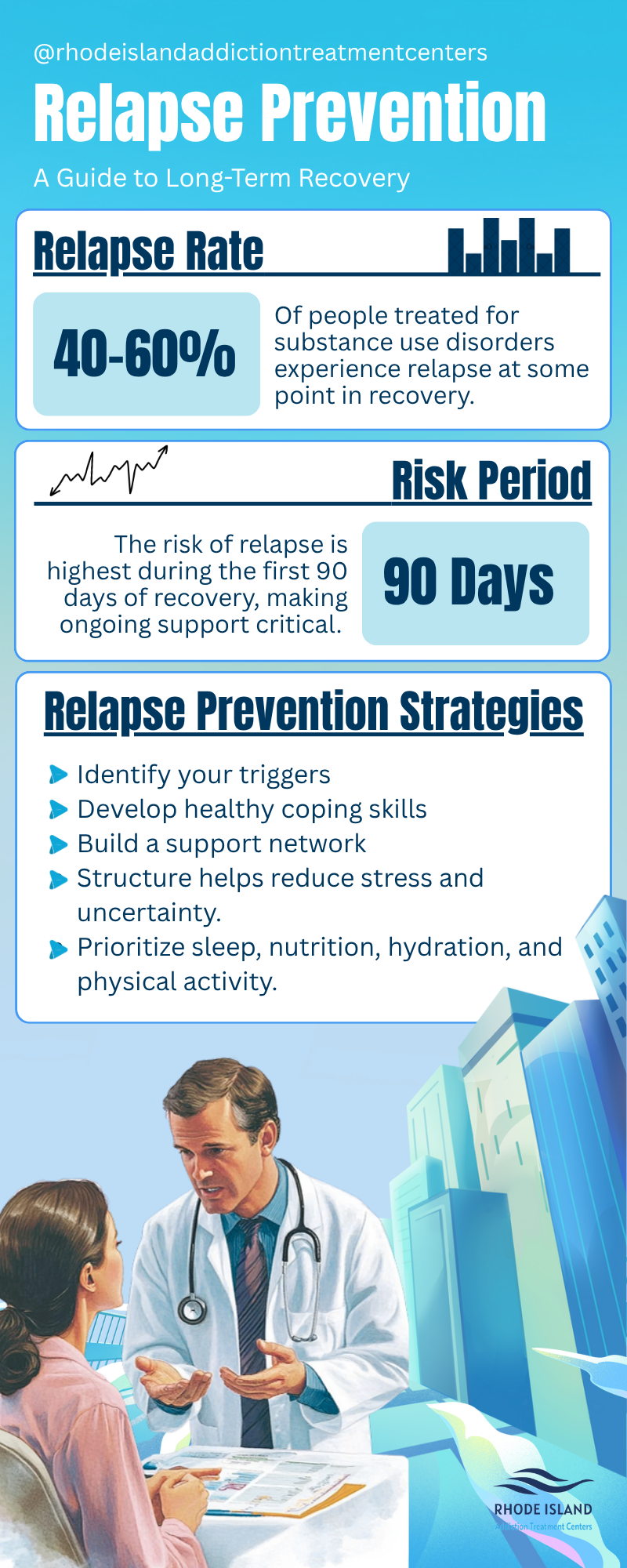
The National Institute on Drug Abuse says relapse rates for substance use disorders are similar to those for other chronic medical illnesses, and relapse can be part of the recovery process rather than proof that treatment failed. Rhode Island’s BHDDH also keeps statewide substance use resources and a 24/7 BH Link access point for people who need help fast.
Rhode Island Addiction Treatment Centers offers evidence-based outpatient services for adults and families near Providence, including intensive outpatient and outpatient care for substance use disorders. That is why a strong prevention plan matters so much after rehab.
What is a Relapse Prevention Program?
A relapse prevention program is a structured plan that helps you spot triggers, handle cravings, and stay steady in daily life. NIDA explains that treatment includes tools that help people recognize, avoid, and cope with the situations most likely to lead back to drug use.
Relapse is rarely just a sudden bad choice. NIDA notes that stress cues tied to drug use, including people, places, things, and moods, are common triggers, and newer therapies are designed to help people interrupt those patterns before substance use returns. In plain terms, the goal is to catch the slide early, while it is still easier to stop.
Three Common Stages to Watch For
- Emotional Relapse: Stress builds, sleep gets worse, and self-care starts slipping, which can make old coping habits feel tempting again.
- Mental Relapse: The mind starts bargaining, glamorizing past use, or drifting back toward risky people, places, and moods linked to substance use.
- Physical Relapse: This is the return to alcohol or drug use after the warning signs have been building for a while.
Why is a Structured Relapse Prevention Plan Necessary?
A structured plan helps bridge the gap between treatment and real life. NIDA says detox alone is not enough for recovery and that people need ongoing treatment that addresses stressful situations and common relapse triggers.
That matters because early recovery can feel shaky even after the body is stable. Stress, poor sleep, conflict at home, and old routines can all wake up the same habits that rehab was trying to quiet. NIDA also says treatment should address the whole person, including medical, mental, social, family, and work needs. A written plan gives you something solid to follow when your thinking is not at its best.
Part of replacing destructive old routines involves introducing healthy, deeply engaging physical activities at home. Embracing a weekend project can provide a healthy dopamine spike, a concept explored in detail in our breakdown on why pressure washing is great for mind and body: the ultimate guide to therapeutic cleaning, which shows how manual tasks keep your hands busy and your thoughts clear.
Unstructured Post-Rehab Transition | Structured Relapse Prevention Program |
People often leave treatment with motivation but not enough day-to-day structure. | A prevention plan gives clear steps for triggers, cravings, and high-risk situations. |
Stress cues, moods, people, and places can quietly pull someone back toward use. | Behavioral therapy teaches people to recognize, avoid, and cope with those triggers. |
Detox by itself often leads to a return to substance use. | Ongoing counseling and recovery support improve the chance of staying in treatment longer. |
Isolation can grow when there is no routine support after discharge. | Rhode Island offers local support options through BH Link and other recovery resources. |
If you are still in early stabilization, a substance use detox center may be part of the first step before relapse prevention work begins. Detox gets the body through withdrawal. A prevention plan helps protect what comes next.
Core Components of a Relapse Prevention Program Rhode Island
A good plan is practical. It is not a stack of nice ideas sitting in a folder. It should tell you what to do when cravings hit after work, when family tension spikes, or when boredom starts whispering old lies.
Rhode Island Addiction Treatment Centers says it offers evidence-based outpatient care for adults and families, and that includes support for people working to stay on track after treatment. In many cases, relapse prevention fits naturally into step-down therapy and intensive outpatient care programs.
- Trigger Identification Mapping: This step helps you name the exact people, places, moods, and routines that raise your risk. NIDA lists stress cues linked to past use, including people, places, things, and moods, as common relapse triggers.
- Coping Mechanism Development: You practice what to do instead of using. That might mean calling a safe person, leaving a risky setting, taking a walk, eating, sleeping, or using grounding tools when the urge feels loud. NIDA says behavioral therapies help people handle stressful situations and triggers more effectively.
- Emergency Lifestyle Response Plan: A solid plan includes clear next steps for rough days. You write down who to call, where to go, and what actions to take if a slip feels close. BHDDH lists 24/7 support through BH Link, which can be a key local safety net.
- Local Support Integration: Long-term recovery works better when people stay connected. Rhode Island’s resource guides list peer recovery and treatment supports across the state, including recovery centers and outpatient programs.
Therapeutic Modalities That Prevent Relapse
These therapies help people break the old chain between stress and substance use. They also make recovery feel less like guesswork and more like a skill you can practice.
- Cognitive Behavioral Therapy (CBT): NIDA says cognitive-behavioral therapy helps people recognize, avoid, and cope with situations in which they are most likely to use drugs.
- Mindfulness-Based Relapse Prevention (MBRP): MBRP combines cognitive-behavioral relapse prevention skills with mindfulness training to increase awareness and skillful action in high-risk situations.
- Peer-Led Accountability Counseling: Rhode Island’s recovery system includes peer-based and community recovery supports that can help people stay connected after formal treatment.
- Family Support Work: NIDA says family therapy can help people and their families address influences on drug use patterns and improve overall family functioning.
Evaluating Program Success: Case Study
A randomized clinical trial found that participants assigned to Mindfulness-Based Relapse Prevention and standard relapse prevention had a significantly lower risk of relapse to substance use and heavy drinking than those receiving treatment as usual.
Adults leaving inpatient or outpatient treatment entered one of three follow-up tracks: treatment as usual, standard relapse prevention, or mindfulness-based relapse prevention. The mindfulness program taught people to notice cravings, stress, and emotional shifts without reacting on autopilot.
Over time, that pause mattered. According to the randomized clinical trial, participants in MBRP and standard relapse prevention showed a significantly lower risk of relapse to substance use and heavy drinking than those who received treatment as usual.
That result supports a simple idea. When people practice real coping skills before stress hits, sobriety has a much better chance to hold through everyday pressure and high-risk moments.
FAQs
What is the Difference Between Aftercare and a Relapse Prevention Program in RI?
Aftercare is a broad term for continuing support after treatment, such as counseling, peer groups, and check-ins. A relapse prevention program is a more targeted clinical approach that teaches trigger management, coping skills, and response planning for risky moments.
Does Health Insurance in Rhode Island Cover Relapse Prevention Services?
Coverage depends on your plan and level of care. Many people start by asking the treatment center to verify benefits for outpatient behavioral health services before admission.
Secure Your Long-Term Sobriety in Rhode Island
Detox and rehab can lay the groundwork, but daily life is where recovery gets tested. NIDA says addiction treatment is a way of managing a chronic condition, and relapse prevention is part of that long game.
Rhode Island Addiction Treatment Centers provides evidence-based outpatient and intensive outpatient support for adults and families near Providence.
If you want a stronger plan for cravings, triggers, and day-to-day stress, contact a Rhode Island addiction recovery facility and ask for a private assessment today.