
Effective Strategies for Funding Rehab Services in Rhode Island
There is a concept in psychology called the ambivalence paradox. It describes the internal war that keeps so many people from seeking help for addiction. It is not the absence of wanting recovery, but the simultaneous presence of two competing wants. The part that knows something has to change. And the part that resists the change anyway. Therapists who work in motivational interviewing spend entire sessions just helping people sit with that tension long enough to move through it.
When the side that wants recovery wins out, something shifts. The ambivalence breaks. And the person on the other side of that shift is, for perhaps the first time, genuinely ready.
That is exactly when the system hands them a billing problem.
This article is an attempt to clear that obstacle for anyone trying to figure out how rehab gets paid for in Rhode Island. The financial piece is not the most important part of recovery. Still, it should not be the thing that stops someone from getting there.
What Rehab Costs Here In Rhode Island
The range is wide enough that a single number is almost meaningless. Without insurance, the average cost of drug and alcohol rehab in Rhode Island runs around $58,755. Medical detox is the most expensive, averaging around $144,853, while outpatient treatment can be as low as $8,600. Inpatient programs cost more than outpatient ones. Longer stays cost more than shorter ones. Amenities and location also add to the price.
Rhode Island ranks 39th nationally in treatment affordability. That is the honest picture. However, the sticker price is rarely what someone truly pays. The sections below cover the realistic paths to paying for care.
Private Insurance
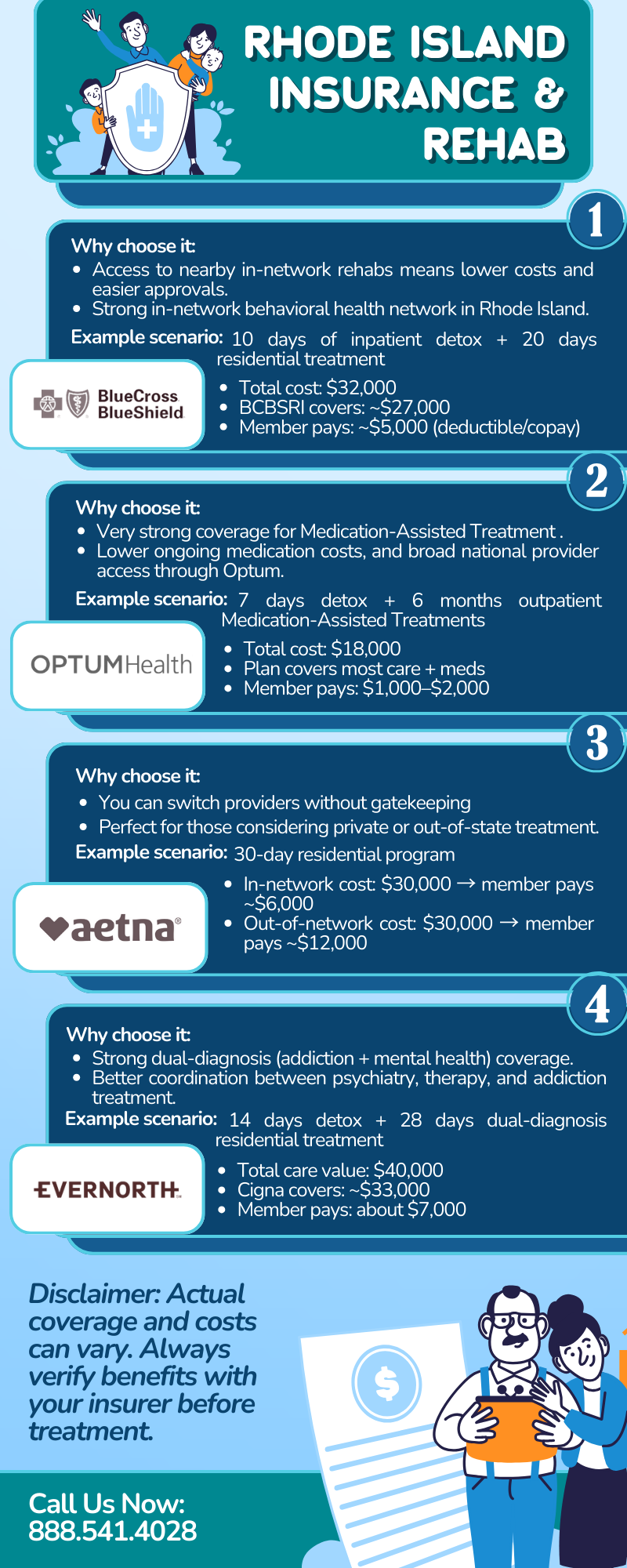
The federal Mental Health Parity and Addiction Equity Act requires insurance plans to cover addiction treatment no more restrictively than physical health conditions. That means financial requirements like copayments and deductibles, as well as yearly visit limits and prior authorization standards, must be comparable to what applies to medical and surgical benefits.
Rhode Island goes further than the federal baseline. State law requires plans to cover behavioral health and substance use disorder benefits, including medication-assisted treatment. It prohibits annual or lifetime dollar limits on those benefits and, when reviewing medical necessity for substance use disorders, requires insurers to rely on criteria developed by the American Society of Addiction Medicine.
In practice: call the number on the back of the insurance card and ask directly what is covered, which facilities are in-network, and whether prior authorization is required. In-network treatment keeps out-of-pocket costs down; out-of-network coverage typically costs more. Most treatment centers will additionally verify benefits directly on a person’s behalf before any commitment is made.
Medicaid
Rhode Island Medicaid is known as Medical Assistance. There are many addiction treatment programs available, such as medication-assisted treatment, detox, inpatient rehab, and outpatient services.
Rhode Island Medicaid recipients generally do not have to make co-payments. The majority of the services are offered to members free of charge. Family size and income determine eligibility. Apply by phone, mail, online, or in person. If you have questions about coverage or enrollment, call HealthSource RI at 1-855-840-4774.
Medicaid is not a lesser path. The clinical care it covers is real care. Many of Rhode Island’s most established treatment facilities accept it specifically because they want to serve anyone who needs treatment, not only those who can afford private insurance.
Sliding Scale Fees and Scholarships
For people who are uninsured or underinsured, many Rhode Island programs adjust what they charge based on what someone can pay. About 11 programs in Rhode Island have sliding scale fees, and about 8 programs offer direct payment assistance.
Under a sliding scale model, a person earning $25,000 a year would pay less than a person earning $100,000 for the same program. The amount depends on income, expenses, and financial situation.
Some facilities also offer scholarships for people who need treatment but have no insurance and cannot qualify for financing or afford even a reduced rate. These are worth asking about directly. They are not always advertised, but they exist.
State-Funded Treatment
The federal Mental Health Parity and Addiction Equity Act requires insurance plans to cover addiction treatment no more restrictively than physical health conditions. That means financial requirements like copayments and deductibles, as well as yearly visit limits and prior authorization standards, must be comparable to what applies to medical and surgical benefits.
Rhode Island exceeds the federal baseline. State law requires plans to cover benefits for behavioral health and substance use disorder, including medication-assisted treatment. It bars annual or lifetime dollar limits on those benefits and requires insurers to use criteria developed by the American Society of Addiction Medicine when reviewing medical necessity for substance use disorders.
In practice: Call the number on the back of the insurance card and ask directly what is covered, what facilities are in-network, and if a prior authorization is required. You’ll pay less out of pocket for in-network care; out-of-network care is usually more expensive. Most treatment centers will additionally verify benefits directly on a person’s behalf before any commitment is made.
A Note on Prior Authorization
Insurance plans usually require prior authorization for treatment coverage. This step may feel like one more hurdle at an already difficult time, but it’s a manageable process.
Federal parity law prohibits more restrictive prior authorization requirements for substance use disorder treatment than the standards that apply to medical and surgical care. Most treatment centers handle prior authorization directly with the insurer on a patient’s behalf. If a claim is denied, appeals are available, and they are often successful.
Not getting an answer you hoped for from an insurer is not the end of the road. It is the beginning of a process that has real options inside it.
Final Words
The financial aspect of this should not be the reason someone does not get help. There are paths here for people with commercial insurance, people on Medicaid, people with no insurance at all, and people who fall somewhere in the middle. None of them are perfect. All of them are real.
If you are trying to sort out what applies to your situation, reach out to Rhode Island Addiction Treatment Centers. We work with most major insurance plans and Medicaid, and we can verify your coverage before your first conversation so that question is already answered when you call. Reach us at 888.541.4028 or visit Rhode Island Addiction Treatment Centers to get started.