
How Family Members Can Avoid Enabling Addiction?

How Family Members Can Avoid Enabling Addiction?

enabling addiction How Family Members Can Avoid Enabling Addiction?

How Family Members Can Avoid Enabling Addiction?

“Love can open a door, but it cannot walk someone through it.”

Enabling addiction often starts as protection. A parent pays rent. A partner calls an employer. A sibling covers another broken promise. Yet repeated rescue can remove safe consequences and delay treatment. 

Based on 2009–2014 data, SAMHSA estimated that one in eight children lived with a parent who had a substance use disorder. That represented about 8.7 million children.

This guide explains warning signs, boundaries, crisis exceptions, family counseling, and a proven way to encourage treatment.

What Enabling Addiction Means for Families?

Enabling addiction means shielding a loved one from substance-use consequences through money, excuses, cover-ups, or taking over responsibilities. Families can stop by setting boundaries, refusing help that supports continued use, allowing safe consequences, and offering practical treatment support.

Enabling often grows from fear, guilt, hope, or love. The concern is a repeated pattern that makes continued substance use easier.

Helping vs Enabling Addiction

Helping vs enabling addiction is judged by impact. Paying a treatment copay supports change. Paying an unexplained debt may leave money for substances. Help supports safety or responsibility. Enabling removes accountability.

Why Loving Families Fall Into Enabling Patterns

Enabling a loved one with addiction rarely comes from indifference. Families may fear overdose, arrest, homelessness, or conflict. “Just this once” becomes a cycle. Exhaustion blurs compassion and rescue.

Common Signs of Enabling Addiction

Look for repetition, secrecy, resentment, and removed responsibility.

Common signs of enabling addiction include:

  • Giving unrestricted money
  • Making excuses to employers or relatives
  • Handling another adult’s duties repeatedly
  • Replacing stolen items quietly
  • Dropping rules after anger or promises
  • Hiding substance use from clinicians
  • Letting crises control your health or finances

Codependency and addiction may be discussed together, but labels should not replace a careful family assessment.

How to Stop Enabling Addiction Without Abandoning Someone

You can change your response, though you cannot control another person’s cravings, choices, or treatment attendance.

Set Family Boundaries Around Your Own Actions

Healthy family boundaries and addiction care focus on your actions. A threat controls someone else. A boundary describes your response.

For setting boundaries with addiction, choose limits you can keep. Speak calmly and cover money, housing, transport, visitors, or children.

Try these scripts:

  • “I won’t give cash, but I can buy groceries.”
  • “I won’t call your employer. I can help you contact treatment.”
  • “You cannot use substances inside my home.”

Support Recovery Instead of Rescuing Substance Use

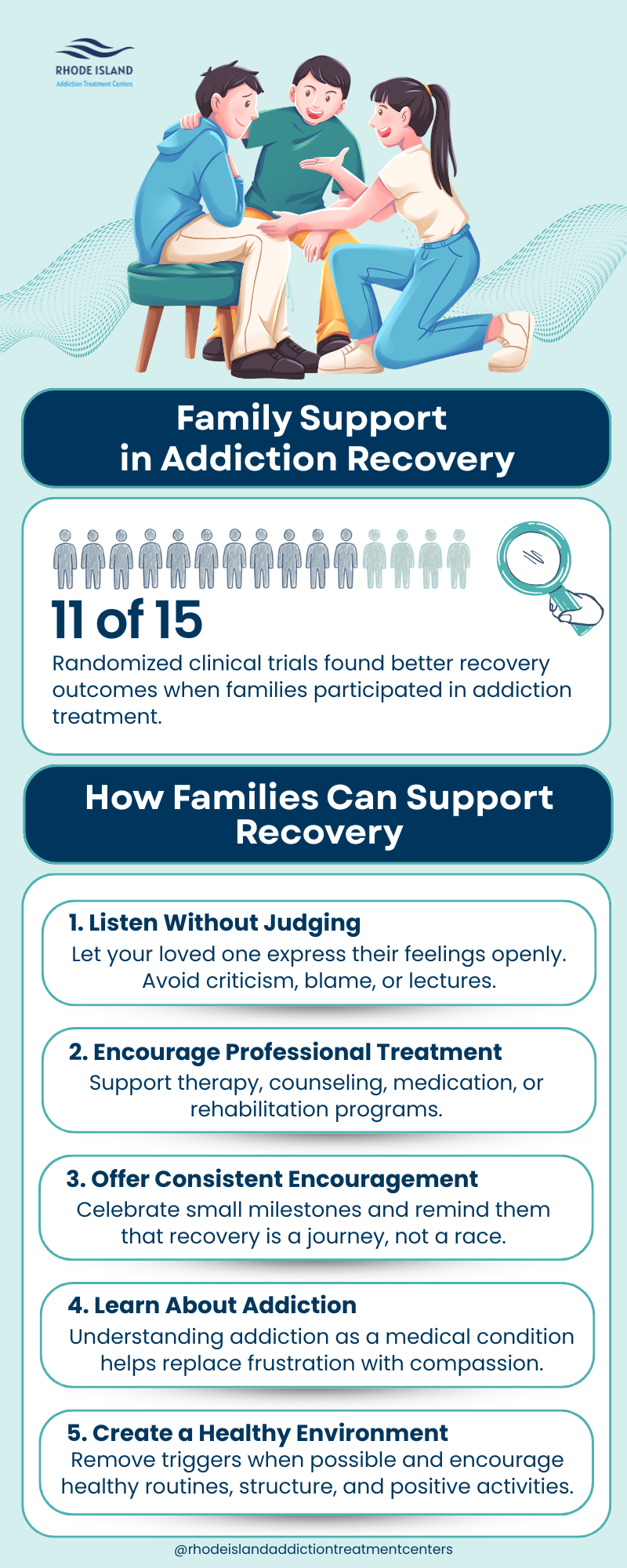
Provide support without enabling by offering transport, paying a provider directly, reviewing insurance, or joining approved family sessions. Family support for addiction recovery can also include naloxone and praise for treatment attendance.

Paying repeated debts, hiding theft, or managing every appointment can continue the cycle. You can stop rescuing a family member while staying caring.

Safety note: During a suspected opioid overdose, give naloxone when available, call 911, place the person on their side, and stay nearby. Call or text 988 for suicidal, mental health, or substance use crises.

Helping vs Enabling Addiction at a Glance

The consequences of enabling addiction may include financial strain, repeated crises, and delayed accountability. Children, disability, and housing may change the safest response.

Situation

Supportive Response

Enabling Response

Money

Buy food or pay treatment

Give unrestricted cash

Missed work

Encourage honest contact

Make a false excuse

Treatment

Offer transport

Complete every task

Housing

State substance-free rules

Ignore unsafe use

Relapse

Encourage reassessment

Pretend nothing happened

Overdose

Use naloxone and call 911

Hide the event

➡️ Also Read: Individual Therapy vs Group Therapy for Addiction

Case Study: How CRAFT Helped Families Encourage Treatment

The CRAFT family approach teaches communication, positive reinforcement, self-care, and safe natural consequences.

A randomized trial studied 130 relatives or contacts of people refusing alcohol treatment. Participants received CRAFT, Johnson intervention preparation, or Al-Anon-oriented facilitation. About 64% of loved ones linked to CRAFT entered treatment. The Johnson group reached about 30%, while the Al-Anon-oriented group reached about 13%.

The study cannot predict every household. Still, calm skill-building may help families help a loved one seek addiction treatment.

How Family Therapy Can Change Enabling Patterns

Family therapy for addiction examines communication, trust, roles, conflict, and rescue cycles without blaming relatives for causing substance use.

SAMHSA says family counseling can identify responses that unintentionally support substance use. It also advises screening for withdrawal, active abuse, violence, and severe psychiatric symptoms before joint sessions.

Rhode Island Addiction Treatment Centers explains what happens in an IOP program for addiction and how family work can improve communication. Families can also review addiction treatment programs in Rhode Island, the intensive outpatient program, and local resources for family members.

FAQs

What is an Example of Enabling Addiction?

Giving cash, lying to an employer, or taking over responsibilities may be enabling. Each shields substance use from safe accountability.

What Happens When You Stop Enabling Someone?

The person may become angry, bargain, or test the boundary. Stay calm and seek help when safety is uncertain.

Is Setting Boundaries the Same as Punishment?

No. A boundary protects your safety, home, finances, or well-being. Punishment aims to control or hurt someone.

Can Families Help Someone Who Refuses Treatment?

Yes. Families can seek counseling, change communication, stop repeated rescue, and offer direct treatment help. CRAFT was created for this situation.

Replace Rescue With Recovery-Focused Support

Stopping enabling addiction doesn’t mean withdrawing love. It means changing how love shows up. You can refuse cash, stop covering missed duties, set household rules, and offer rides to treatment or listen without judgment. 

Are fear, guilt, or repeated crises controlling your family’s choices? 

Rhode Island Addiction Treatment Centers offers personalized outpatient support for adults and their loved ones near Providence. Call 888.541.4028 to discuss treatment, family involvement, and insurance options. You cannot make another person recover, but you can stop carrying addiction’s consequences for them. A calmer boundary today may create room for an honest decision tomorrow.