
Recognizing Cross-Addiction When Starting Recovery
Anyone who’s watched Dragon Ball Z knows the drill. Goku finally beats the villain who was supposed to be unbeatable. Everyone breathes. The credits practically start rolling. Then a stronger one shows up. Freeza. Then Cell. Then Buu. The fight never truly ends. It just changes shape and always finds a new final boss.
Recovery can feel a little like that. The moment a person finally puts down the substance that nearly destroyed their life, everyone exhales. The victory feels permanent. Unfortunately, before the relief can even settle, a new threat quietly claims that empty seat. It might be a pill bottle, a casino app, or an everyday routine no one would think to label an addiction, like an obsessive workout schedule or an online shopping cart.
That’s cross-addiction. And it’s a lot more common than people expect.
A Deeper Look Into Cross-Addiction
Cross-adding happens when someone who’s stopped using one substance starts leaning on another substance or behavior instead. One that delivers the same emotional payoff. It’s sometimes described as “switching addictions.” The new habit doesn’t have to look anything like the old one. It doesn’t need a needle, a bottle, or a pill to count.
It also doesn’t have to involve a substance at all. Cross-addiction can shift from drugs or alcohol into gambling, compulsive shopping, emotional eating, sex, or exercise. The common thread isn’t the object. It’s the function. Something is being used to manage a feeling that hasn’t actually gone anywhere. Researchers call it “addiction interaction disorder,” reflecting that it isn’t just a swap of harmful habits but stems from the same psychological and physiological processes that drove the original addiction.
Why It Happens: The Brain Doesn’t Know the Difference
The brain doesn’t file “drugs” and “gambling” into separate folders. The brain’s reward system, particularly its dopamine pathways, drives cravings no matter which substance or behavior is filling that role. A slot machine can light up the same circuitry as a drink. A shopping cart can do it too. The brain isn’t loyal to the substance. It’s loyal to the relief, and it will happily accept a substitute.
Quitting a substance removes the tool. It doesn’t remove the reason someone reached for it in the first place. Cross-addiction often emerges during recovery because a person is learning to live without their old coping tool, while the stress, pain, or discomfort underneath it hasn’t disappeared. The hole is still there. Something tends to fill it, whether anyone planned for that or not.
The numbers back this up. One study found that approximately 20 percent of the population had problems with two or more addictive substances or behaviors at the same time. Research on the subject indicates that alcohol-addicted people are 18 times more likely to report prescription drug abuse than non-drinkers. It is no coincidence. That is a pattern.
Also Read: How Addiction Changes the Brain Over Time
Common Forms Cross Addiction Takes
It shows up in more places than most people expect.
Substance-to-Substance
It often looks like a game of chemical musical chairs: a person recovering from alcohol turns to prescription medication, or an individual who quit opioids shifts to stimulants. The drug changes, but the underlying role remains identical. This substitution is a high-stakes gamble. Replacing alcohol with benzodiazepines or opioid painkillers carries an extreme risk, as layering central nervous system depressants dramatically drives up the likelihood of a fatal overdose.
Substance-to-Behavior
This one is sneakier because it doesn’t come in a bottle or a baggie. Emotional eating can be a substitution reward system, taking the addiction from a substance to food. Gambling, compulsive shopping, and exercise can do the same. Exercise addiction can manifest as an obsession with physical activity that can lead to injury or social withdrawal. None of these resemble relapses. That is the problem exactly.
Recognizing the Signs
A few patterns worth paying attention to:
- Spending a growing amount of time thinking about, planning for, or recovering from the new behavior
- Using it to cope with stress or boredom rather than for actual enjoyment
- Needing more of it over time to get the same effect
- Feeling restless, irritable, or anxious when it isn’t available
- Hiding or downplaying how often it’s happening
- Letting responsibilities, relationships, or health start to slip
None of these mean recovery has failed. They mean it’s worth a second look, and a second look is a lot easier to take than a second rock bottom.
How the Rhode Island Addiction Treatment Center Approaches This
We don’t treat sobriety from one substance as the finish line. It’s one part of a longer picture. At Rhode Island Addiction Treatment Center we look at the whole person, not just the substance someone walked in asking for help with. That means asking about gambling, shopping, food, screen time, and other behaviors that can just as easily turn into the next seat filler once the first one’s gone.
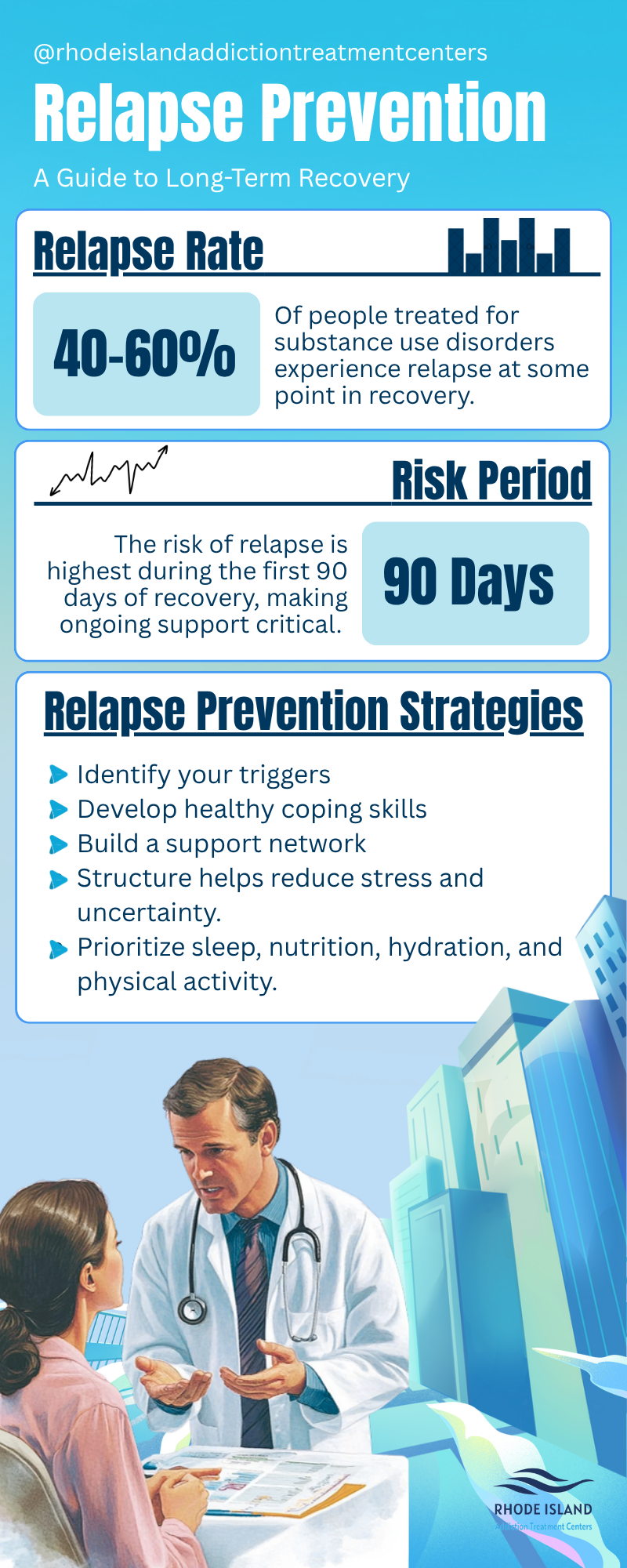
Treatment focuses on building real coping tools, not just removing the old one and hoping nothing moves in behind it. Cognitive behavioral therapy helps identify what a substance or behavior was actually doing for someone emotionally, so that gap doesn’t stay open and unattended. We keep a close eye on early recovery specifically, since that’s when cross-addiction tends to take root, often within the first several months when old routines are still being rebuilt. Group support and family involvement round things out, because a person who’s rebuilding is better at noticing the warning signs when they’re not doing it entirely alone.
Final Words
Recovery was never just about subtraction. It was never only about what someone gives up. It’s about what moves in to take that space instead. Sometimes that’s connection, purpose, rest, and the things that were missing all along.
At other times, it’s something else with another face standing in for the same old villain. It’s not a sign that something went wrong to see which one it is. It’s what keeps the whole thing going, fight after fight, long after the credits were supposed to roll. Reach us at 888.541.4028 or visit Rhode Island Addiction Treatment Centers to get started.