
Why Honesty Is Essential in Recovery
Living in the Ocean State brings a unique kind of pressure. Communities from Providence down to South County are tightly knit, making the shame of a hidden substance use disorder feel twice as heavy. In Rhode Island, over 100,000 individuals battle a substance use disorder annually. We need to rethink how we view honesty in recovery. It is not just a moral rule or a disciplinary measure. Honesty is a required clinical tool for actual neurological healing. You cannot get better while living in the shadows.
At our clinician-led sanctuary in Warwick, we use radical honesty as the foundation for rebuilding broken trust and starting real psychological recovery.
The Neurochemical and Psychological Cost of Secrets
Keeping a heavy secret during active addiction is like trying to sail a leaking boat across Narragansett Bay. Things might look fine to people watching from the shore. But the hidden water inside the hull eventually becomes too heavy to manage. The boat will sink without immediate help.
The mental drain of living two different lives has real clinical consequences. Lying every single day puts your brain on high alert. Your nervous system is always scanning the room to see if someone figured out your secret. This chronic stress response floods your body with cortisol.
Your brain actually processes this chemical overload the same way it processes chronic trauma. It cannot tell the difference between the social threat of a leaked secret and a physical predator. You remain stuck in pure survival mode.
Why Secrets Block Evidence-Based Therapies
Staying in survival mode makes therapeutic progress nearly impossible. You spend all your psychological energy just keeping up the facade you built for your coworkers and neighbors. Your prefrontal cortex simply runs out of the bandwidth needed to learn emotional regulation.
Clinicians rely heavily on Cognitive Behavioral Therapy and Dialectical Behavior Therapy to fix destructive thought patterns. These methods require you to look objectively at your own internal emotional triggers. You cannot analyze a trigger if you are lying to your therapist about what actually causes your distress.
Telling the truth immediately relieves this heavy neurological burden. When you stop hiding the reality of your substance use, your cortisol levels naturally drop. Your brain finally gets the energy it needs to absorb advanced clinical therapies.
How Honesty Unlocks Specialized Trauma and Family Therapies
Deep psychological healing requires a solid foundation of vulnerability. Our clinical team utilizes Eye Movement Desensitization and Reprocessing therapy to help clients process complex trauma. EMDR allows the body to safely release trapped emotional pain.
This highly specialized therapy targets the specific neural pathways where your brain improperly stored agonizing memories. The clinician guides your eye movements to help reprocess these painful memories into neutral events. However, this process relies on your willingness to expose your deepest triggers.
The Mechanics of EMDR and Vulnerability
Processing these deep trauma networks will not work if you are still hiding behind protective lies. You have to face your root emotional disturbances with clear transparency. Radical honesty is the key that finally opens the door to genuine trauma resolution.
When a client embraces this level of clinical honesty, therapeutic breakthroughs happen much faster. The defensive walls drop, and the actual neurological healing can finally take root. Our boutique environment is specifically built to foster this exact kind of safety.
Rebuilding the Rhode Island Family Unit
The family dynamic is a major foundational pillar of our boutique care model. In close-knit Rhode Island neighborhoods, addiction rarely stays isolated to just one person. The chaotic ripples of substance abuse heavily impact spouses, parents, and children.
The intense localized pressure often forces families to maintain their own painful facade to protect their social standing. True family-centric healing requires breaking these exact generational cycles of denial.
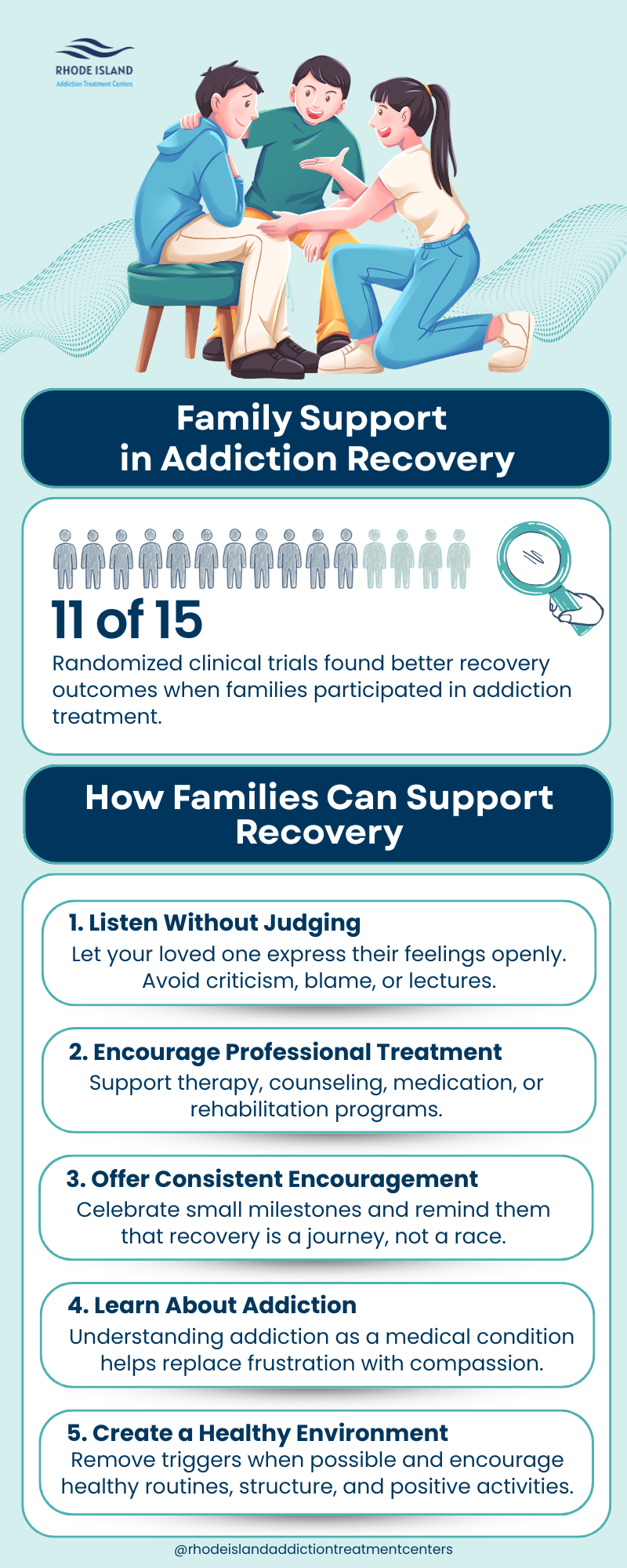
We replace years of hidden resentments with raw and open communication. Families learn how to set healthy boundaries without resorting to anger or judgment. This honest dialogue repairs shattered trust and creates a reliable support system for the recovering individual.
Step Out of the State System and Into a Private Sanctuary
Trying to open up about your deepest traumas inside a massive state-run institution is very hard. Those environments often feel cold, crowded, and highly impersonal. Patients frequently worry about institutional judgment or becoming just another case number on a clipboard.
Rhode Island Addiction Treatment Centers offers a very different recovery experience. We intentionally built a private sanctuary setting right on Jefferson Boulevard in Warwick. Our boutique environment provides the specific psychological safety needed for a person to finally lower their guard.
A smaller and more intimate setting removes the fear of public exposure. You receive highly individualized attention from compassionate clinicians who truly understand your unique story.
Practicing Honesty in Real-Time
Our flexible levels of care fit smoothly into your regular life. We offer a highly structured Partial Hospitalization Program for individuals requiring intensive daily stabilization. We also provide Intensive Outpatient and standard Outpatient programming for ongoing support.
These flexible outpatient models allow our clients to actively practice honesty in real time. You can engage in deep clinical work during the day and return to your local community in the evening.
This model ensures you do not have to abandon your career or disrupt your family life. You learn how to navigate the unique stressors of Rhode Island living with newly acquired coping skills and total transparency.
Drop the Weight and Begin Your Rebuilt Life
You do not have to carry the heavy burden of a secret addiction alone for one more day. Dropping the weight of those secrets is the most empowering decision you will ever make. Please take the very first step of radical honesty by calling our clinician-led admissions team today. We will have a private and completely confidential conversation to map out your individualized care plan and verify your insurance benefits.
Reach out to Rhode Island Addiction Treatment Centers by calling 885-541-4028. You can also explore our boutique recovery hub online at rhodeislandaddictiontreatmentcenters.com.