
Navigating Court-Ordered Rehab and Legal Substance Abuse Programs in Rhode Island
Being charged with a crime while dealing with substance abuse can be stressful. Court dates, probation, and pressure from family members can make it even harder.
Engaging in court-ordered rehab may be a chance to treat substance use and fulfill legal requirements.
Understanding these programs can help you make decisions about treatment and recovery.
What Is Court-Ordered Rehab?
Court-ordered rehab refers to substance use treatment ordered by a court, as part of a court condition or diversion agreement.
Some legal options include treatment and supervision in addition to or instead of traditional sanctions.
The aim is to treat substance use problems that can lead to crime.
The Adult Drug Court in Rhode Island is for eligible defendants who are charged with nonviolent felony drug and/or drug-related offenses.
Participants are offered treatment and supervision, which includes random drug screening and routine case reviews.
If an individual completes the requirements after 12 months, he or she may be eligible for having the charges dismissed and records sealed and expunged, according to the Rhode Island Attorney General’s Office.
Results and eligibility are subject to change for each person. Treatment cannot be said to guarantee a specific legal outcome.
Understanding Rhode Island’s Legal Substance Abuse Programs
There are multiple routes between legal supervision and substance use treatment in Rhode Island.
Adult Drug Court
Adult Drug Court is a combination of treatment, monitoring, and judicial supervision.
The participants receive treatment services and fulfill court mandates. Progress is monitored by random drug screens and regular drug reviews.
Depending on the circumstances of the participant, the course might have legal benefits if he/she is successful in completing it.
Superior Court Diversion Program
The Rhode Island Superior Court Diversion Program is a program that provides an alternative to a defendant’s traditional conviction and sentencing.
Supervision and services offered as part of the program are designed to promote positive behavior and decrease reoffending.
On average, participation in the program lasts six months to one year.
Participants must follow their agreements. Failure to make appointments, fail a drug test, or receive new charges can cause compliance issues.
Treatment as a Condition of Probation or Bail
Substance use treatment is a condition that can be imposed by a judge as a condition of bail or probation.
Requirements may differ from case to case. Some people may be able to get outpatient counselling; others may need more intensive treatment.
Your attorney, as well as your treatment provider, should be aware of these requirements prior to treatment.
Why Treatment Matters Beyond Legal Requirements
While passing drug tests might be a priority, there is much more to be done to achieve long-term recovery.
Substance Use Disorders may have an impact on someone’s physical health, relationships, work, or decisions.
In the absence of support, it can be hard to make the transition back to normal routines.
In 2025, there were 219 accidental overdose deaths in Rhode Island, a 33.4% drop from 329 overdose deaths in 2024.
The numbers emphasise the ongoing importance of effective treatment and recovery assistance.
What Happens During Court-Ordered Rehab?
Treatment is based on the needs of the court and the needs of the individual.
Initial Assessment
Typically, treatment starts with a history of substance use, physical health, mental health, and withdrawal risk assessment.
Providers can use this information to make recommendations for an appropriate level of care.
Individual and Group Therapy
Individual counseling provides the opportunity to develop a better understanding of oneself and of personal substance use.
Group therapy can promote accountability and the connection with others.
Participants can also learn to identify triggers and learn to cope more healthily through cognitive behavioral therapy.
Drug Testing and Progress Monitoring
Regular drug testing and progress reports may be necessary for court-connected programs.
The participant will also be required to make appointments and use the services as recommended, as well as communicate with caseworkers.
Knowing what is expected from the beginning can aid in avoiding compliance issues.
Choosing the Right Level of Treatment
The level of care that is needed varies from person to person.
The level is based on clinical requirements, potential for withdrawal problems, and legal obligations.
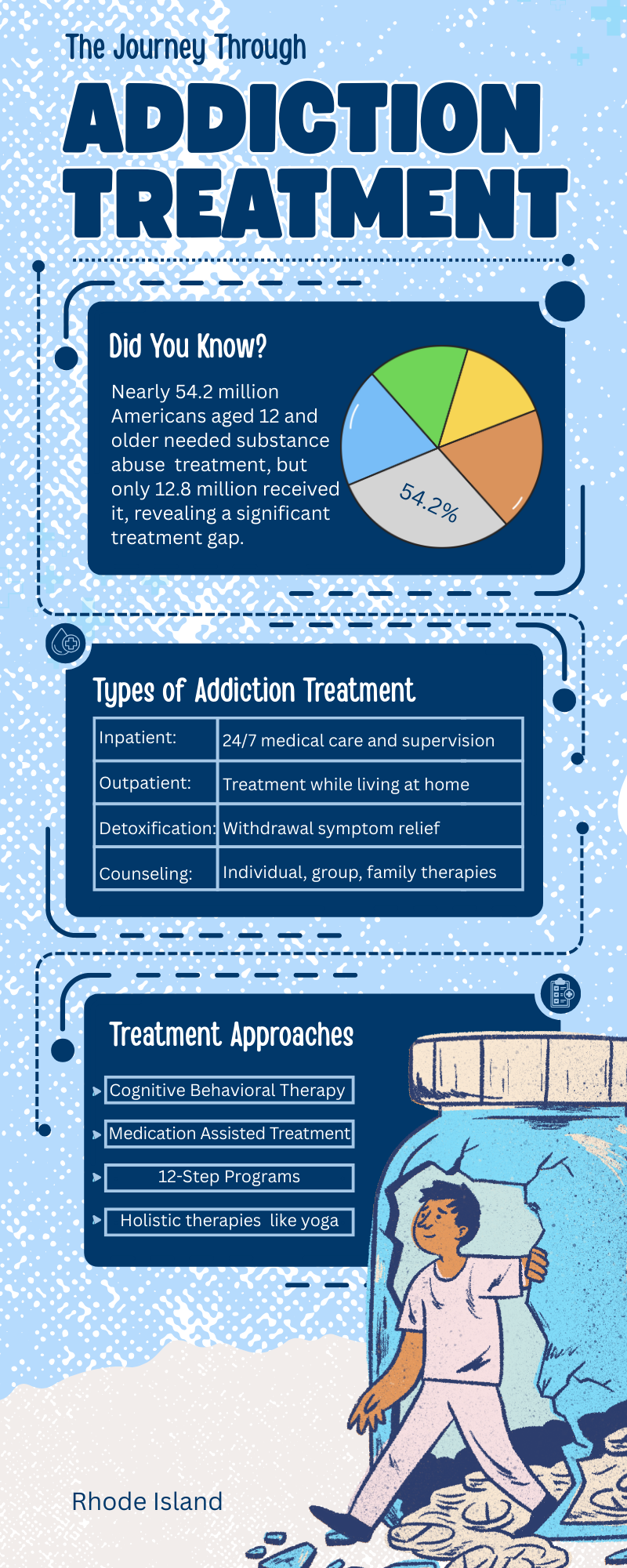
- Medical detox: Assists with medical withdrawal, if needed. Some drug and alcohol withdrawals can need medical assistance.
- Residential treatment: Provides a structured residential setting with regular therapeutic attention.
- Intensive outpatient treatment (IOP): Offers more than one session per week, while allowing the participant(s) to stay at home.
- Outpatient counseling: Provides continuous therapy to individuals who do not require intensive supervision.
Treatment needs may be outlined on a court order. A qualified provider might be able to figure out if a program fits those requirements.
Finding Substance Abuse Treatment in Rhode Island
Working with a provider who has knowledge of addiction treatment and legal requirements makes the process easier.
Users can learn more about substance use treatment and available care options at Rhode Island Addiction Treatment Centers.
When considering a provider, inquire about treatment methods, programs offered, documentation, and court-related requirements.
If you have trouble with a requirement set by the court, reach out to your lawyer and treatment team as soon as possible.
Do not change or leave a program without understanding the possible legal consequences.
A Chance to Move Forward
Court-ordered rehab may seem like another obligation, but it may also be a chance to overcome addiction and to make the necessary life changes.
Whether you or a loved one is facing legal issues as a result of substance use, check out the resources at Rhode Island Addiction Treatment Centers.
The road to recovery is very real, and these steps can help create a healthier tomorrow.