
How to Keep Your Job and Utilize FMLA During Addiction Treatment in Rhode Island
“FMLA leave may only be taken for treatment for substance abuse by a health care provider,”
says the federal rule in 29 CFR 825.119. Eligible workers get up to 12 weeks of job-protected leave. So can you really protect your paycheck while getting help?
Can You Use FMLA for Addiction Treatment in Rhode Island and Keep Your Job?
Often, yes. If you qualify, FMLA protects up to 12 weeks of unpaid leave for treatment by a health care provider, including outpatient visits taken in pieces. It won’t cover absences caused by use or shield misconduct. Eligibility, notice rules, and Rhode Island’s added leave law matter. Here’s the breakdown.
Key Takeaways
- FMLA gives eligible employees up to 12 workweeks of unpaid, job-protected leave in 12 months, and group health benefits continue (U.S. Department of Labor).
- Leave for substance abuse counts only when it is for treatment by a health care provider (29 CFR 825.119).
- Leave can be taken intermittently, which helps with outpatient or IOP schedules.
- Employers can still enforce conduct rules. This is general information, not legal advice.
First, let’s see whether you qualify.
Who Qualifies for FMLA Leave?
Not everyone does. The rules look at your employer and your own work history. The Department of Labor sets four tests:
- Employer size: a private employer with 50 or more employees in 20 or more workweeks.
- Time on the job: at least 12 months with the employer.
- Hours worked: at least 1,250 hours in the 12 months before leave starts.
- Worksite: 50 or more employees within 75 miles of where you work.
Miss one test and federal FMLA may not apply. State law might still help. Keep reading.
What Does FMLA Protect and What Doesn’t It?
Think of FMLA as protecting the treatment, not the trouble that led up to it. That line decides most disputes. Here’s how it plays out.
What Is Protected
Treatment by a health care provider qualifies. That can mean an inpatient stay or regular outpatient sessions. When it’s medically necessary, you can take leave in blocks or on a reduced schedule, which is called intermittent leave. You may also take FMLA leave to care for a covered family member who is receiving treatment. And your employer can’t act against you simply because you used your rights.
What Isn’t Protected
The regulation is blunt here. Absence “because of the employee’s use of the substance, rather than for treatment, does not qualify.” Treatment also “does not prevent an employer from taking employment action” for conduct or performance problems that would apply to anyone. So missing Monday because you were high isn’t covered. Attending your Tuesday therapy session is.
What Does Rhode Island Add?
Rhode Island has its own family leave law. The two can overlap. A vendor summary from Teambridge compares them like this. Confirm the details with the state before you rely on them.
Federal FMLA | RI Parental and Family Medical Leave Act | |
Private employer size | 50+ employees | 50+ employees |
Employee tenure | 12 months and 1,250 hours | 12 consecutive months, averaging 30 hours a week |
Leave amount | 12 weeks in 12 months | 13 weeks in 24 months |
Employee’s own serious health condition | Covered | Covered |
Pay | Unpaid | Unpaid |
Also Read: Benzodiazepine Withdrawal and Tapering: Why Medical Detox in Cumberland, RI is Essential
Do the Two Laws Run Together?
Per the same summary, yes. When you’re eligible for both, the leaves run at the same time. So you don’t get 25 weeks. You get the longer of the two periods.
What About Pay?
Both leaves are unpaid. Rhode Island’s Temporary Caregiver Insurance gives partial wage replacement for some qualifying events. Whether it fits your situation is a question for the state Department of Labor and Training. Ask before you assume.
Can Your Employer Fire You for Going to Rehab?
Not for using your protected rights. But it isn’t a free pass either. The regulation says an employer may not take action against you because you exercised your right to leave. It also says treatment doesn’t stop an employer from acting on conduct or performance problems. So a spotless attendance record helps. A paper trail helps too.
- Safe ground: requesting leave for treatment and attending sessions on the approved schedule.
- Risky ground: missed shifts before you asked, safety violations, or policy breaches.
- Smart move: ask early, in writing, and before a disciplinary meeting if you can.
How Can Outpatient Treatment Fit Around Work?
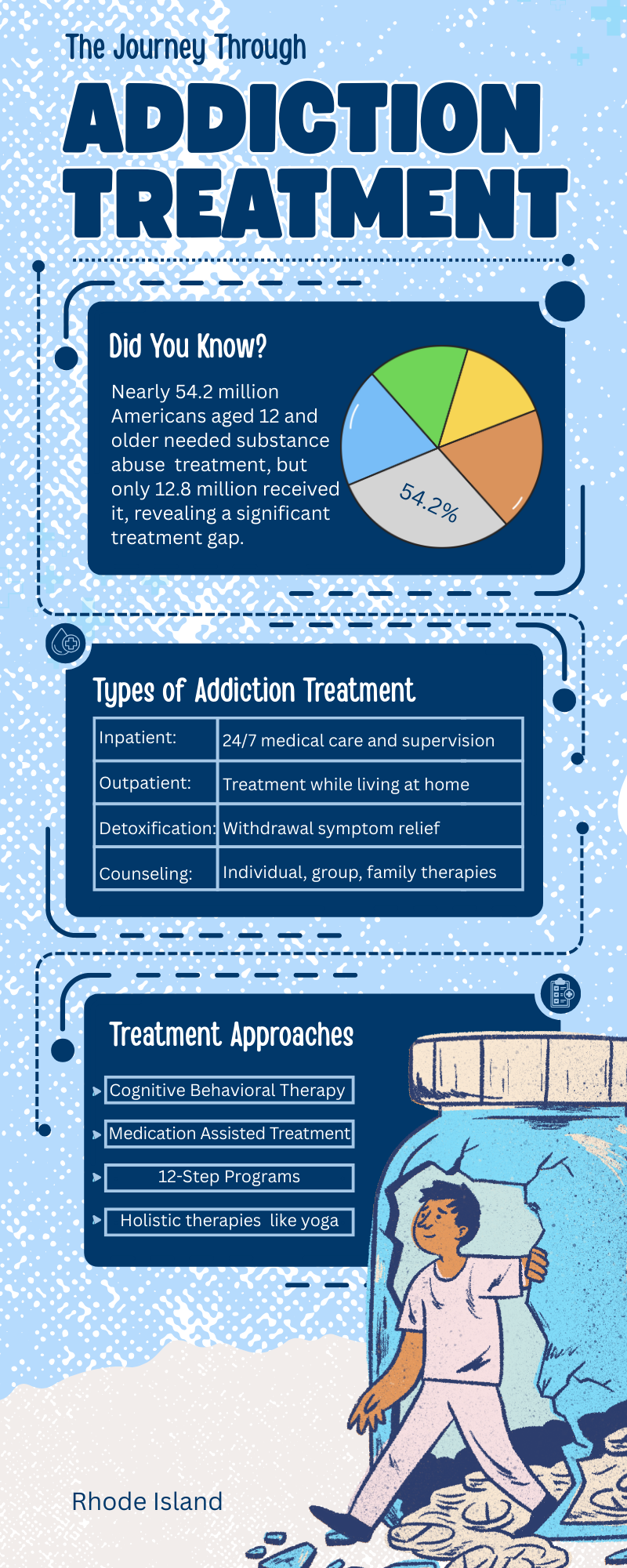
Outpatient care was built for people who can’t disappear for a month. An intensive outpatient program (IOP) typically runs 9 or more hours a week over three to five days. Our IOP helps clients keep up with work, school, and home responsibilities. Some practical steps:
- Ask your provider for the paperwork that certifies your treatment.
- Request intermittent leave in writing if you’ll attend sessions during work hours.
- Share only what HR needs to process the request.
- Keep copies of every form and email.
- Call the Labor Department’s Wage and Hour Division at 1-866-487-9243 with questions.
Healthcare workers face extra pressure. Our guide to addiction treatment for nurses and healthcare workers in Providence covers that side.
A Real-World Case: Darst v. Interstate Brands
A federal appeals court drew the line in 2008. In Darst v. Interstate Brands Corp., an employee near dismissal for absenteeism missed three days while intoxicated. Then he checked into inpatient rehab.
His doctor certified a serious health condition for the whole absence. The employer accepted that the hospital stay qualified for FMLA leave but fired him over the three days before admission.
The Seventh Circuit upheld the firing. FMLA protects treatment and recovery, the court said, not the behavior that led up to it.
Rhode Island sits in a different federal circuit. That makes this ruling persuasive rather than binding. The lesson still travels: ask for help before a crisis at work, not after.
Where Can I Get Treatment That Fits My Schedule?
Rhode Island Addiction Treatment Centers is at 110 Jefferson Blvd, Unit G in Warwick, RI 02888. The site describes it as about 10 minutes from Providence. A first call is confidential.
- Call 888.541.4028 to ask about schedules and levels of care.
- Read about our intensive outpatient program.
- Verify your insurance before you book.
- Talk with an employment attorney if your employer pushes back.
Protect Your Paycheck and Your Recovery
Asking for leave feels scary. You might worry about gossip or about being passed over. Losing your health to avoid the conversation is scarier. A plan, a few forms, and the right program can protect both your job and your recovery.
Ready? Call 888.541.4028 or verify your insurance. Want to understand what withdrawal looks like first? Read our guide to cocaine and stimulant withdrawal management in North Providence. If you’re in crisis, call or text 988.
Read Next: Cocaine and Stimulant Withdrawal Management: Outpatient Programs in North Providence, RI