
Addiction Treatment for Nurses and Healthcare Workers in Providence, RI
You can spot a patient slipping before the monitor does. You catch the gray skin, the shaky hands, and the answer that comes a beat too slow. Then you go home, look in the mirror, and chart nothing. (Nobody ever taught the experts to read their own vitals.)
If your drinking or drug use has crept past what you can explain away, you’re not the only person in scrubs who feels this way. The Washington State Board of Nursing estimates that 10 to 15 percent of nurses have a substance use disorder. That number doesn’t make you weak. It makes you a person in one of the hardest jobs there is who got very good at caring for everyone except yourself. Addiction treatment for nurses and healthcare professionals in Providence, RI, is real; it’s close by, and it can work around a life that doesn’t pause.
Understanding the Challenges Caregivers Face
Long shifts wear you down in ways sleep doesn’t fix. Night rotations scramble your body clock. You carry other people’s worst days home and show up calm the next morning anyway. On top of that, health professionals know how drugs work and usually have easy access to controlled substances. That makes it easier for use to start and harder to see when it has become a problem.
The trap has a voice. It says you’d know if this were a real problem, because you know the risks better than anyone. It says you handle everything, so you can handle this. That isn’t knowledge talking. That’s the illness, and it uses your training against you.
Shame is a major factor in the under-recognition of substance use disorder in health care workers. The pain’s not as bad as being the patient. It should not. Addiction is a medical condition, and you know more than most what happens when it goes untreated.
The Fear That Keeps You Quiet: Your License
Let’s name it. You’re afraid that asking for help ends your career. This is what Rhode Island law says, including where it stops.
For nurses, the State law allows the Board of Nurse Registration and Nursing Education to provide an alternative to disciplinary measures for alcohol and drug problems if the treatment and rehabilitation are undertaken by the nurse on a voluntary basis. The records of such treatment and rehabilitation are completely confidential and cannot be revealed, subpoenaed, or otherwise disclosed publicly. However, the same law stipulates that the information needed to monitor the compliance with the program by employers should be available at the workplace. Thus, it is better to consult with the Board about the details in the context of the case and seek the advice of a licensing attorney.
Moreover, physicians, physician assistants, dentists, and podiatrists can rely on Rhode Island’s Clinician Wellness and Support Act. The law confirms the status of the Rhode Island Physician Health Program, or its equivalent, as a confidential and non-disciplinary source for the treatment of burnout, mental health issues, addictions, and substance abuse, which went into effect in June 2025.
Why does this matter? That’s because accountability plus treatment works. In the largest study of state physician health programs, 631 of 802 physicians (78.7%) were licensed and working five years later. That study followed physicians, not nurses, and it measured structured monitoring programs rather than any single clinic. Still, it shows what’s possible when care and support go hand in hand.
Also Read: Court-Ordered Addiction Treatment in Rhode Island: How It Works and Your Options
What Treatment Looks Like When You Can’t Vanish
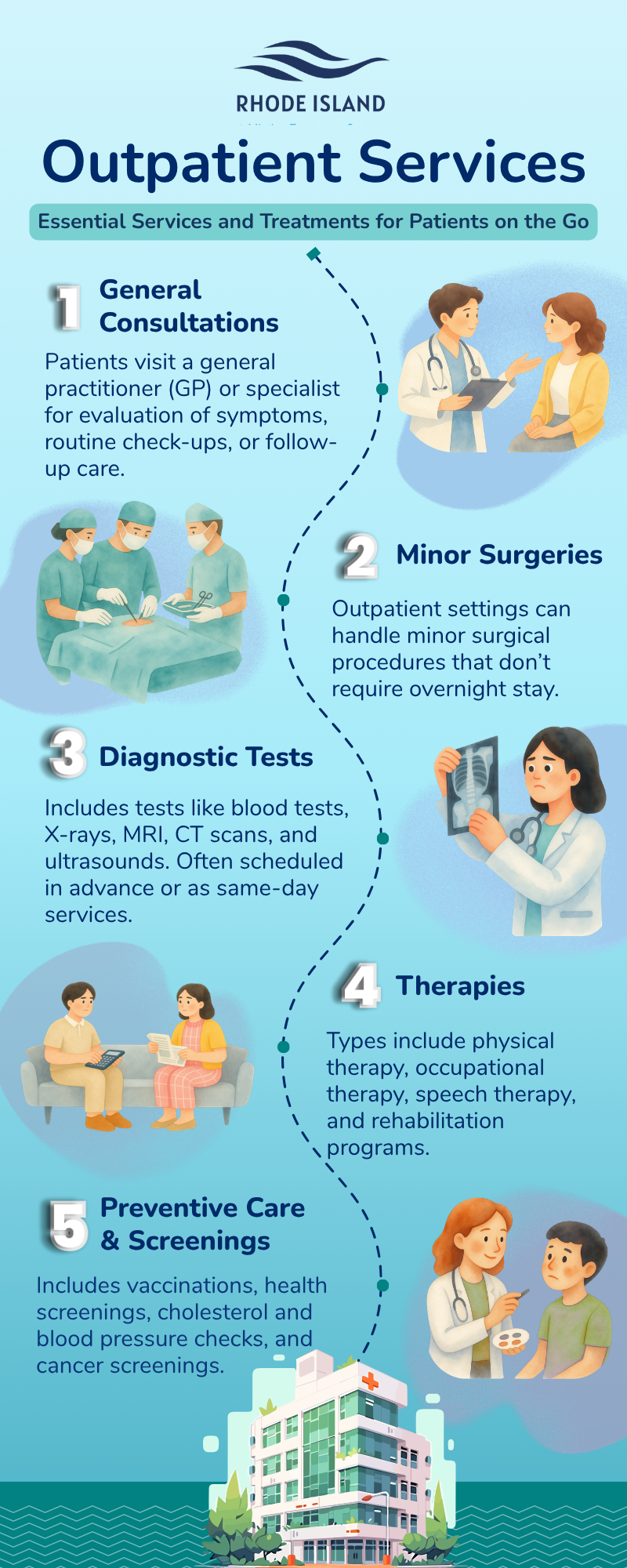
Not everyone is able to afford or take a 30-day residential rehab stay, and the treatment should be individualized according to the severity of one’s addiction, medical and psychological needs, and general safety. If a person requires a round-the-clock treatment and monitoring, residential rehab facilities can be a valid option, and a competent outpatient facility will be able to recognize this and advise the client accordingly.
For working professionals, a PHP is a good middle ground: during the day, they attend treatment and are able to return to their households and jobs during the evenings. This program boasts that it allows the patients to keep up their professional and academic responsibilities. An intensive outpatient program (IOP) steps down from there, with fewer hours and more room for your job.
Inside those programs, the work is practical. Individual therapy digs into what drives your use. Therapies such as individual counseling and CBT allow the patient to learn what is driving their substance use and unhealthy coping mechanisms. Intense emotions are managed with the help of dialectical behavior therapy (DBT) techniques to achieve emotional regulation. Group therapy gives clients a crucial social support system and a chance to learn how to communicate without judgment. Other important parts of a complete treatment program are psychiatric evaluation and medications, relapse prevention, and case management.
Finding The Right Program In Providence For Healthcare Professionals
Ask direct questions, because the answers differ from place to place. How do you handle confidentiality? Have you worked with licensed professionals? Can sessions fit around rotating shifts? Which insurance do you take? What does aftercare look like? A program that welcomes these questions is usually a good sign.
Rhode Island Addiction Treatment Centers is one option. It sits at 110 Jefferson Blvd in Warwick and describes itself as about ten minutes from Providence. It offers intensive outpatient and outpatient formats for adults 18 and older, covering alcohol, benzodiazepines, cocaine, marijuana, methamphetamine, and opiates. You’ll sleep in your own bed, which is exactly the point for many people who can’t step away from work. Call 888.541.4028 or use the site’s insurance verification form to find out what’s covered.
If You Need Someone Right Now
You don’t have to wait for an appointment.
- BH Link runs a 24/7 walk-in facility at 975 Waterman Ave. in East Providence for Rhode Islanders 18 and older. The hotline is (401) 414-LINK (5465).
- 988 covers substance use crises, along with suicidal thoughts and mental health crises.
- In an emergency, call 911.
Final Words
You’ve spent your career being the steady hand in someone else’s worst hour. You don’t have to treat this alone. Let someone be that steady hand for you. Start your own chart today: one call, one assessment, one honest answer. The professional who has been caring for everyone else is allowed to be cared for.