
Gambling and Substance Use Disorder in Rhode Island: Treating Both Together
Your phone buzzes at 6:42 p.m. Your team is live, the odds just moved, and the app would like you to know you’re due. You are ninety days sober, which the app has not been told and would not care about. Nothing about the moment looks dangerous. Nobody is pouring anything, and there is no bar and no bottle. That is exactly the problem.
In Rhode Island, that buzz is easier to reach than it has ever been. Mobile sports betting launched in September 2019, and iGaming went live in March 2024. A Rhode Island Medical Society study of young adults shows what that access can mean. It found problem gambling in 11.4% of them, and the odds ran 2.4 times higher among people who bet on sports.
Gambling and substance use disorder rarely arrive alone. They share the same shortcuts to relief, and they tend to cover for each other. If you are treating one, the other is probably already in the room.
Dual-Diagnosis: Gambling and Substance Use Travel Together
If you are fighting both, you are not unlucky or uniquely broken. You are statistically ordinary. National Comorbidity Study data shows that 96% of people with gambling disorder have at least one other psychiatric disorder, and more than 60% have three or more. People already in treatment for a mental health or substance use problem may meet gambling disorder criteria at roughly ten times the general rate.
The overlap is sneaky, because one addiction can quietly replace another. People can become addicted to gambling even after years of sobriety from alcohol. It feels like progress at first, since the drinking stopped. The brain, however, simply found a new door.
The habits also feed each other. One national study found that the more a person gambles, the more often they tend to drink. Moreover, people with current marijuana abuse or dependence showed the highest rates of problem gambling. Betting makes the drink feel like part of the night, and the drink makes the next bet feel like a good idea.
The 3 Top Warning Signs of Problem Gambling
You don’t need a diagnosis to notice that something has shifted. Researchers use a short screening tool, the Brief Biosocial Gambling Screen, that boils the question down to three plain items. Rhode Island’s own young adult survey uses it, and answering yes to even one counts as a positive screen. It is not a clinical diagnosis, and the study’s authors note it is only a brief screening instrument. Still, these three signs are a good place to start asking honest questions.
You Get Restless, Irritable, or Anxious When You Try to Cut Down
The first screening item asks whether you’ve felt restless, irritable, or anxious when trying to stop or cut back on gambling. Notice how that plays out in real life. You tell yourself no bets tonight, and the evening turns into a low hum of snapping at everyone, pacing the kitchen, and checking the score you swore you’d ignore.
You Hide How Much You Gamble
The second item asks whether you’ve tried to keep family or friends from knowing how much you gamble. It rarely looks dramatic. It looks like deleting the app before dinner, closing the tab when someone walks in, or saying you were “up a little” when you were not. The secrecy tends to grow faster than the gambling does, and it is often what leaves you feeling most alone.
Money Trouble Has You Asking Others for Help
The third item asks whether you’ve had such financial trouble that you needed help with living expenses from family, friends, or welfare. This one lands hardest because it pulls other people into the problem. You don’t have to wait for this sign to appear before you reach out. If the first two already sound familiar, that is enough reason to talk to someone.
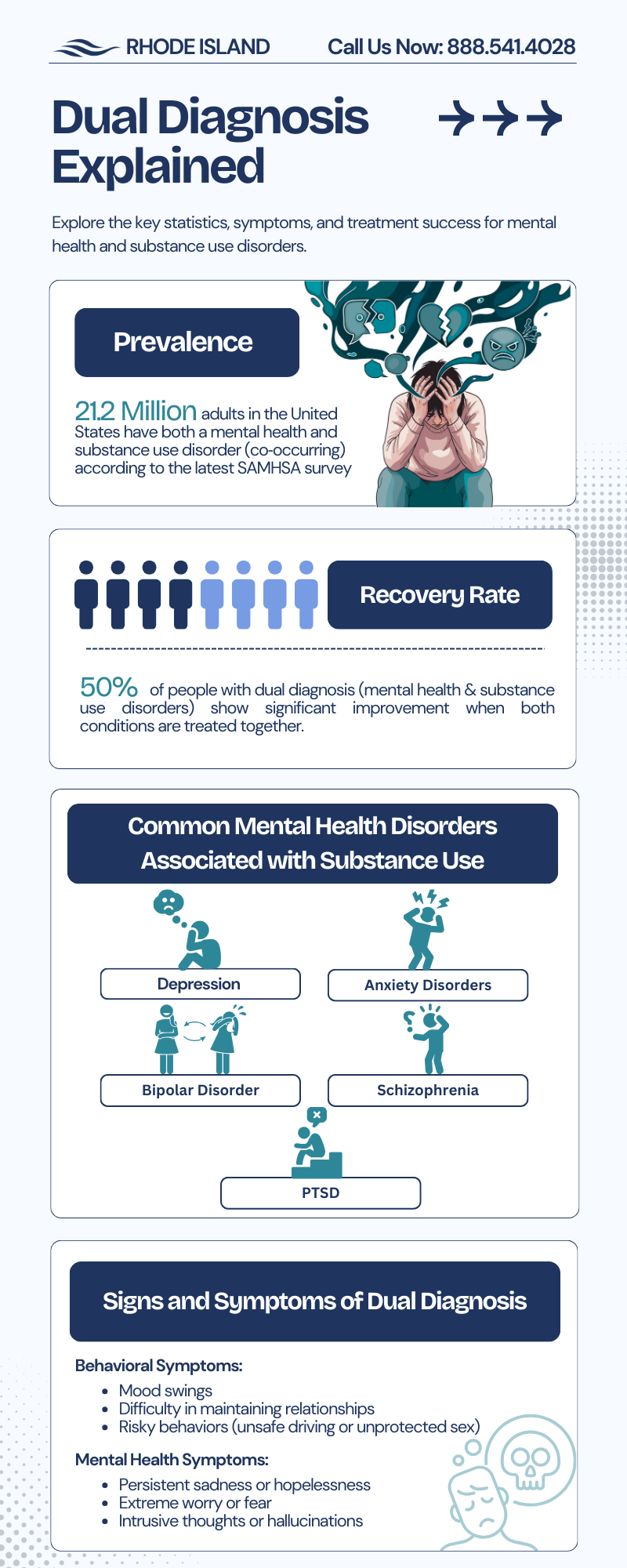
Integrated Treatment For Dual-Diagnosis Disorder
Integrated care starts with screening for both at intake. It continues with therapy that treats the two as connected, not as separate files.
For gambling, the evidence points to talk therapy. Meta-analysis of several studies found cognitive-behavioral therapy significantly reduced gambling behavior within three months of finishing treatment, with significant effects still showing at follow-ups of up to two years. CBT teaches you to spot the thought that says “I’m due” and to question it. Motivational interviewing, a client-centered approach built around resolving ambivalence, reduced how often people gambled for up to a year after treatment. New research suggests a combined MI and CBT approach may be the most effective for problem gambling.
Medication can help manage this dual diagnosis too. Opioid receptor antagonists have reduced gambling behavior and substance use in some individuals. Your prescriber has to make that call, and it depends on your history and what you’re using. Family involvement matters as well. Gambling damages trust and money in ways that a household feels long before anyone says a word.
Getting Started in Rhode Island
If you are not sure where to begin, start with a phone call. Problem Gambling Services of Rhode Island, a CODAC service, runs a confidential 24-hour helpline at 1-877-942-6253 and connects people with certified gambling counselors. Its provider network covers Cranston, Providence, East Providence, Rumford, North Kingstown, Newport, Warwick, and Lincoln.
You can also cut off access. Voluntary self-exclusion can run one year, five years, or for life, and a single request covers Bally’s properties and the Lottery’s products. Nationally, 1-800-MY-RESET covers gambling, and 1-800-662-HELP covers alcohol and drugs. The good thing is that both are free and open around the clock.
Final Words
Go back to that 6:42 p.m. notification. It was never really about the game. It was about a brain that learned to reach for a fix, and you can retrain that reflex. Treating gambling and substance use together means the next buzz meets a plan, a team, and a person who already knows what it is.
Rhode Island Addiction Treatment Centers is based in Warwick. We offer an intensive outpatient program, integrated treatment for dual-diagnosis conditions, and a family program that offers structure and lets you keep working and living at home while you do the work of recovery. Make the right call today, and begin your journey to sobriety.
Read Next: Seasonal Depression and Substance Use: Preparing for a Sober Winter in Rhode Island