
Does Medicaid Cover IOP in Rhode Island?
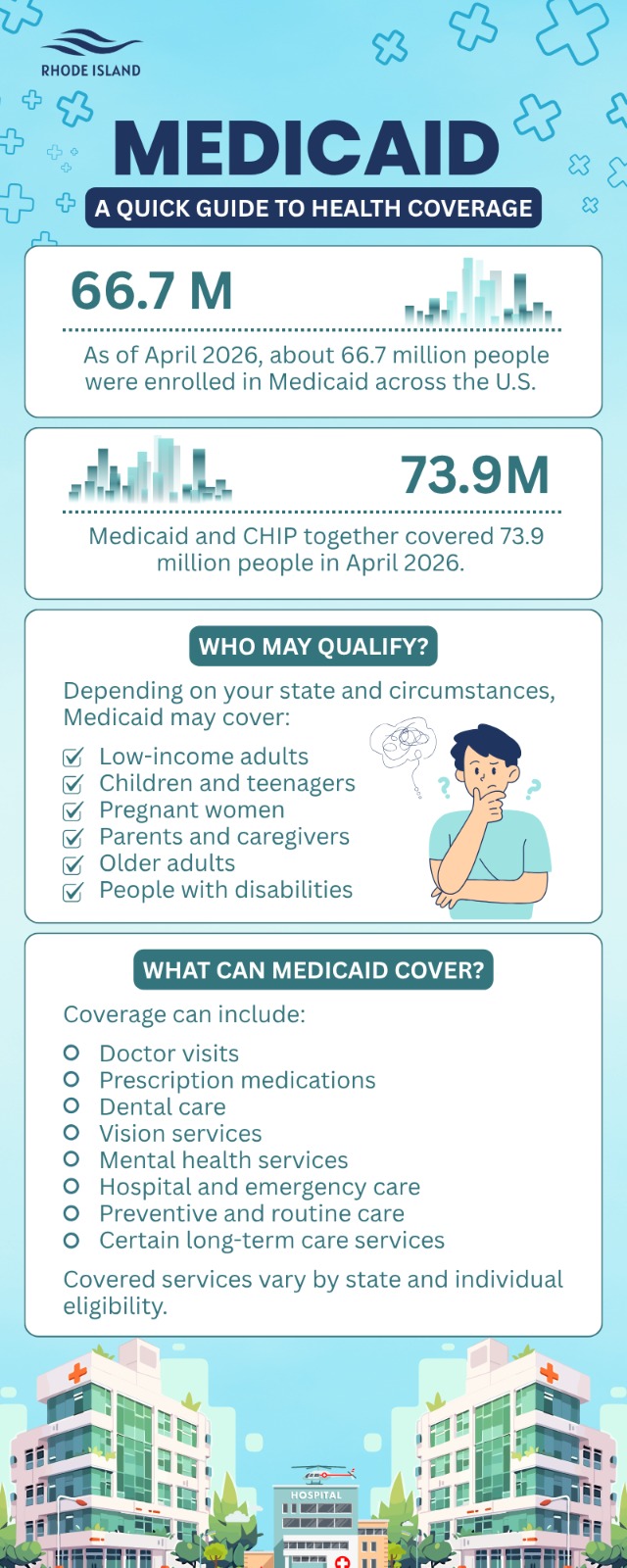
Medicaid gives low-income people access to healthcare through a well-managed network of hospitals and providers (doctors) across the country. Since it also covers mental health disorders and addiction problems, more and more people are benefiting from it.
So much so that, according to The Commonwealth Fund, Medicaid covered 43% of youth with major depression or substance use problems in 2023. Now, imagine if Medicaid didn’t cover addiction or mental health conditions. It’d mean that a big percentage cannot receive treatment; hence, the government is including more addiction and mental health centers in the loop.
In this aspect, today we’ll clarify whether Medicaid covers IOP in Rhode Island, so a person deciding to treat their addiction has a solid answer. If you want to benefit from this insurance, keep reading to see how much of the treatment it supports.
Does Medicaid Cover IOP for Addiction Treatment in Rhode Island?
Medicaid covers IOP in Rhode Island for mental health and substance use treatment through the state’s managed care plans. Addiction treatment falls under behavioral health care, and Medicaid is required to cover it.
However, this IOP coverage isn’t automatic; it depends on multiple factors. For instance, the most crucial factor is whether or not the treatment in question is medically necessary. Also, the patient seeking Medicaid coverage for IOP must have an approved plan as well as a prior authorization (where applicable). Hence, the exact details of what’s covered under Medicaid IOP Rhode Island vary.
Notably, all states have different Medicaid requirements around two things: prior authorization (getting approval from Medicaid before treatment starts) and hour limits (how many hours of treatment per week are allowed without extra steps).
For example, in Ohio, IOP services classified as ASAM Level 2 don’t require prior authorization. ASAM is a classification system created by the American Society of Addiction Medicine to categorize substance use treatment into levels based on the intensity of care. Level 2 refers to intensive outpatient and partial hospitalization-type care, i.e., treatments that are more involved than therapy but don’t require hospital stays.
Also, continuing the Ohio example, if a patient’s Level 2 IOP treatment stays under 20 hours of treatment per week, they don’t need a prior auth, and their treatment can start right away with Medicaid.
IOP Services Covered by Medicaid in General
The Intensive Outpatient Program is more comprehensive than standard therapy and includes many modules to help one with addiction. In general, here are the IOP services covered by Medicaid (terms and conditions apply):
Group Therapy Sessions
Medicaid includes group therapy in its covered services to give patients a community where they feel positively accountable. When a struggling person hears others describe similar struggles, they stop feeling isolated and feel relevant. Also, a licensed facilitator or therapist runs group therapies included in IOP, so there’s always an expert factor in play. Most group sessions run multiple times a week as part of the IOP schedule and give one a positive healing space.
Individual Counseling
Secure, non-judgmental, and trigger-free discussions with the therapist build the foundation of addiction recovery. Hence, Medicaid covers one-on-one therapy sessions, where the expert adjusts your treatment based on what’s happening in your life. Then, they track your progress and address issues you may not want to disclose in a group.
Relapse Prevention Planning
Relapse prevention is crucial because without it, a person’s hard work can go to waste. Therefore, credible facilities like Rhode Island Addiction Treatment Centers build you a plan. This prevention plan focuses on identifying triggers and building coping strategies, so you can beat cravings. Medicaid might come into play during this stage because gains made during treatment often don’t hold up long-term without these precautions.
Medication Management (When Applicable)
Medicaid covers medication management because some patients need clinical support beyond therapy. For example, if they’re facing severe withdrawal symptoms or co-occurring conditions, they’re prescribed strong medication, and having insurance helps with that. The doctor monitors dosage and effectiveness throughout treatment to ensure things are under control. However, this service only applies when medically indicated, not as a default part of every IOP plan.
What Determines Medicaid IOP Rhode Island Coverage?
As explained earlier, Medicaid IOP Rhode Island coverage isn’t limited, and as expected, the insurer inspects multiple treatment aspects. If an addiction treatment center is in-network with Medicaid, which simply means they accept patients with this insurance, here are further things that determine the extent of coverage:
Medical Necessity
Medical necessity is crucial for approving IOP before insurance coverage comes into play. The provider has to evaluate if a particular level of care is appropriate for the patient’s condition. Without that documentation, Medicaid has no grounds to approve the claim.
Prior Authorization
Prior authorization plays a big role in determining whether a certain treatment model will be supported by Medicaid. It is done to confirm if the requested care matches the patient’s documented needs. And when a provider skips prior auth when the plan requires it, the insurer wouldn’t consider the claim.
Visit or Session Limits
As explained earlier, insurance helps up to a certain extent only. Therefore, Medicaid sets visit or session limits, so the patients know to stay within a reasonable range. Plans specify the number of sessions or hours allowed within a given period to keep treatment structured. If the patient goes over that limit, insurance doesn’t help with that.
Benefit From What’s Being Offered
If you’re eligible for Medicaid and are also fighting an addiction, consider this your sign to start treatment right away. Even though no insurance covers you 100%, having some support is enough to give you a push. Sure, addiction treatment can be expensive, but the insurance might take a huge burden off your shoulders. So, know your rights and make the system work for you where it’s bound to do so.