
Detox vs. IOP vs. Residential: Which Level of Care Do You Need in Rhode Island?
Looking for addiction treatment can be confusing. You may come across terms like detox, residential treatment, and IOP, but you may not know what they actually mean.
More importantly, how do you know which level of care you need?
Detox, residential treatment, and IOP each help with recovery in different ways. Detox helps you deal with withdrawal symptoms, while residential treatment gives you a structured environment to focus on recovery. And IOP lets you get regular treatment while living at home.
The right choice for addiction treatment depends on your substance use, withdrawal symptoms, health, living conditions, and the support you need.
If you want addiction treatment in Rhode Island, knowing these factors can help you make an informed decision.
What Is Medical Detox?
Detox is usually the first step for someone who wants to stop using drugs or alcohol but might face withdrawal symptoms. The goal of detox is to help manage these symptoms while providing monitoring and support.
Depending on the substance and the person’s health, detox usually involves:
- Monitoring medical health
- Managing withdrawal symptoms
- Medications to manage withdrawal symptoms when appropriate
- Help with hydration and nutrition
- Watch for changes in physical or mental health
- Plan for ongoing treatment
When Might Residential Treatment Be Appropriate?
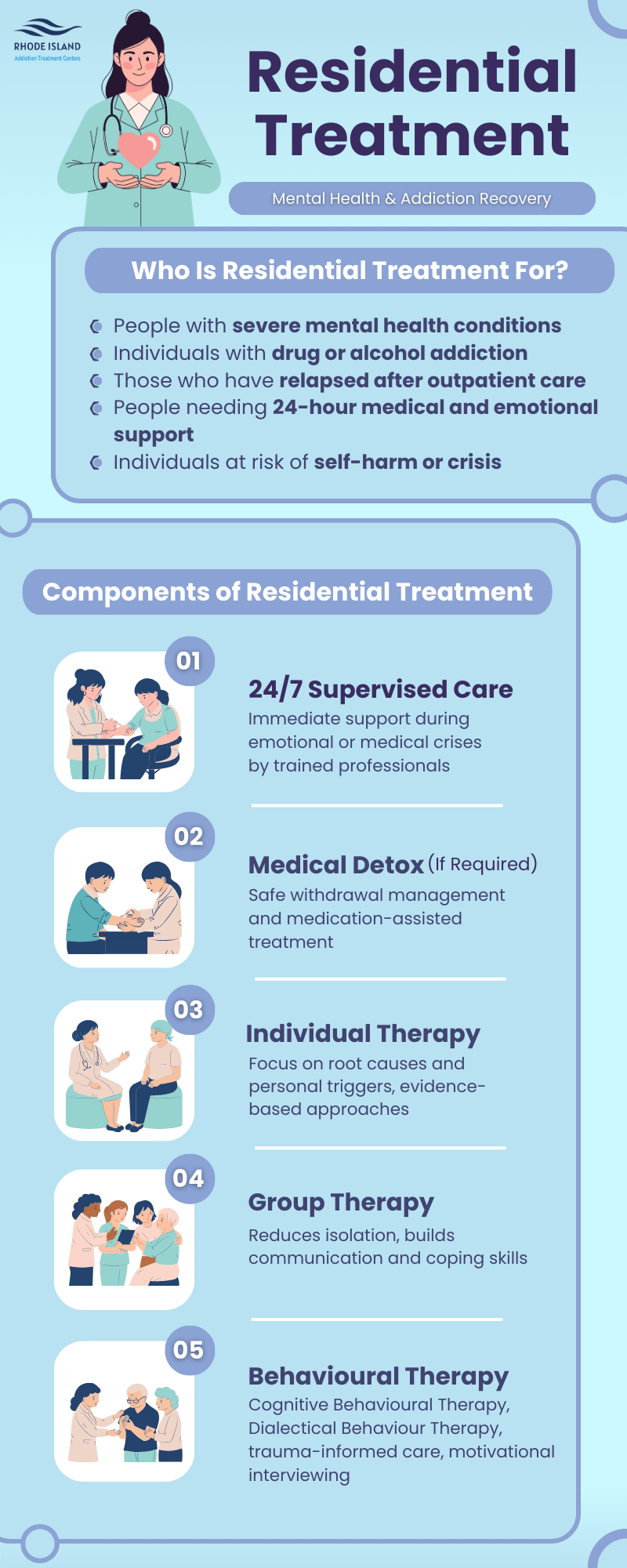
Residential treatment offers structured care where you live at the treatment facility while getting help for addiction.
Rhode Island defines these services as safe, live-in places for people who want to live a sober life, free from drugs and alcohol. You can consider residential treatment if you need more support than outpatient care can offer.
Treatment may include:
- Individual therapy
- Group therapy
- Addiction education
- Coping skills
- Relapse prevention
- Medication management
- Mental health support
- Structured daily activities
Why Choose Residential Treatment?
One benefit of residential care is that you can step away from some of the people, places, and situations connected to your substance use.
Instead of trying to manage recovery while dealing with the same daily triggers, you have a structured environment where you can focus on treatment.
What Is an Intensive Outpatient Program?
An intensive outpatient program (IOP) provides regular addiction treatment while allowing you to continue living at home.
Rhode Island’s Behavioral Health Assessment and Plan recognizes intensive outpatient and partial hospitalization as higher-intensity outpatient services. It states that IOP generally involves more frequent and intensive treatment than standard outpatient care.
Depending on the program, treatment may include:
- Individual counseling
- Group therapy
- Recovery education
- Coping skills
- Relapse prevention
- Treatment planning
- Medication management
Why Choose IOP?
IOP may be a good fit for someone who needs more support than weekly therapy but doesn’t need residential care. It can also be used as a step down from a more intensive level of treatment.
Detox vs. Residential: What’s the Difference?
Detox and residential treatment are sometimes confused because both can involve staying at a treatment facility.
The main difference is what the treatment is designed to accomplish.
- Detox focuses on withdrawal and stabilization
- Residential treatment focuses on ongoing recovery
Detox helps your body recover after you stop using drugs or alcohol. Residential treatment allows you to spend more time working on the behaviors, thoughts, relationships, and other problems related to addiction.
For some people, detox is followed by residential treatment rather than going directly home.
Residential vs. IOP: Which Provides More Structure?
Residential treatment generally provides more structure because you live at the treatment facility. IOP gives you more flexibility because you return home between treatment sessions.
That difference can be important when deciding what type of care you need.
When Might Residential Treatment Be a Good Fit?
- Your home environment does not support your recovery.
- Substance use is seriously affecting your daily life.
- You need support throughout the day.
- You have had trouble staying in recovery without intensive care.
When Might IOP Be a Good Fit?
- You can safely live at home.
- You have some support outside of treatment.
- You need regular treatment but do not need to stay at a residential facility.
- You want to continue working, going to school, or managing family responsibilities.
Detox Vs. IOP Vs. Residential Treatment at a Glance
The simplest way to understand these levels of care is to look at what each one is designed to do.
Level of Care | Main Purpose | Where You Live | Level of Support |
Detox | Manage withdrawal and provide stabilization | Detox facility or home, depending on the program | High support with medical care when needed |
Residential | Provide structured addiction treatment | Treatment facility | High support with structured daily care |
IOP | Continue treatment while living at home | Home | Regular treatment several days a week |
How Do You Know Which Level of Care You Need?
There’s no single checklist that can tell you which program is right for you.
A professional will usually review different angles of your situation before suggesting the level of care you need.
This may include:
- The substances you are using
- How much and how often you use them
- If you have had withdrawal symptoms before
- Your overall physical and mental health
- Past treatments
- Your relapse risks
- Your home environment
- Support from family and friends
- How you manage work, school, and daily tasks
The goal is to look at the bigger picture instead of just how often you use drugs or alcohol.
If you’re not sure where to begin, an assessment can help you figure out what kind of support you need.
Finding the Right Level of Addiction Treatment in Rhode Island
There isn’t one level of addiction treatment that’s right for everyone. Some people may need help managing withdrawal, while others may benefit from residential care or ongoing treatment through an IOP. Your needs can also change as you move through recovery.
If you’re looking for addiction treatment in Rhode Island, Rhode Island Addiction Treatment Centers can help you understand the different levels of care and which may be right for your situation.
Call us today or fill out this form to learn more about treatment options and get the support you need!