8 Aftercare and Alumni Programs: Life After Rehab in Rhode Island
Meta Description
Here are 8 aftercare and alumni programs in Rhode Island, including therapy, recovery support, sober living, and other ways to stay connected after rehab.
Finishing rehab is an important step in your recovery. However, after treatment, you still need to manage everyday life. You might return to work, rebuild relationships, handle stress, or face situations that could lead to substance use. Without the structure of rehab, it can be tough to stay on track.
That’s why aftercare matters!
Aftercare provides support as you adjust to life after treatment. It may include therapy, outpatient care, recovery housing, peer support, alumni programs, and other resources that help you stay connected to your recovery.
Rhode Island offers many recovery services for people who need ongoing support after rehab.
Here are 8 aftercare and alumni programs to consider after your treatment ends,
1. Outpatient Addiction Treatment
Finishing residential rehab doesn’t always mean you’re ready to manage recovery completely on your own. Outpatient treatment can give you ongoing support while you return to work, school, family life, and other responsibilities.
Outpatient programs may include individual therapy, group counseling, relapse prevention, and other recovery services.
For some people, outpatient care provides a gradual transition from intensive treatment to a more independent routine.
2. Intensive Outpatient Programs (IOP)
An intensive outpatient program (IOP) offers more structure than regular outpatient therapy, but lets you stay at home. You will attend treatment several days a week and take part in various services, such as:
- Individual therapy
- Group therapy
- Coping skills
- Relapse prevention
- Treatment planning
IOP helps people who still need regular support after rehab but don’t need to live at a treatment facility. It is considered a step down from more intensive treatment to regular outpatient care.
3. Recovery Support Groups
Recovery can become easier when you have people around you who understand what you’re going through.
Support groups give you a place to talk about challenges, share experiences, and connect with others in recovery. Based on your preferences, this may include 12-step meetings, peer-led recovery groups, or other community-based support.
You don’t have to attend a formal treatment program to benefit from having a recovery community.
4. Alumni Programs
Alumni programs help people stay connected to a treatment center after finishing their program. Instead of ending your ties with the treatment community when you leave rehab, an alumni program lets you stay involved through activities, events, check-ins, and connections with others who have also completed treatment.
This ongoing connection can be very helpful, especially in the first months after rehab. You face new routines, relationship changes, and situations that test the skills you learned during treatment.
An alumni program provides a familiar place to reconnect and shows you that recovery doesn’t have to be a solo journey.
5. Sober Living Homes
Your living environment can greatly affect your recovery. If returning home means being around drugs or alcohol, staying sober can be quite a challenge.
Sober living homes, also known as recovery residences, offer a drug-free and supportive place to live while you work towards becoming more independent.
Rhode Island describes these recovery residences as safe and healthy places that help people recover from alcohol and substance use. Residences offer different levels of support, ranging from peer-based recovery to counseling or medical services.
If someone is not ready to return to their old living situation, recovery housing can offer support and stability during the transition period.
6. Recovery Coaching
Recovery coaching offers support after treatment. It does not replace therapy or clinical care. Instead, a recovery coach helps you set personal recovery goals and deal with everyday challenges.
They assist people who have issues with drugs or alcohol, those who are already in recovery, and those worried about someone else’s substance use.
A recovery coach may help you:
- Set recovery goals
- Stay accountable
- Find community resources
- Build healthier routines
- Work through everyday challenges
- Stay connected to recovery support
This type of peer support can be useful when you want continued encouragement but don’t necessarily need a higher level of clinical treatment.
7. Family Support Services
Recovery affects families, too.
After rehab, family members might still feel hurt, struggle with trust issues, and have trouble communicating or knowing how to support their loved one. Family support services can help everyone understand the recovery process better.
Support may include family therapy, education, or support groups focused on families.
Involving family does not mean they are responsible for keeping someone sober. Instead, it helps create a healthier environment where there is open communication, clear boundaries, and the recovery goals are easier to achieve.
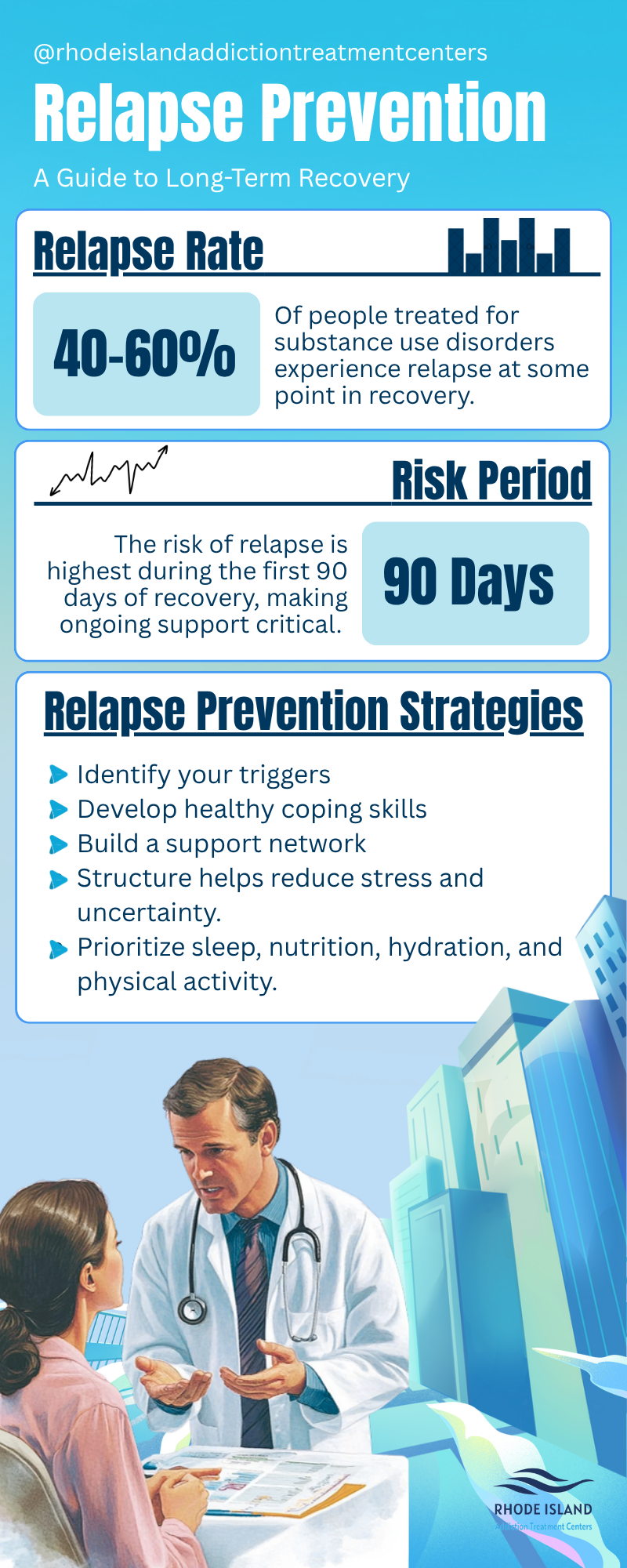
8. Relapse Prevention Planning
Relapse prevention planning is an important part of recovery support.
Its goal is to help you recognize things that might come in the way of your recovery and how you’ll handle them. A good plan includes identifying your triggers, warning signs, coping strategies, and people you can reach out to when you are having a hard time.
A relapse prevention plan may include:
- Things or situations that increase your cravings
- People or places to stay away from
- Healthy ways to handle stress
- Supportive people you can call
- What to do when cravings get strong
- Treatment options or community resources to revisit
If you notice stronger cravings, changes in your routine, or old behaviors returning, reach out for help early. Getting support now can prevent the situation from getting worse.
Aftercare and Alumni Programs at Rhode Island Addiction Treatment Centers
At Rhode Island Addiction Treatment Centers, we know that recovery doesn’t end when treatment does. It continues after it. Life after rehab can bring new challenges, and ongoing support can help you deal with them.
Our team can help you explore aftercare options based on your needs, including continued treatment, recovery support, and strategies for maintaining your progress.
If you’re looking for aftercare and alumni programs in Rhode Island, get in touch with us to learn more about your options and rebuild your life!