
The 5 Stages of Alcohol Rehab Most People Never Hear About
Heavy alcohol consumption can alter your brain chemicals, whose impacts might show in your alertness, judgment, and emotional stability. Therefore, you must seek treatment to overcome this dangerous habit.
You should know that addiction treatment can feel nerve-wracking because it tests your willpower and emotional control. But if you go to a good Rhode Island alcohol rehab to end this problem for good, your journey could be less bumpy.
If you want to overcome this dependence and not let it control your life, let us explain how it all works. This article discusses the stages of Rhode Island alcohol rehab so you can start it well-prepared. Keep reading.
Stages of Rhode Island Alcohol Rehab
According to the 2024 National Survey on Drug Use and Health (NSDUH), almost 228 million people drank alcohol at some point. That’s 84% of the adult population, and even if occasional drinking wouldn’t risk your health, alcoholism is another story.
If you have a torturous image of rehab in your mind where you spend days in a rubber room, hoping to miraculously beat an addiction, let that go. Science-backed Rhode Island alcohol rehab is a practical journey where change happens safely and gradually.
Once you make this good decision, here is how your journey will go:
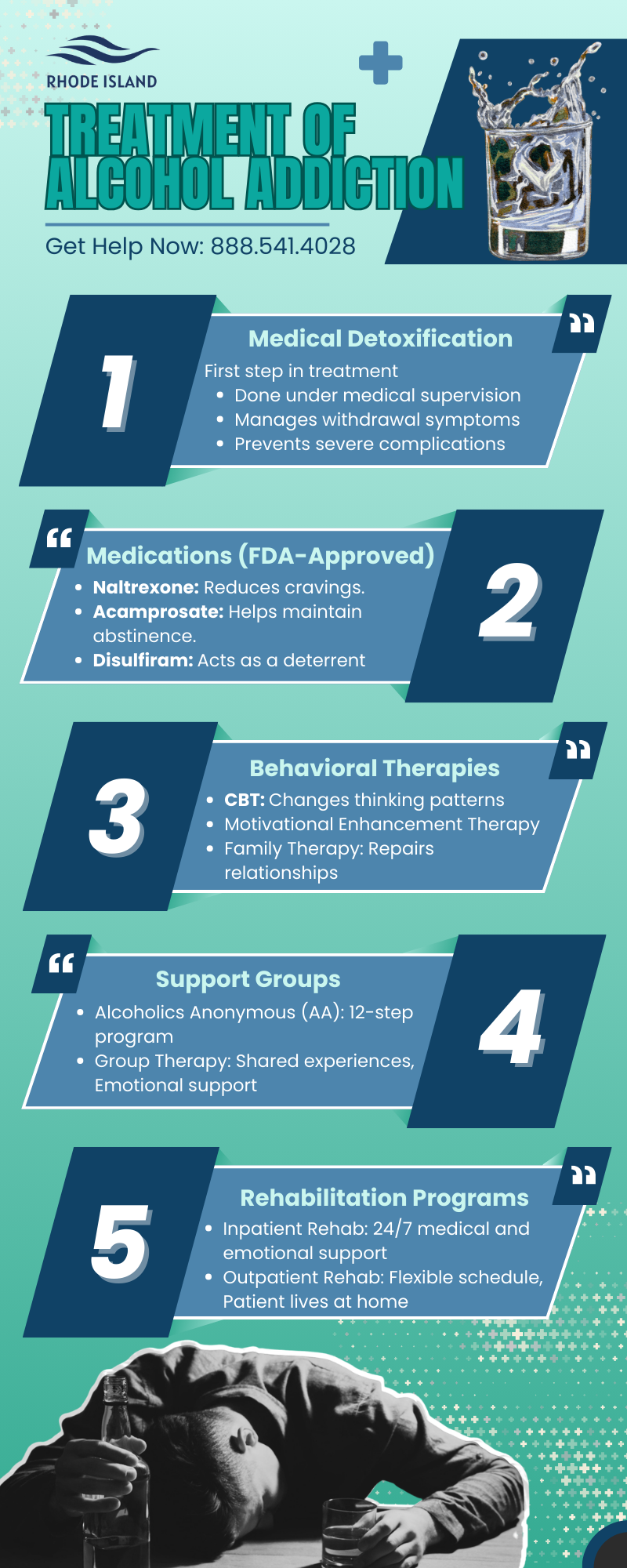
1. Intake and Assessment
An addiction treatment center’s staff needs detailed information on your dependency, history, and patterns. Therefore, when you first visit them, you go through a discussion cum assessment session to share important details. The person talking to you could be a therapist, nurse, or an intake manager, simply feeding your information into the system. Nevertheless, the goal is to let them know how alcoholism has impacted you and how you wish to overcome it.
For example, if you started drinking heavily after a loss (breakup, financial loss, or someone’s death) because it helped you numb the pain, this is important information. Having this know-how will help the center plan your therapies to accommodate your patterns and history. Once this discussion is over, you’ll start your Rhode Island alcohol rehab by checking into a treatment center (if it’s inpatient) or attending sessions (if you follow the outpatient treatment route).
2. Detoxification and Withdrawal Management
Then comes the most overwhelming phase of rehab, where you are to live without alcohol to flush it out of your system. And it’s as hard as it sounds because without completely detoxifying your body, treatment cannot take hold. When a heavy drinker doesn’t consume alcohol for a while, they face physical and psychological symptoms.
On the physical side, you could experience nausea, body aches, intense sweating, and shaking, etc., that can last for up to 2 weeks during Rhode Island alcohol rehab. Then comes the psychological burden of detoxification that disturbs your sleep, might give you anxiety, or impact your thought patterns.
Will this all be overwhelming? For sure. But once you complete the detox phase, the rest of the rehab feels more manageable and gives lasting results.
3. Behavioral Therapy and Counseling
When someone overcomes the draining detox phase during Rhode Island alcohol rehab, the next focus is on their behavioral improvement and counseling. Since addiction causes more than just physical damage, rewiring one’s ability to control their urges and helping them regulate their emotions is crucial.
For this purpose, the experts use individual as well as group therapy sessions for discussions that are profound enough to help bring your inner struggles out. When you’re in one-on-one talks with a therapist, your traumas, personal challenges, and triggers are focused on. Similarly, openly talking about your alcoholism struggles with your peers could give you more clarity on how to cope with the triggers. All in all, these are structured sessions where your recovery is the focus via proven therapies.
4. Relapse Prevention
A complete and successful Rhode Island alcohol rehab could take months of focused efforts. But once you’re out of it and resume your previous routine, the same triggers or environments that pushed you to drink earlier would still be there. Therefore, a core stage of rehab is teaching you to avoid relapse, even when triggers are there.
A beneficial relapse prevention skill is mindful meditation, so you don’t let your mind wander and stay present in the moment. Similarly, having the ability to ground yourself will ensure you don’t spiral or give in to cravings. Therefore, a credible addiction treatment center will dedicate a few days to relapse prevention and aftercare, so you can maintain recovery.
5. Step-Down Care
A rehab is a big commitment, and jumping right out of it could potentially be risky. That’s why experts recommend stepping down to an intensive outpatient treatment or weekly therapy after completing rehab. This way, you continue practising your skills and can discuss your challenges with the therapist.
An intensive outpatient treatment is preferred when you still need regular monitoring and are at a higher risk of relapse. In that case, multiple weekly meetings with the therapist can prevent that risk. On the other hand, if you’re medically stable and can lead a life without major risks or relapse, one therapy session a week will suffice. During these regular touchpoints, the therapist gets to know your progress and can guide your journey from thereon.
Rehab is Not Scary; it’s There to Make Things Better
You might feel overwhelmed because of the rehab initially, but after a few days, your situation will surely improve. Rhode Island Addiction Treatment Centers make these life-changing decisions more manageable for you.
Our rehab plans are meant for real-life situations where other responsibilities are unavoidable. From 24/7 supervision during inpatient rehab to an outpatient treatment where you can manage life and treatment side by side, we can do both.
So if you want to break these shackles and live a life where you’re in control of your actions, call us today and let’s work together.