
Prescription Opioid and Painkiller Detox: Safe Medical Protocols in Pawtucket, RI
It may have started with an injury, surgery, or months of ongoing pain. The medication helped, and you took it as prescribed. But somewhere along the way, things changed. Now, stopping feels difficult, and even thinking about withdrawal can be frightening.
You’re not alone! Almost 4.2% of the residents of Rhode Island have an Opioid Use Disorder (OUD). Many people start taking prescription opioids for pain and don’t expect to become dependent on them.
With the right support, you can safely stop using prescription opioids. This guide explains what medical detox is and where to find help in Pawtucket, RI.
What is Prescription Opioid and Painkiller Detox?
Detox means helping your body get rid of drugs while managing your symptoms. For opioids, like prescription painkillers such as oxycodone and hydrocodone, it is safest to detox with medical support. Withdrawal is usually not life-threatening, but it can be very uncomfortable. Trying to go through it alone often leads people to start using again. Medical support reduces the risks and makes symptoms easier to manage.
If you take an opioid medication prescribed by your doctor, don’t stop taking it suddenly on your own. Talk to your doctor or another medical professional first to make a safe plan.
What Opioid Withdrawal Feels Like?
Withdrawal happens when your body has gotten used to an opioid and then goes without it. For many short-acting painkillers, symptoms can begin within about 8 to 24 hours after the last dose. Early on, it often feels like a bad case of the flu.
You may experience:
- Muscle aches
- Sweating
- Runny nose
- Yawning
- Trouble sleeping
- Anxiety
Symptoms often get stronger over the first few days, then slowly ease over the following days and weeks.
How long it lasts and how hard it feels depends on the opioid, how long and how much you took, your overall health, and your mental health. Some people also have lingering low mood or poor sleep for weeks afterward.
What Safe Medical Protocols Look Like?
Medical protocols simply mean a careful, step-by-step plan guided by trained professionals. A safe plan puts your health first and your comfort close behind.
Every plan at Rhode Island Addiction Treatment Centers is different, but safe care usually includes these steps:
1. A Full Assessment
A therapist asks about your health history, what you take, how much, and for how long. They also ask about alcohol or other substances, since mixing them can raise risks. This helps the team match the plan to you.
2. Careful Monitoring
During withdrawal, our team checks your symptoms and vital signs and watches for problems such as dehydration. Having someone monitor how you’re feeling and how your body is responding helps keep you safe and makes the process less stressful and frightening.
3. Comfort Care
Medications and support can help with symptoms like nausea, body aches, restlessness, and trouble sleeping. A medical professional will decide what is best for you. Never take medications for withdrawal without first talking to a doctor!
4. Medication for Opioid Use Disorder
For some people, medications such as buprenorphine or methadone can reduce withdrawal symptoms and cravings. They are part of an evidence-based approach to recovery. Whether they’re right for you is a decision made with a licensed medical professional, based on your health and your goals.
5. Mental Health Support
Anxiety, low mood, and trouble sleeping are common during and after withdrawal. Therapy and emotional support can help you deal with these feelings and address any mental health issues you had before. You can also learn about our program for co-occurring disorders.
Why Quitting Alone Can Backfire?
Going cold turkey at home can feel like the simplest choice, but it often backfires!
- Symptoms Can Push You Back to Using: When withdrawal feels unbearable, going back to the pills can seem like the only way out.
- Your Tolerance Drops. After a few days without opioids, your body can’t handle your old dose. Returning to it can lead to an overdose. Our guide to Fentanyl Overdose Risks and Narcan Access Across Rhode Island explains why this matters.
- Mixing Substances Adds Risk: Alcohol or benzodiazepines can make withdrawal harder and more dangerous.
If you or someone near you has severe withdrawal symptoms or is in danger, call 911 right away!
Detox Is the First Step, Not the Whole Plan
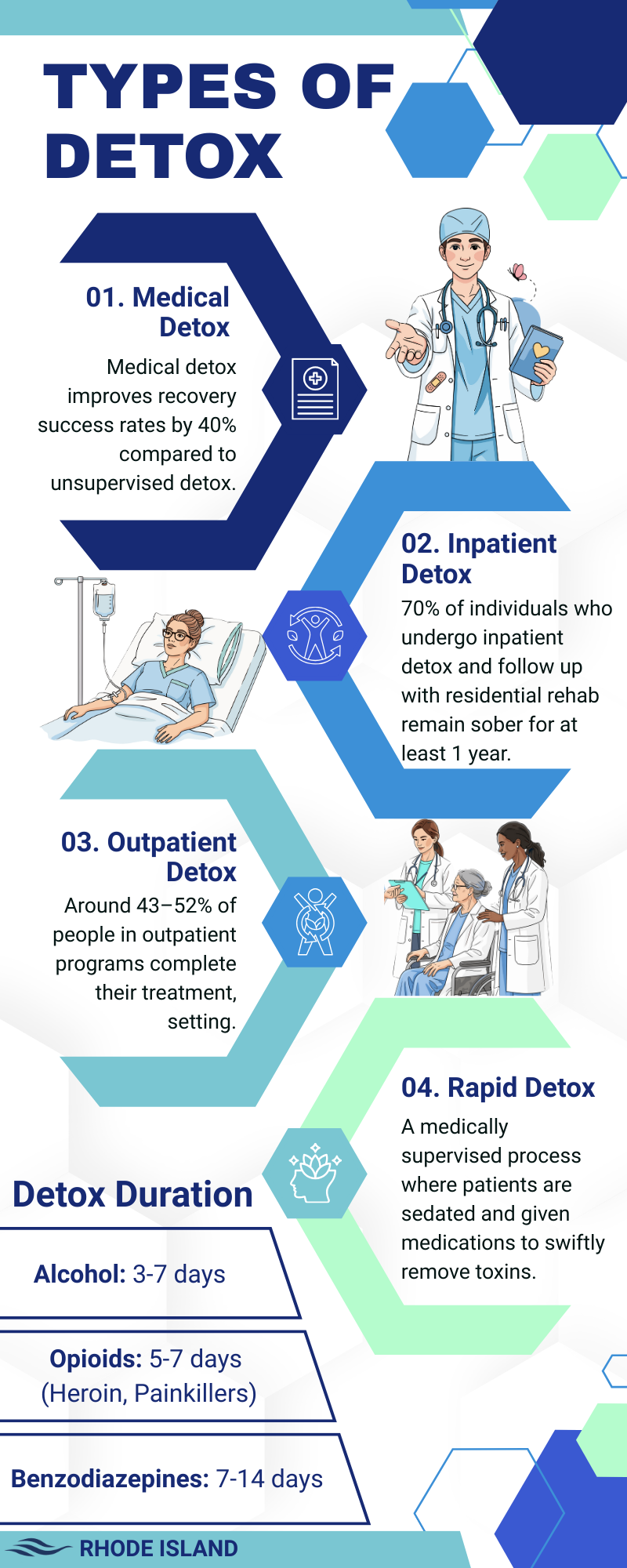
Detox helps your body cope with withdrawal symptoms, but it does not explain why you became dependent or how to stay healthy afterward. That’s why detox is most effective as the first step in a longer recovery plan.
Ongoing care usually includes therapy, relapse-prevention skills, and regular support.
At Rhode Island Addiction Treatment Centers, outpatient treatment includes approaches such as Cognitive Behavioral Therapy (CBT) and Dialectical Behavior Therapy (DBT), plus care for anxiety, depression, and other mental health needs alongside addiction.
We offer men’s and women’s programs, too. If alcohol is also an issue, our guide to the First 48 Hours of Alcohol Detox in Rhode Island may help.
Having a plan for what comes after detox can make recovery easier to keep going.
Before You Stop, Talk to Someone First
Stopping opioids is a medical decision, and it needs a plan. A short, private call can help you understand your options and find a safer way forward before you change anything.
Our center is in Warwick, and we welcome people from Pawtucket, Providence, and communities across Rhode Island.
Asking questions doesn’t commit you to anything. You can ask what to expect from your first visit, how to start safely, and what your insurance covers. It simply gives you information and support from people who understand.
Feeling better starts with a plan, and a plan starts with a call! Make the call today and take the first safe step toward feeling like yourself again.
Read Next: Discreet Outpatient Addiction Treatment for Working Professionals in Cranston, RI