
Discreet Outpatient Addiction Treatment for Working Professionals in Cranston, RI
At work, you’re the one people count on. You meet deadlines, lead meetings, and handle whatever comes your way. But outside of work, you know something needs to change. Maybe drinking or drug use has become a bigger part of your life than you would like, and you’re tired of trying to keep it hidden.
The fear of being found out stops many professionals from getting help. If that sounds like you, you’re not the only one!
This guide explains how discreet outpatient addiction treatment can work around a busy career in Cranston, RI, so you can get support without putting everything else on hold.
What Discreet Really Means?
When people ask for discreet treatment, they usually mean a few simple things:
- Your treatment records are private.
- You decide who to tell, and when.
- There’s no overnight stay, so no long absence that people notice.
- And appointments can fit around your day instead of taking it over.
No treatment center can guarantee that no one will find out about your information, so be cautious of anyone who claims they can. A good center will explain how it keeps your information safe and help you make informed choices.
When you call a provider, ask how they manage records, billing, phone calls, and appointment reminders. Our team is here to guide you through our process.
Why Outpatient Fits a Working Schedule?
Many professionals worry that getting help means stepping away from everything. Outpatient care is designed so that you don’t have to!
In outpatient treatment, you live at home and keep your normal routines. You can still get to work, pick up the kids, and be there for your family. Treatment is built around your schedule instead of replacing it.
Outpatient care can also come in different levels of intensity. Some people need a few sessions a week, while others need more support at the start, which becomes less as they make progress.
What Does Outpatient Treatment Include?
Every plan is different, but outpatient treatment at Rhode Island Addiction Treatment Centers generally includes:
- An assessment to understand your history and goals
- One-on-one therapy with a trained therapist
- Group sessions where you meet others who understand
- Skills-based therapy, such as cognitive behavioral therapy (CBT) and dialectical behavior therapy (DBT)
- Care for anxiety, depression, or other mental health needs alongside addiction
- Medication support when it’s right for you
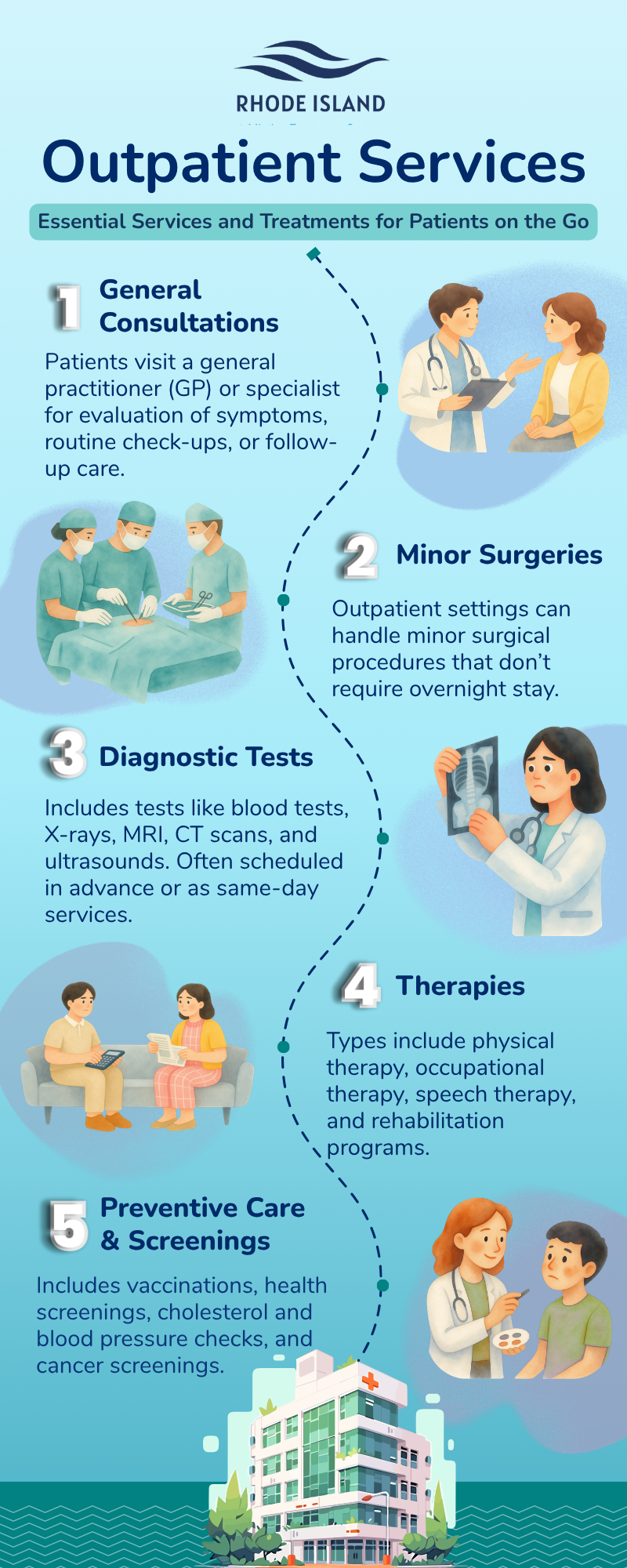
Your first step is usually an assessment. A clinician asks about your health, your substance use, your work, and your goals. This isn’t a test, and there are no wrong answers. It simply helps the team build a plan that fits your life and decide which level of care makes sense for you.
Your plan is built around you, not around a one-size-fits-all program, and it can change as you make progress. If mental health is part of what you’re facing, you can read about our co-occurring disorders program.
5 Ways Treatment Can Fit Around Your Job
1. A Schedule that Works with Yours
Ask about morning, evening, or flexible appointment times. Finding a schedule that works for you makes it easier to stick with it. And sticking with it is what makes the biggest difference!
2. You Choose Who to Tell
No one at work has to know unless you decide to share. Some people tell a manager or a trusted coworker. Others tell no one. It’s your call.
3. Time-off Options
Some workers have the right to medical leave or workplace support when they get treatment. The rules depend on your employer and your situation, so it’s worth talking with your HR department or a legal resource. You don’t have to share more than you choose to.
4. Staying Sharp at Work
The skills you learn in therapy are made for real life. You can try them in a tense meeting, on a long day, or when stress hits. Then you tell us what worked, and what didn’t, in your next session.
5. A Plan for Travel and Busy Schedules
Tell your team about work trips, deadlines, and busy stretches ahead of time. They can help you plan around them, so a big project doesn’t pull you off track.
Signs Outpatient May Be a Good Fit
Outpatient treatment may be a good fit if:
- You’re still able to function at work most days
- You have a safe, stable place to live
- You want help but can’t step away from your job or family
- Your substance use isn’t causing dangerous withdrawal symptoms or safety risks
These aren’t hard-and-fast rules, but they can help you decide whether it’s time to seek support. If most of these symptoms sound familiar, you should definitely consider outpatient treatment. Even if only a few apply, talking with a treatment provider can help you understand your options and decide what to do next.
We Are Close to Cranston
Our center is in Warwick, just a short drive from Cranston and about 10 minutes from Providence. For many professionals, that makes treatment easy to fit around the workday. You can also call first and ask about the best times to come in.
Getting started is simple. Call, share a little about your situation, and our team will explain the next steps, including how to check your insurance and when you can come in for an assessment.
Start Quietly, On Your Terms
The first step doesn’t have to be a big one. It can be a private phone call where you ask questions, learn how treatment can fit around your work schedule, and explore your options. You don’t have to commit to treatment right away or involve anyone else before you’re ready.
Reach out to our team in Warwick to talk about the support available and how we can help.
You’ve spent a lot of time taking care of work and other responsibilities. Now it’s time to take care of yourself.
Make the call today!
Read Next: Cannabis Use Disorder and Mental Health: When Weed Becomes a Problem in South Kingstown, RI