
How to Stage an Intervention for a Family Member Struggling With Addiction in Rhode Island
Watching a loved one getting consumed by addictive substances and not being able to beat this habit is excruciatingly painful. You want this person to realize how they’re ruining their life, but they can’t because of the strong chokehold these substances have on them. Slowly, you also stop asking them to stop and have to accept the bitter reality that this person you dearly love has a serious addiction problem.
But we believe that these harmful patterns can always be interrupted and fixed. If you’re consistent and compassionate, you can intervene in a loved one’s addiction patterns and make them see the reality. This guide will walk you through the steps of staging an intervention that can ultimately convince them to seek help. Don’t give up just yet; let’s find a solution.
How to Stage an Intervention for Someone Who Is Addicted?
Addictive substances and alcohol can blur one’s perception and sense of reality. While they might feel these things are ‘bad’ for them, they can’t stop because of the temporary euphoria they bring. If someone close to you is in this loop, here are some steps you can follow to stage an intervention that can potentially save their life:
Professional Advice First
Even with the best intentions, a poorly planned intervention can push your loved one further away. Therefore, long before staging the meeting, you should talk to an addiction counselor or a doctor to understand how this journey works.
They’ll look at the substance the patient is consuming, their addiction history, and they’ll also inquire about their mental health before forming an opinion. From there, the expert can tell you whether a group meeting is smart or a gentler approach will work better.
This consultation is more crucial if your loved one has been violent or feels no sense of joy, because these indicate a deeper issue. You can also ask this expert to be a part of the supposed meeting, but only after the close people have made their point. A neutral voice in the room keeps things on track when emotions run high.
Choose Your People
We all have people who make us feel judged, supported, or ridiculed. And more often than not, all these varieties exist in our close circles. Hence, the group planning an intervention should only include those who don’t make the patient feel less or weak.
3-6 people they truly love and respect are enough. For instance, the group can include a parent, sibling, spouse, or a close friend. Having them there shows this conversation comes from love. If someone else from the close circle also uses substances, leave them out because their presence will weaken the message. Also, people who lose their temper quickly or give in under pressure should stay out, too.
Besides choosing the people, deciding the place of intervention is also important. We recommend choosing a familiar place, like the family home, so they feel safe rather than trapped. Then, plan your meeting when they’re most likely to be sober and avoid festivals, weddings, or the day after a big fight.
Have Their Potential Treatment Plan Ready
When your loved one agrees to get help, that willingness may not last if they have to wait days for a treatment plan. That’s why everything should be arranged before the intervention begins. You should find a program, like an inpatient rehab or an intensive outpatient program, that treats their addiction and call ahead to confirm if the center can take them in.
Another thing you must understand is that suddenly stopping drinking or taking alcohol can be physically dangerous for a person. That’s why the treatment program you choose should include a medically supervised detox to ensure their safety.
Prepare Impact Statements
Your words of encouragement matter more than you realize, especially when someone is already feeling vulnerable. So once you explain how you want them to seek help instead of continuing this destructive pattern, share some positive words. Since the people in this intervention group deeply care about them, their words will have a profound impact.
An impact statement is a short note each person reads aloud, and it has three parts. Start with something you love about them, so they feel valued before hearing anything difficult. Then describe one specific moment their addiction hurt you, calmly and without blame. End with a clear request that they accept treatment today.
And while it’ll feel bitter, each person should also decide on a consequence if they refuse treatment. For instance, you can hint at stopping financial support or asking them to move out. But only choose one you’ll follow through on, so this meeting doesn’t go in vain.
Be Calm and Prepared to be Initially Shunned
And last but not least, someone who is dependent on substances won’t agree to addiction treatment right away. Some of the common initial reactions in these situations are anger, denial, and blame, which you should be ready to absorb. No matter how they respond, your core group should be ready to handle it.
For instance, one person can explain why everyone is there and guide who speaks next. Then, others read their statements in turn and avoid side arguments. Keep your tone gentle and stick to the facts. Shouting, insults, or digging up old problems will only push them away.
Also, if things get too heated, stop and try another day, because this is a huge decision. We also encourage family members to keep trying because many people agree to treatment once they’ve had time to think about what they heard.
Don’t Leave Them Alone
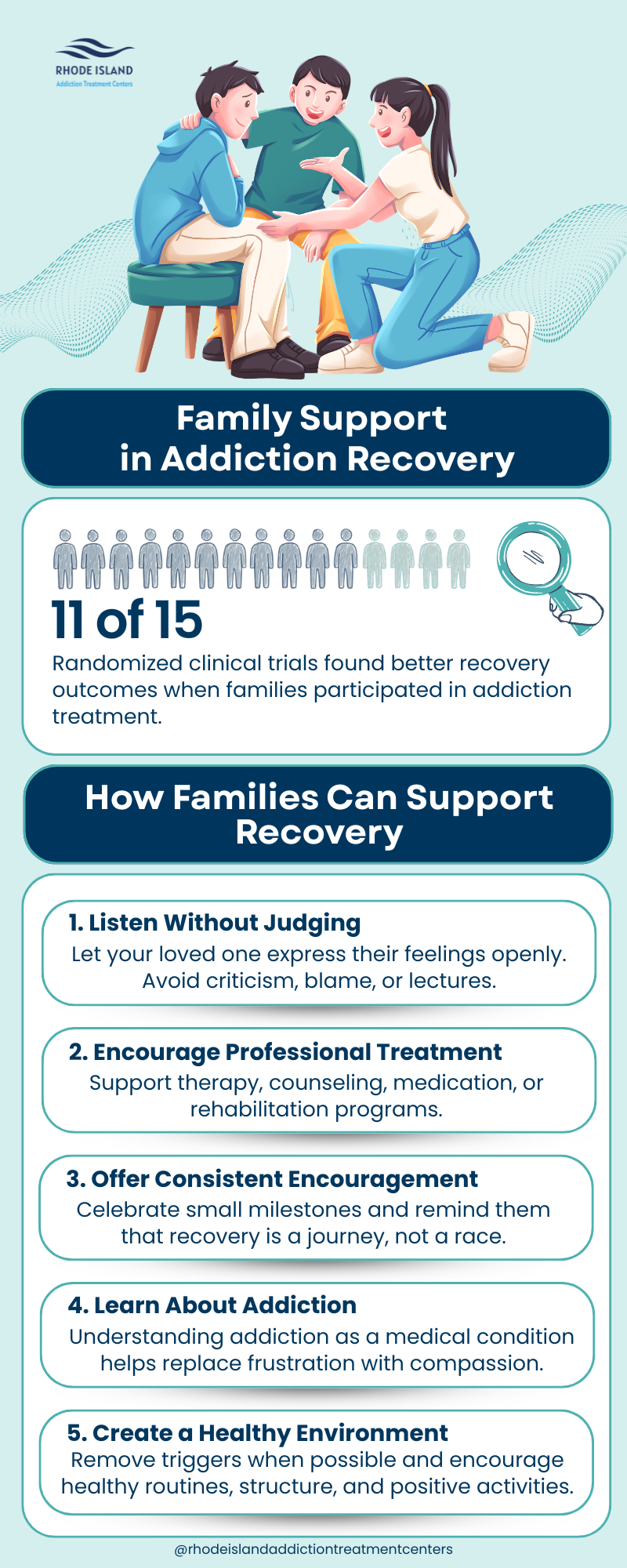
Addiction can weaken one’s self-control, and they can’t break this cycle even if they want to. That’s why Rhode Island Addiction Treatment Centers want families and friends to understand that these situations call for consistency and patience. If you know that someone needs help, don’t leave them alone. Help them out of this dark phase by making a plan and motivating them to act on it. You got this!
Read Next: Prescription Opioid and Painkiller Detox: Safe Medical Protocols in Pawtucket, RI