
Aftercare Planning for Addiction Recovery Rhode Island
David Sheff watched his son Nic complete treatment. Then relapse. Then complete treatment again. Then relapse again. The cycle that Beautiful Boy depicts in both the book and the movie isn’t about a family that didn’t put in enough effort. It tells the tale of what occurs when treatment is discontinued, and nothing organized takes its place.
It’s also more prevalent than most people would like to acknowledge. Studies show that up to 80% of adults and teenagers who have completed a rehab program return to using drugs and alcohol. That number doesn’t mean treatment failed. It means that for most people, treatment alone was never going to be enough.
Aftercare planning isn’t a formality at the end of a program. It’s the part of treatment that has to survive contact with real life. For Rhode Islanders, that distinction matters more than most discharge conversations acknowledge.
What is Substance Abuse Aftercare Planning?
Aftercare planning isn’t a generic packet of hotlines and meeting addresses handed to you on your way out the door. It starts on day one of treatment and is built specifically for the life you are returning to.
A real plan delivers a concrete, localized setup:
- Confirmed Appointments: Therapy appointments already on your calendar, not a list of numbers to dial.
- Active Connections: Direct connections to peer support networks rather than merely listing resources for assistance.
- Personalized Crisis Protocol: A safety strategy tailored to your specific Rhode Island neighborhood, not a generic national hotline.
Recoveries most often fall apart quietly in the space between what aftercare looks like on paper and what it looks like in practice. Clinical work done in treatment can be real, deep, and truly transformative. Still, it cannot survive the return home if there is nothing waiting on the other side to reinforce it.
Navigating the 5 Cs of Lasting Recovery
Recovery after treatment isn’t one problem. It’s five, and they tend to arrive at the same time.
1. Craving
It is the body asking for something it was trained to expect. It neither asks in a courteous manner nor does it react well to logic.
You can fight cravings with physiological tools like breathwork, movement, and grounding techniques thanks to the aftercare plan.
2. Compulsion
When cravings get loud enough, individuals persistently seek drugs. Where craving is a pull, compulsion is a push.
Understanding the difference matters because the interventions are different.
Compulsion is where you have to map out and plan around behavioral triggers in advance, not respond to them in the moment.
3. Consequences
They are the reason most people sought treatment in the first place. In aftercare, consequences take on a different role. They become a reference point.
A reminder of what was at stake that can be returned to when the reasons for staying sober start to feel abstract.
4. Control
Control, or the loss of it, is the thing addiction is most honest about. One of the most useful things a good aftercare plan does is help people build genuine agency in their lives again: stable housing, employment, legal resolution, and relationships.
Control doesn’t come from willpower. It comes from circumstances that make it possible.
1. Craving
It is the body asking for something it was trained to expect. It neither asks in a courteous manner nor does it react well to logic.
You can fight cravings with physiological tools like breathwork, movement, and grounding techniques thanks to the aftercare plan.
2. Compulsion
When cravings get loud enough, individuals persistently seek drugs. Where craving is a pull, compulsion is a push.
Understanding the difference matters because the interventions are different.
Compulsion is where you have to map out and plan around behavioral triggers in advance, not respond to them in the moment.
3. Consequences
They are the reason most people sought treatment in the first place. In aftercare, consequences take on a different role. They become a reference point.
A reminder of what was at stake that can be returned to when the reasons for staying sober start to feel abstract.
4. Control
Control, or the loss of it, is the thing addiction is most honest about. One of the most useful things a good aftercare plan does is help people build genuine agency in their lives again: stable housing, employment, legal resolution, and relationships.
Control doesn’t come from willpower. It comes from circumstances that make it possible.
5. Coping
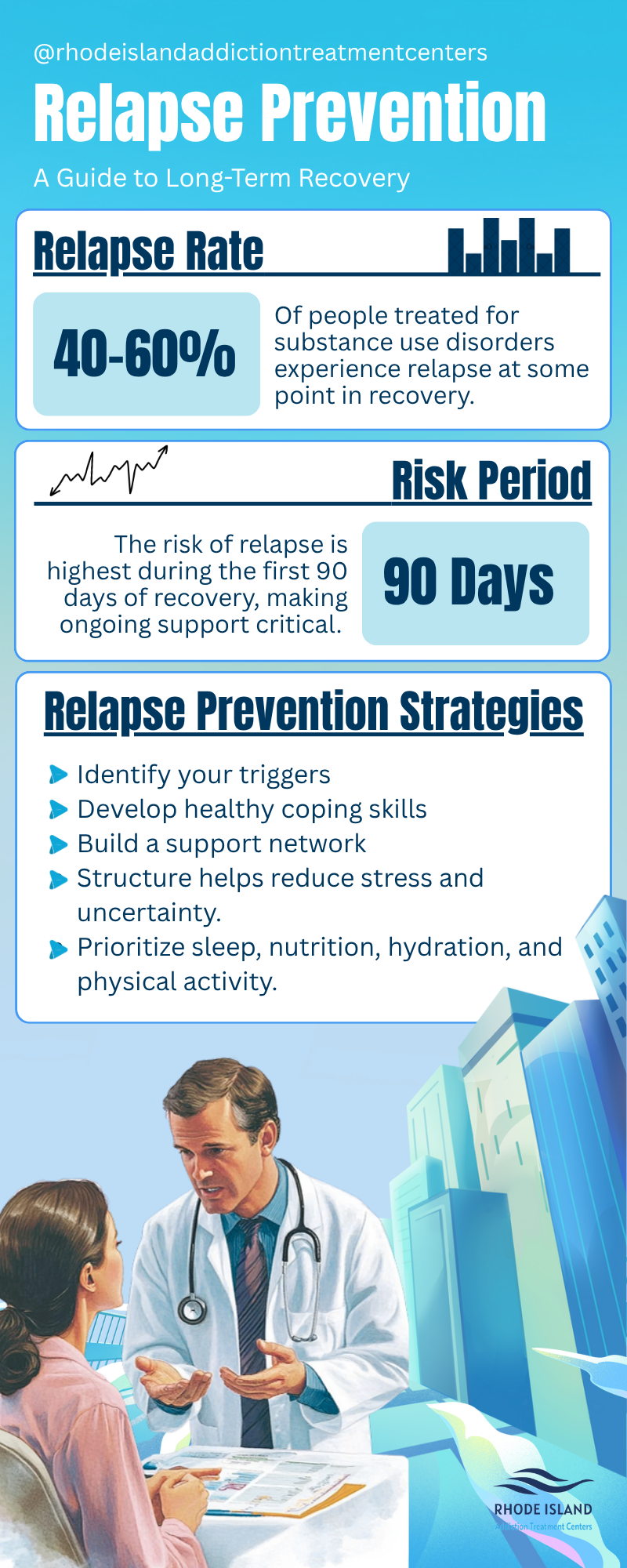
It determines whether the other four stay manageable. The therapeutic work done during treatment builds a coping toolkit. That toolkit is tested, sharpened, and added to in the real world during aftercare.
Coping skills are then maintained through ongoing therapy, peer support, and crisis planning when life puts pressure on you.
The 12-Step Program: Structure When There’s Nothing Else Holding the Day Together
Early recovery has a time problem. Treatment filled your hours with purpose, routine, and people. Life after treatment often doesn’t, at least not right away. That vacuum is one of the most underestimated relapse triggers there is.
This is one of the things the 12-step model quietly solves. Alcoholics Anonymous and Narcotics Anonymous aren’t just support groups; they are a physical anchor for the calendar.
However, the structure is just the container. The actual work inside that container requires a radical internal shift: surrender. For many, the true crux of the program begins when they admit they can no longer manage life on their own terms.
Showing up to a meeting on Tuesday evening or sitting down for coffee with a sponsor on Thursday morning shows that the client is actively surrendering the isolated ego that kept them sick and handing control over to a community.
The Journal of Addictive Diseases found that people who attend AA meetings exhibit abstinence rates twice as high as those who don’t attend.
That gap isn’t explained by the schedule alone. It’s explained by what happens when you combine consistent structure with the core of the steps: unflinching self-honesty, making amends for past wreckage, and breaking isolation.
It builds a place where your honest experience of recovery is understood without explanation.
The 12-step model also isn’t for everyone, and a good aftercare plan acknowledges that honestly. SMART Recovery and other non-12-step peer support options exist for people who want the community without the framework.
What a Real Aftercare Plan Addresses Beyond Sobriety
Clinical recovery and life stability are not the same thing, and treating them as though they are is one of the most reliable ways an aftercare plan fails.
Unsecured Living
Housing instability is one of the strongest predictors of treatment dropout and relapse. Your client cannot consistently apply coping strategies when they don’t know where they are sleeping.
Serious aftercare plans in Rhode Island ensure active coordination with housing assistance programs while the person is still in treatment.
Job Loss and Unemployment
Employment readiness matters for the same reason. Rhode Island’s unemployment rate is 4.5%, and a 2021 study found a direct correlation between drug overdoses and deaths in the state. Work provides us with routine, identity, and purpose.
So, an aftercare plan that doesn’t take this into account has a big hole in the framework.
Ongoing Legal Challenges
Legal support is clinical support for people dealing with pending judicial issues, court dates, probation requirements, and charges related to their substance use.
The anxiety about upcoming court dates doesn’t take a break for therapy. Addressing them as part of the aftercare process addresses serious relapse triggers that deserve active attention, not administrative afterthoughts.
Final Words
You don’t have to wait until everything is falling apart to ask for help. You don’t need to have the language for what’s been happening or know what level of care you need. That’s what the first conversation is for.
Rhode Island Addiction Treatment Centers builds aftercare planning into treatment from day one. Not as a handout at discharge, but as a living part of the clinical process. We verify your benefits before any commitment is made and help you understand what a real plan for your specific situation can look like. Call us at 888.541.4028 or visit us online to book your first consultation!