
Addiction Treatment for Young Adults and College Students Near URI and Providence Campuses
New friendships, independence, and opportunities come with college. But there can be difficulties from academic pressure and social expectations.
Some students use alcohol or drugs to cope with stress or to numb bad feelings.
What starts as occasional experimentation can have an impact on students ‘ grades, relationships, finances, and mental health.
It is important to identify these patterns as soon as possible so that students can receive help.
Educating young adults about the options for addiction treatment is an essential first step for the youth near the University of Rhode Island (URI) and Providence campuses.
Substance Use among College Students: What the Statistics Show
Underage drinking is still a prominent issue in the United States today at the college level.
According to the National Institute on Alcohol Abuse and Alcoholism (NIAAA), in 2024, 46.6% of 18- to 25-year-old full-time college students admitted to consuming alcohol over the past month.
In addition, 26.7% reported experiences of binge drinking and 14.5% met the criteria for alcohol use disorder.
There’s also a need to consider the risks associated with drugs.
These figures strongly point to the need for timely intervention and treatment.
Why Young Adults May Develop Substance Use Problems
Students attending college frequently have to juggle work, studies, relationships, and money concerns. Some resort to drugs to control these pressures.
These problems may be caused by any of the following:
- Academic stress: Exams and deadlines can cause more anxiety.
- Social pressure: Students might feel that they should drink or try something.
- Routine change: When you move away from home you may lose familiar supports.
- Anxiety, depression, and trauma can impact substance use.
If a student is using the same substance repeatedly, has developed a dependence on the substance, and struggles to stop using it, these behaviors should be addressed, even if they are happening while the student is in class.
Also Read: Navigating Court-Ordered Rehab and Legal Substance Abuse Programs in Rhode Island
Recognizing When a Student Needs Addiction Treatment
Symptoms may be low grades, attendance issues, difficulty paying bills, and withdrawal from friends and family.
Other concerns include:
- Using drugs or alcohol to cope with normal stress.
- Repeated attempts to stop and failure to do so.
- Having cravings or withdrawal symptoms.
- Failure to fulfill duties due to drug abuse.
- Keeping going through health and relationship issues.
Students don’t have to be in crisis to get professional assistance. Early assessment helps to identify concerns and provide support.
Local College Life Around URI and Providence
Rhode Island’s college communities offer different student experiences.
Kingston is about 30 miles south of Providence on the main campus of the University of Rhode Island. It has a historic campus core that has been added to the National Register of Historic Places.
Regular visits to the Memorial Union and the surrounding Kingston Village are made by the students.
In Providence, Brown University and the Rhode Island School of Design are located around College Hill.
Other popular walkways for students include Thayer Street and historic Benefit Street.
URI’s Rhode Island Nursing Education Center at 350 Eddy Street provides another university presence in Providence.
Treatment should take into account academic schedules, transportation, and living arrangements for students in these areas.
Overcoming Barriers to Addiction Treatment for College Students
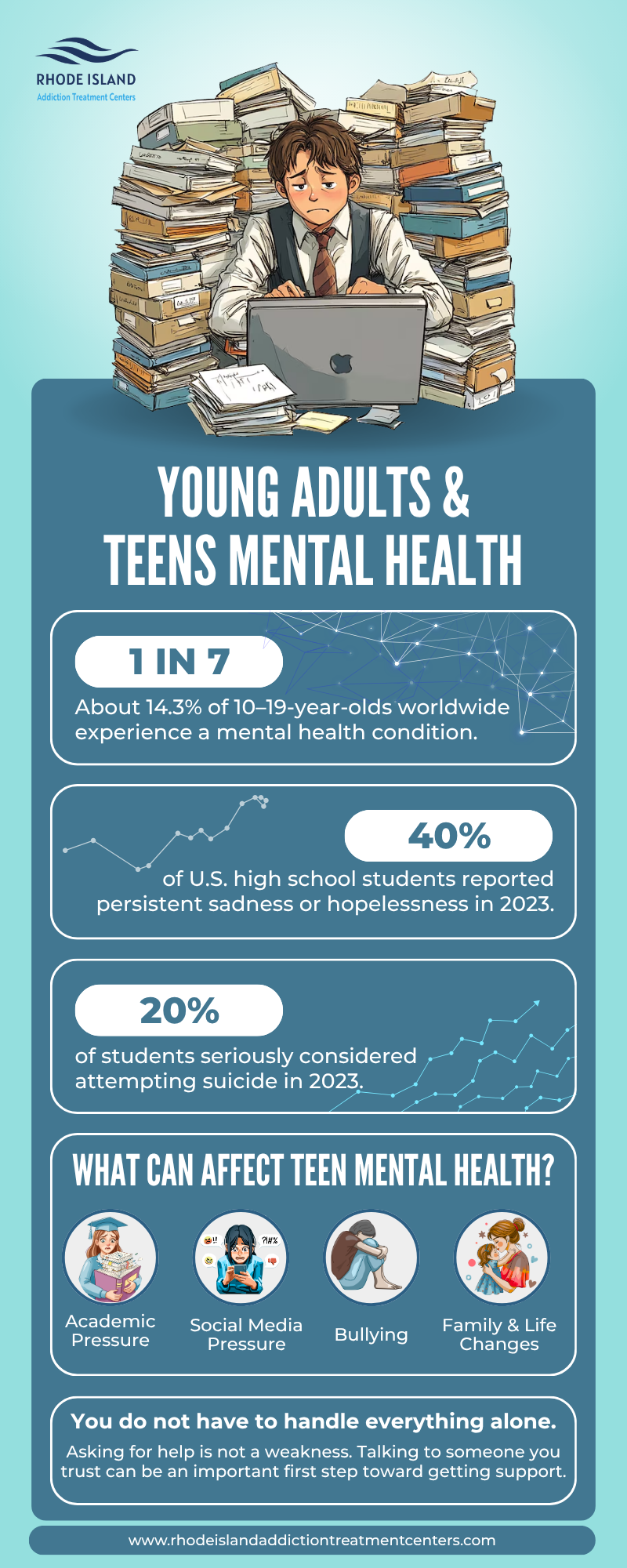
Fears of judgment, disruption, or disappointment to family members often cause many students to put off treatment.
There can also be financial issues and travel barriers to accessing assistance.
But looking for help doesn’t mean you have to abandon your education and/or your goals.
Flexible outpatient services might be able to help eligible students manage recovery and college.
When it is necessary for a student to miss class due to treatment, they may also visit campus counselling resources and discuss academic accommodations.
Addiction Treatment Options for College Students
A professional evaluation can be used to decide on the level of care.
Outpatient Treatment
Outpatient programs are for students who are able to attend treatment sessions and stay in their home or student housing.
Intensive Outpatient Programs (IOP)
IOP provides more frequent therapy and recovery support. Students participate in multiple sessions per week and have some daily responsibilities.
Residential Treatment
Residential treatment provides a highly structured setting with intensive support for those who require constant supervision and intensive support.
Medical Detox
Other chemicals can have serious withdrawal effects. Professional monitoring will be provided at medical detox.
Regular users of alcohol or some drugs should always consult a doctor before making sudden quitting attempts.
Treating Mental Health alongside Addiction
Addiction and mental health issues may co-occur.
Alcohol and drugs are used by some students to cope with anxiety, depression, and/or emotional distress.
But these symptoms can become more severe if substance use continues.
Integrated treatment incorporates strategies to address both concerns, including cognitive behavioral therapy, coping strategies, and relapse prevention.
Helping Students Take the First Step Toward Recovery
Treatment can be daunting when students are concerned about their academic performance or how their families will respond.
Providing non-judgmental and supportive discussions can motivate them to seek professional assistance.
Families and individuals can learn more about substance use treatment and the kinds of treatment available at Rhode Island Addiction Treatment Centers.
When looking at programs, you should inquire about the program schedule, treatment intensity, mental health support, and continuing education options.
Students may consult with their colleges regarding academic accommodations, too.
Building a Healthier Future Beyond College
Substance use issues do not need to take over or define a young person’s college experience or future.
Students can identify and change unhealthy patterns and restore stability with appropriate treatment.
If you or a loved one is having difficulties near the URI or Providence area, check out the substance use resources that are available at Rhode Island Addiction Treatment Centers.
Recovery can start with one conversation and one step to getting help.