
Veterans Addiction and PTSD Treatment in Rhode Island: TRICARE-Accepted Care
Many veterans experience PTSD and addiction as interconnected struggles rather than separate battles. Together, they can become a tangled mess. Trauma causes pain. Pain creates urgency to escape. That attempt to escape can create a new problem. Suddenly, you’re confronting two adversaries at once, often unsure which deserves your attention first. You’ve already demonstrated tremendous strength. But you don’t have to fight this battle alone.
Rhode Island addiction treatment center maintains an expanding network of evidence-based treatment programs specifically designed to address this interconnected challenge. Unlike standard addiction treatment centers, Rhode Island offers integrated PTSD and substance use treatment, recognizing military culture and honoring your service experience.
Additionally, TRICARE covers these services, which may help reduce financial barriers to accessing treatment and genuine healing opportunities for veterans.
This blog shows you where to find real care, how TRICARE works in Rhode Island, what integrated treatment looks like, and what step you can take this week. Recovery isn’t about willpower or toughness; it’s about getting the right tools and finding people who genuinely understand your journey and what you’ve actually been through.
Can Veterans Get Treatment for PTSD and Addiction at the Same Time?
Yes, absolutely. Rhode Island’s Veterans’ Addiction and PTSD Treatment programs apply integrated approaches addressing both conditions occurring together at the same time. PTSD can develop after experiencing or witnessing combat, serious accidents, assault, or other life-threatening events.
Substance use can occur alongside PTSD as someone tries to cope with difficult emotions, sleep problems, intrusive memories that won’t go away, and constant anxiety from the trauma they went through.
Why Treating Both Conditions Matters
If you only treat substance use, trauma stays untouched underneath. But if you focus only on PTSD and ignore drugs or alcohol, recovery gets way harder. Both conditions need to be treated together.
The VA’s National Center for PTSD gets it: veterans with both PTSD and substance use can benefit from evidence-based trauma-focused treatment. They’re clear that having one condition shouldn’t stop you from getting treatment for the other one too.
Based on what an assessment shows, Veterans Addiction and PTSD Treatment in Rhode Island might include individual therapy, group counseling, medication management, substance treatment, trauma-focused therapy, and ongoing recovery support.
What Does TRICARE Cover for Addiction and Mental Health Treatment?
One of the biggest questions veterans and military families ask is whether insurance actually covers treatment. TRICARE usually covers drug and alcohol care if a doctor says you truly need it. They also help pay for recovery medications, opioid treatment, and regular counseling sessions to support your mental health.
For veterans dealing with both addiction and PTSD, insurance coverage often stretches far past basic weekly therapy. The exact type of care you receive depends on what medical professionals say you need and the fine print of your specific TRICARE policy.
What About PTSD Therapy?
TRICARE provides coverage for individual and group therapy sessions, psychological evaluations, and prescribed medications integrated within treatment plans. For PTSD treatment, it acknowledges evidence-based approaches, including CPT, EMDR, and PE specifically. When selecting rehab, verify whether the facility has experience treating PTSD and substance use disorders concurrently simultaneously and together.
What Kinds of Veterans Addiction Treatment Are Available in Rhode Island?
Treatment intensity varies significantly because every veteran’s situation differs. Rhode Island treatment options span weekly outpatient counseling to comprehensive intensive programs based on individual symptoms, substance use history, safety considerations, and daily functioning capacity levels.
Detox & Withdrawal Management:
Medical detox helps with the brutal withdrawal symptoms that happen when someone stops drinking alcohol, opioids, or other drugs. Detoxification is among the services TRICARE may cover for substance use, although coverage limits and authorisation requirements may apply.
Intensive Outpatient Treatment
An intensive outpatient program, or IOP, lets you get structured help while continuing to live at home. It usually involves attending several therapy sessions each week, working on relapse prevention, and getting solid mental health backing.
Residential Treatment
If someone needs a higher level of structure, TRICARE also pays for residential rehab where you stay on-site for addiction treatment. You will need to get approval ahead of time, and whether you qualify depends on your specific medical situation and the plan’s rules.
Medication-Assisted Treatment
MAT (Medication-Assisted Treatment) mixes FDA-approved medicines with counseling and behavioral support to help people support recovery from substance use disorders. TRICARE covers some eligible MAT services, including certain treatments for opioid addiction and opioid use disorder specifically.
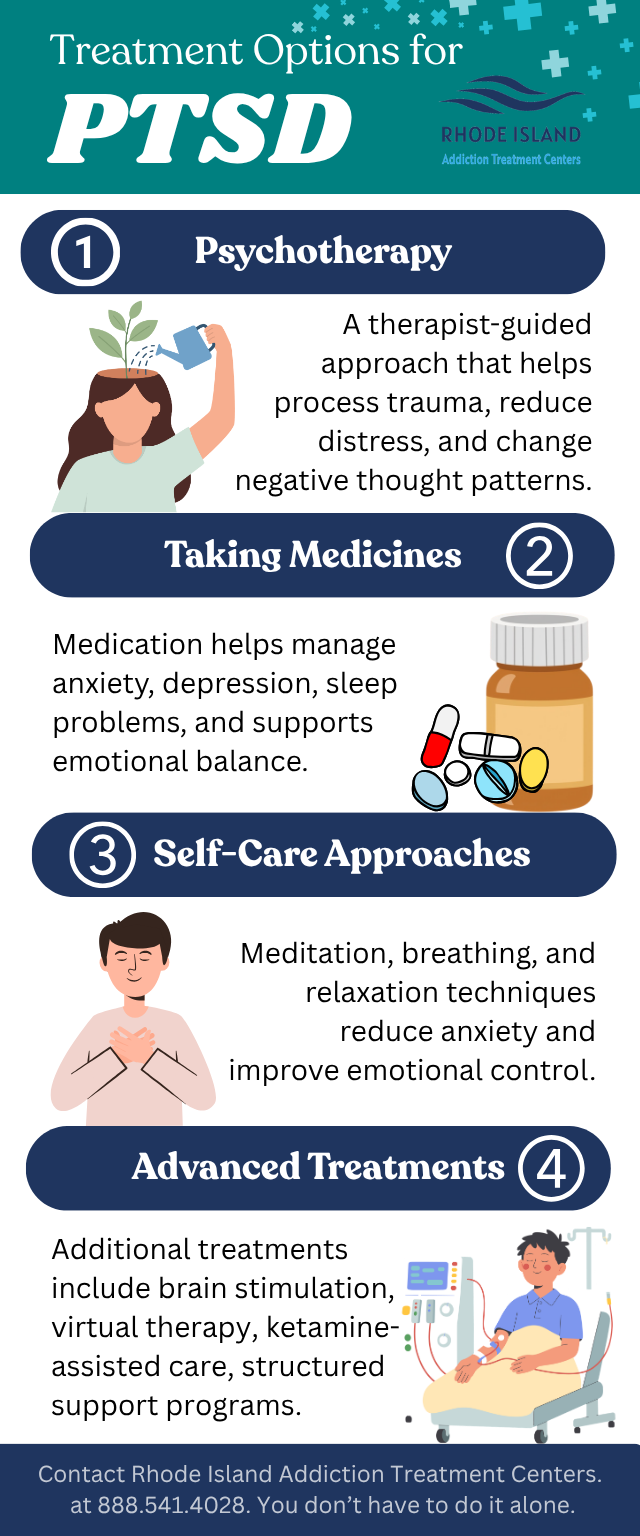
A good treatment plan for veterans with PTSD and substance use disorders in Rhode Island should start with a proper assessment. Every veteran’s situation is different, so some may need detox or residential care, while others may do well with outpatient treatment and regular support.
How Do Veterans Start Recovery in Rhode Island?
Starting treatment doesn’t mean you have to jump straight into staying at a residential facility. A veteran can start with a simple evaluation to discuss their symptoms, substance use, and treatment needs.
Start with a vet center assessment.
If you are currently receiving VA healthcare, discuss your PTSD or substance use concerns. Discuss your PTSD or substance use concerns with your doctor or mental health provider, and they’ll direct you toward appropriate treatment resources.
If you are new to the VA system, The Providence VA Medical Center and Providence Vet Center can explain your available treatment options comprehensively and can explain your available options, ranging from outpatient services to residential treatment programs. Vet Centre counsellors can also provide referrals to additional support services when needed.
Recovery After the Initial Treatment
Recovery continues after detox ends. Ongoing counseling, relapse-prevention plans, peer support, and regular check-ins help veterans stay on track and maintain their progress. The VA also provides substance-use follow-up care for veterans. For additional help with housing, employment, family counseling, or questions about benefits, the Providence Vet Center connects you with VA and community resources available.
Final Words!
Veterans facing PTSD and substance use can access treatment ranging from detox and outpatient care to residential treatment, trauma therapy, and ongoing support. TRICARE may cover many medically necessary services, depending on the plan. A proper assessment helps determine the right level of care.
At Rhode Island Addiction Treatment Centers, we understand that recovery involves more than treating addiction. Our goal is to provide compassionate, evidence-based care that considers trauma, substance use, and the challenges veterans may face after service.
If you or a veteran you care about is ready to explore treatment, contact us today to learn about available programs, TRICARE coverage, and the next steps toward recovery.
Read Next: First Responder Substance Abuse Treatment in Rhode Island: Confidential and Peer-Informed