
Drug Rehab in Providence That Accepts Medicaid: What to Know
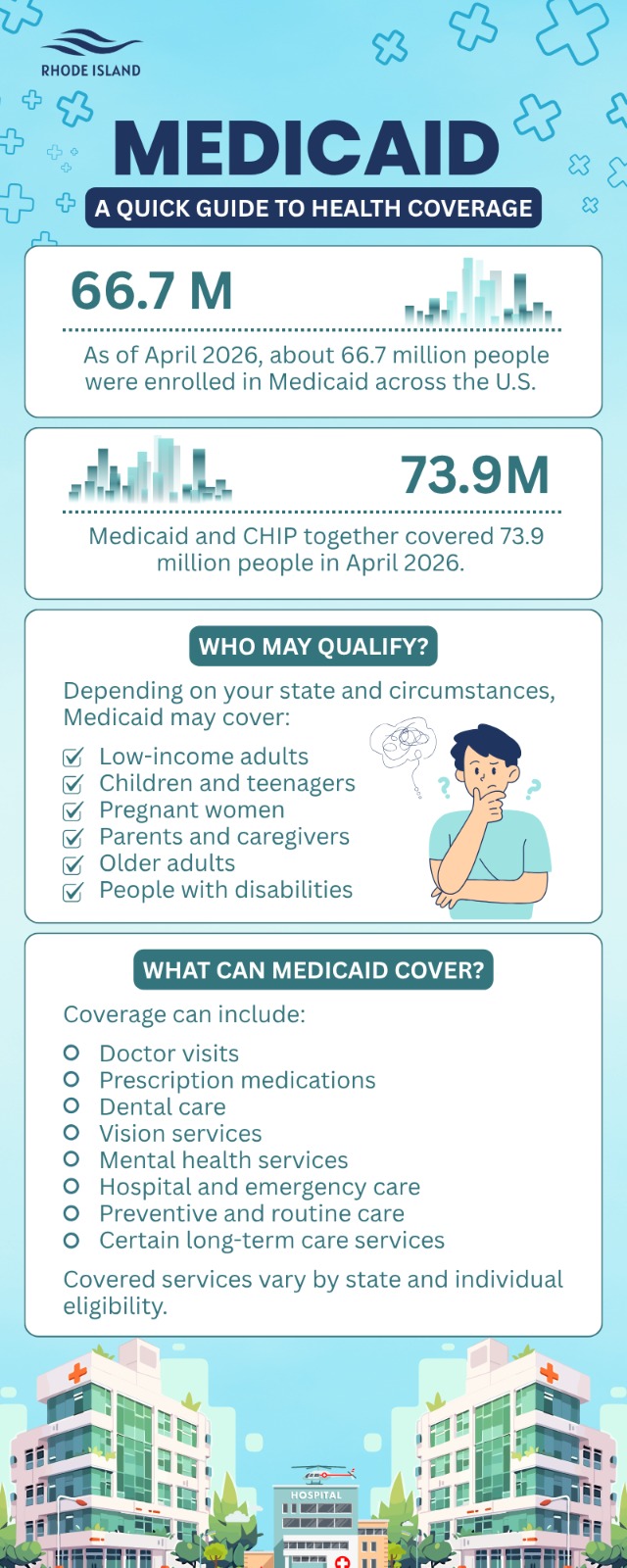
Medicaid is among the most widely used state funding resources for drug and alcohol rehab. Low-income individuals and those with no or insufficient private health insurance can rely on it for rehab if eligible.
However, since Medicaid is administered at the state level, its coverage and eligibility will vary. For example, a drug rehab in Providence that accepts Medicaid might have a lower income threshold for eligibility than in Massachusetts. Hence, the patient should understand the main things about its coverage to avoid ambiguity.
Although the exact dollar amount your Medicaid insurance covers for rehab depends on your specific situation, some factors are similar across all states. Keep reading to learn some facts about Medicaid drug rehab in Providence, RI.
Things to Know About Medicaid Drug Rehab in Providence, RI
Sure, Medicaid has helped millions receive treatment for substance use disorder (SUD) and aims to support even more people, but terms and conditions always apply. It’s a government-backed program for low-income individuals with certain parameters to decide their eligibility and benefits.
So once you find drug rehab in Providence that accepts Medicaid, here are some standard facts you’ll come across:
Medicaid Covers Addiction Treatment
It’s a misconception that Medicaid treats drug addiction as a lesser priority and deals with it in a bare-minimum way. However, as per the Mental Health Parity and Addiction Equity Act (MHPAEA), Medicaid is required to cover drug rehab on par with other treatments.
Moreover, substance use disorder is classified as a medical condition under the state’s Medicaid program and stands on the same footing as diabetes or a heart condition. For a patient, this means they won’t have to fight for addiction treatment while being on Medicaid; it’s built into their plan already.
A drug rehab in Providence that accepts Medicaid will hence offer a full range of care, including inpatient stays for serious conditions and outpatient treatment for moderate addictions. Your treatment center will also offer ongoing support through individual and group counselling with licensed therapists under Medicaid benefits. However, know that the exact services you’ll avail will depend on your diagnosis and treatment plan.
Outpatient Care Comes First
Suppose there are two patients dealing with opioid addiction. One patient’s condition requires a full-time hospital stay because they need constant supervision; it’ll be called inpatient rehab. On the other hand, the second patient visits the treatment facility for regular treatment sessions but doesn’t stay there; it means they are following an intensive outpatient program (IOP).
With the distinction aside, Medicaid prefers IOP because it requires you to attend therapy sessions several times a week while living at home and managing daily responsibilities.
Do you wonder why Medicaid prioritizes IOP? Well, it’s all about the costs. Since residential care requires staff, beds, meals, and round-the-clock care, it’s far more expensive to fund. Because of this strenuous routine, the insurer has to reimburse a higher dollar amount, and nobody wants that. Hence, a drug rehab in Providence that accepts Medicaid will prefer IOP because it’ll go lighter on their pocket.
Medication-Assisted Treatment is a Required Benefit
Medication-assisted treatment (MAT) pairs medicines with counseling and evidence-based therapies to fight addiction. Its benefits are usually two-fold because while the meds manage withdrawal symptoms and cravings, counseling focuses on your behavioral side. As a result, you can work on addiction’s root cause as well as its impact on your day-to-day life.
Luckily, any drug rehab in Providence that accepts Medicaid supports MAT to ensure patients have important medicine without a hefty medical bill. The common medicines covered by Medicaid are FDA-approved, including methadone, buprenorphine-naloxone (commonly known as Suboxone), and naltrexone, among many others.
Sliding Scale Option Helps Fill Coverage Gaps
Each state sets income thresholds to determine people’s eligibility for Medicaid, and, naturally, not everyone qualifies. More importantly, even if a person/family qualifies for that low-income status, they might encounter gaps, such as an application under review or a service that their plan doesn’t cover. When this is the case, a drug rehab in Providence that accepts Medicaid might use a sliding fee scale to cover such gaps.
Here is how it works:
The addiction treatment facility checks a patient’s income and household size to set a fee using a percentage of their income rather than a fixed fee. It means that someone earning less pays less for healthcare under Medicaid, and vice versa.
This model differs from the standard approach, in which a rate is set, and every patient is charged the same amount regardless of what they can afford. Luckily, several Providence facilities use this model so a pending Medicaid application or a coverage shortfall doesn’t stop your drug rehab.
Prior Authorization May Apply
Medicaid requires proof that a certain treatment is necessary for a patient’s condition before paying for it, and that process is called prior authorization. When the treatment is for an addiction, the doctor will submit documents to show why a certain service is needed for your current situation and that Medicaid must approve it for reimbursement later.
While not for all, this requirement does apply to certain addiction treatment programs in Rhode Island as well. For example, outpatient and day treatment services require prior authorization once a patient has completed 30 sessions in a calendar year. If they remain below that threshold, no approval is needed; otherwise, the provider must justify the necessity to be reimbursed by Medicaid.
You Can Get Through It
If the money is tight and an addictive substance has held you down, there is still hope. Programs like Medicaid and helpful places like Rhode Island Addiction Treatment Centers see your battles and want you to win. So, don’t consider these challenges a failure and ask for help from the right places; you’ll always find it. If you need further guidance on health insurance coverage for rehab, let’s have a quick call and clear up any doubts.