
Alcohol Detox in Rhode Island: What to Expect in the First 72 Hours
People often assume that they can quit drinking alcohol whenever they want, and while it’s somewhat true for occasional drinkers, the truth for heavy drinkers is different. If you drink frequently and have been doing it for a long time, removing all traces of alcohol from your body and ensuring it causes no trouble is a whole process.
That’s why addiction experts recommend that you complete alcohol detox under medical supervision. Speaking of it, detox is the initial phase of treating any addiction during which your brain and body adjust to that particular thing’s absence. Surely, that period is uncomfortable and even painful if the addiction has deep roots.
However, with medical supervision, you can get through that initial big hurdle and meet your sobriety goals. This article focuses on what to expect from alcohol detox so you don’t get any surprises; keep reading and start this journey with full clarity.
How Does Alcohol Affect Your Brain and Body?
Although alcohol is legal and isn’t controlled in most parts of the world, it’s still a drug whose dependence develops pretty quickly. Since alcohol has a depressant effect, it makes you feel relaxed, slower, and even tired.
It does so by enhancing the calming effect of a neurotransmitter called GABA, whose inherent role is to make you feel relaxed and good. If you stop drinking, you’re met with withdrawal symptoms, such as:
- Anxiety
- Insomnia
- Nausea
- Shakiness
- Excessive sweating
- Increased heart rate
- Headaches
- Higher body temperature
- Confusion
What to Expect in the First 72 Hours of Alcohol Detox?
Alcohol detox is different for everybody because it depends on one’s drinking pattern, history, and other health conditions. For instance, if a 30-year-old physically healthy person (who drinks heavily) undergoes detox, their body will likely react differently from someone in their 50s with decades of alcohol addiction.
But in general, here is what to expect from the first 72 hours of alcohol detox in Rhode Island:
Stage 1
Withdrawal is the body’s reaction to losing a substance it has adapted to. Because alcohol slows the nervous system, the brain compensates by speeding up to stay balanced. So after the last drink wears off, nothing slows that extra speed down, and the first symptoms appear 6-12 hours after the final drink.
Your body will likely feel uneasy; there are random headaches and stomach aches. Also, there is nausea that kills your appetite, and you feel extra anxious, which then disturbs your sleep. Notably, many people mistake this for a hangover, but a hangover eases after a few hours. Alcohol detox, however, brings consistent withdrawal symptoms. This stage is the first sign that detox has started and that you need medical support.
Stage 2
By the second day, your nervous system is running at a much higher pitch than normal. As we discussed earlier, alcohol is used to strengthen the brain’s calming signals, and when it’s not in the picture, those signals stay low.
Such imbalance inevitably disrupts the brain’s electrical activity, which then raises your heart rate and body temperature. The most common symptoms at this point include hand trembling and increased sweating because your nervous system is undergoing something new.
It’s also worth mentioning that some people even see or hear things that are not there during this stage of detox. Sometimes these hallucinations can begin as early as twelve hours in. Plus, seizures are also possible, with the highest risk being within the first 48 hours.
Since seizures are alarming and need proper care, one shouldn’t stay at home if they have a strong history of alcoholism. In a detox facility, doctors can give medication that lowers the risk before it turns into an emergency.
Stage 3
The third window is the most dangerous in alcohol detox because most symptoms peak at this time. Here are some challenges to expect:
- Fever and heavy sweating
- Racing heartbeat and high blood pressure
- Confusion and loss of orientation
- Agitation with vivid hallucinations
Another issue some recovering alcoholics face towards the end of their 72-hour period is Delirium tremens, known as DTs. It is the severe form of withdrawal that causes a sudden change in awareness and mental state. DTs mostly show up between 48 and 96 hours after the last drink, and since it is life-threatening, it needs emergency care.
If there is a history of heavy drinking, earlier DTs, or poor liver function, the risk is even higher. Therefore, medical teams continuously track vital signs to provide fluids and medication around the clock during this period.
Stage 4
Now we’re past the crucial 72-hour mark, and the body has finally begun to accept this new normal. Your nervous system slowly recalibrates to working without alcohol, and the extreme signals start to fade.
Here are some other differences you’ll possibly experience if the above 3 stages went well:
- Reduced sweating
- Steadier heartbeat
- Milder tremors
- Exhaustion instead of agitation
However, this change will not be drastic; your sleep, appetite, and mood will still be unsettled, and the cravings won’t go away either. But if you’re consistent, most of these issues continue to ease over the next 4-7 days, even though low mood and poor sleep can still linger for weeks.
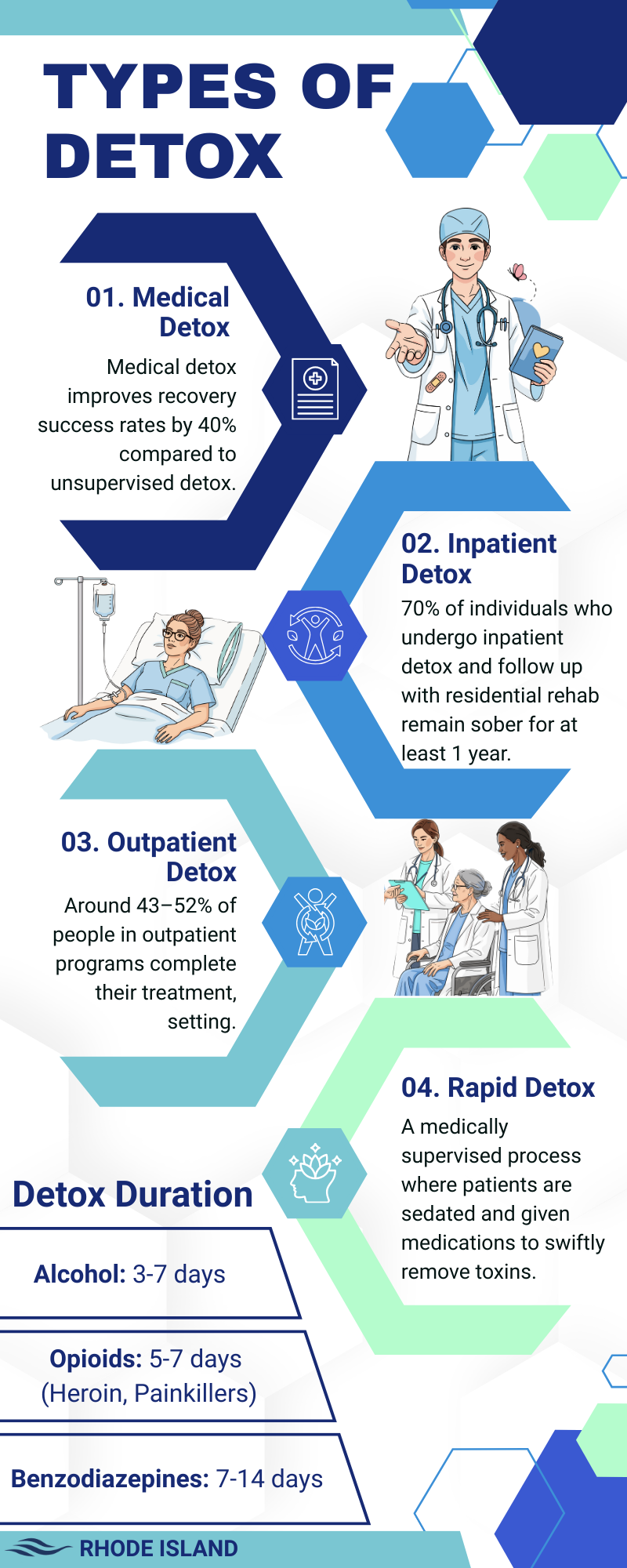
Also, the recovering person is weak and dehydrated at this point, so the addiction treatment center continues to monitor them. This is also the point where the experts decide how to carry forward your treatment because detox only clears the body and does not treat the addiction itself.
Depending on your health and withdrawal intensity, you might be recommended for inpatient rehab, partial hospitalization, or an intensive outpatient program.
Things Will Only Get Better From Here
Yes, quitting alcohol and living a sober life is one of the hardest things you’ll ever do, but it’s all worth it. These things only deteriorate your physical and mental health, so decide now, and your future self will be proud. Reach Rhode Island Addiction Treatment Centers at 888-541-4028 and let’s get you out of this for good.
Also Read: Kratom Addiction in Rhode Island: Risks, Withdrawal, and Treatment Options