Kratom Addiction in Rhode Island: Risks, Withdrawal, and Treatment Options
Kratom addiction often develops from products you consider safe or non-addictive. This particular substance is made from a plant and is then presented to you in many forms, i.e., teas, liquid extracts, capsules.
However, unlike other drugs, there’s some confusion regarding Kratom because some assume it’s completely safe and doesn’t make you dependent. Today, we’ll clarify this aspect and also discuss how Kratom might harm your health. Keep reading and don’t risk your well-being.
What is Kratom?
Kratom is a tropical tree, called Mitragyna speciosa, that grows in Southeast Asia, mainly Thailand, Indonesia, and Malaysia. It belongs to the coffee family, and people have chewed its leaves for generations to boost energy during long work hours.
However, recently, this plant has made its way to the US, where its products are being sold as powder, capsules, tea, and liquid extracts.
If taken in small amounts, Kratom works as a stimulant, and people consume it to manage their anxiety or for an energy boost. However, according to Yale Medicine, when a person consumes Kratom in larger quantities and for a long time, its effect reverses, and it now operates as a sedative.
Naturally, the shift from a (relatively) safer stimulant to a sedative poses multiple health risks and must be checked. Following its increasing use in the US, the FDA considers it unapproved and adulterated. But despite not having an approval stamp from the FDA, this drug is being sold and is making people addicted.
How Does Kratom Addiction Work?
Kratom’s main active compounds are mitragynine and 7-hydroxymitragynine. They attach to mu-opioid receptors, the same receptors that opioid drugs target, and reduce pain signals. Eventually, the user experiences a feeling of calm or euphoria. Moreover, Kratom interacts with your adrenergic receptors.
Adrenergic receptors are proteins on cells that respond to the body’s main alertness and stress chemicals. They are present in the brain, heart, and blood vessels. Once activated, these receptors raise heart rate and increase alertness.
The liver also converts some mitragynine into 7-hydroxymitragynine, a stronger compound that binds to opioid receptors more powerfully. If a person continues using Kratom, their brain adapts to this constant stimulation, which then results in addiction.
Kratom Addiction Withdrawal and Health Risks
Even though Kratom producers and sellers claim it’s a safe plant, stopping its consumption results in uncomfortable withdrawal, just like any other illicit drug. Sure, using it in small and occasional doses wouldn’t trigger withdrawal, but if it’s a part of one’s life, the risks will be serious.
If you stop using Kratom, here are some withdrawal symptoms that’ll immediately follow:
- Muscle aches
- Restless legs
- Poor sleep
- Irritability and anxiety
- Nausea and diarrhea
- Cravings
- Constipation
- Nausea and dizziness
- Fast heart rate
- Tolerance and dependence
Luckily, most of these symptoms begin 12 to 48 hours after the last dose and peak around the second or third day. If you stay strong, most physical symptoms ease in 7-10 days. However, your mood changes, sleep disturbance, and cravings can last several weeks longer.
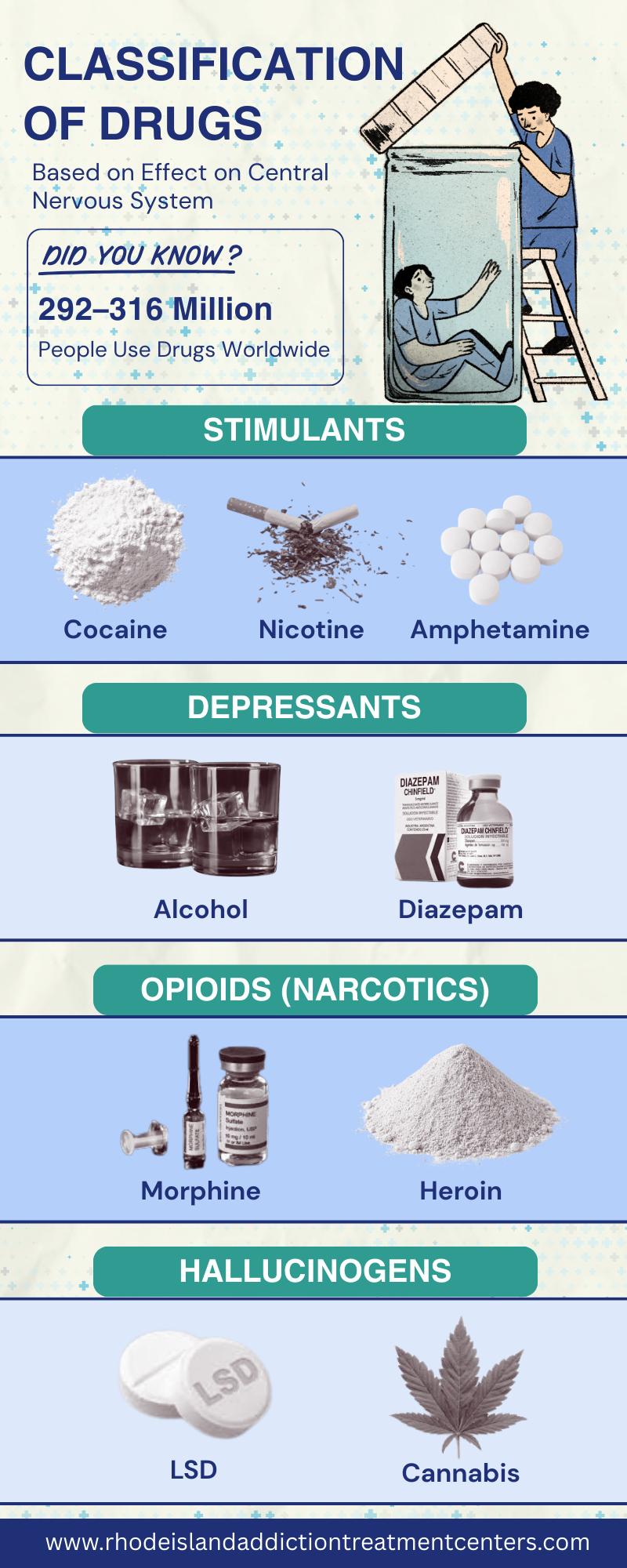
Another risk surrounding Kratom addiction is mixing it with other drugs, because that compounds the danger. For example, alcohol, opioids, benzodiazepines, and gabapentin all slow the central nervous system. If you use Kratom along with any of these, it will add to that effect, and you may experience heavy sedation, slowed breathing, and overdose.
How is Kratom Addiction Treated in Rhode Island?
Luckily, Kratom addiction is not severe in the US, and treatment centers don’t put you in inpatient rehab for it. But this drug can still be a threat, and here are the treatment options used in Rhode Island to fight it:
Outpatient Treatment
Outpatient treatment is another name for scattered visits to the treatment center, sometimes up to 3 times a week. Most of your visits last for 1-2 hours, during which you receive expert-led counselling. You get to discuss with the expert why you started using kratom and what triggers your cravings.
Sometimes your outpatient visits also mean check-ins with a doctor or nurse who tracks your withdrawal symptoms and health. Notably, this flexible model often runs for a few months, and its schedule can change as you progress. Because the time commitment is small, you can keep working or going to school. Needless to say, this option fits people with mild to moderate dependence and works best when your home life is stable.
Intensive Outpatient Program (IOP)
An intensive outpatient program (IOP) sits between outpatient care and a rehab stay in a facility. This schedule makes you spend far more time at the treatment center than regular therapy, but you still return home at night. Ideally, you take 3-5 weekly IOP sessions, with each session being 3 hours.
Depending on the treatment facility, your time will include group therapy, one-on-one counseling, and lessons on avoiding relapse. Many programs last eight to twelve weeks and then, as you get stronger, taper down. If weekly appointments are not enough for your addiction and you need more care, an intensive outpatient model is the best choice.
Medically Supervised Detox
Since the first days of quitting kratom are often the hardest, medically supervised detox is meant to help you through them. A stay in a facility usually lasts 3-7 days, and that duration covers the window when symptoms peak (usually around day 1 or 2).
The common withdrawal symptoms, such as nausea, muscle aches, anxiety, and poor sleep, are monitored and treated so they don’t get uncomfortable.
Detox suits people who used kratom heavily or for a long time. It is also safer if you use other substances like alcohol or opioids, since withdrawal from more than one is harder to predict. But do remember that while detox clears kratom from your body, it does not treat the addiction, so outpatient care or IOP usually follows.
Never Risk Your Health
Addictive substances have a way of making you believe they’re safe, only until it’s too late. Kratom, along with 10s of other harmful chemicals, is being used recklessly, but only a few realize its impact. If you have fallen victim to this chemical and wish for a safe exit, Rhode Island Addiction Treatment Centers will help. Let’s discuss how it started and get you out!