
Why Aftercare Improves Long-Term Recovery
Every graduation looks the same. The cap gets thrown. Friends cry. Parents take too many photographs. For one afternoon, it feels like the story is over. As if the diploma was the whole point of the last four years.
It never was. The degree is something they give you on your way out the door, before the real test starts. People are not hired, promoted, or do their jobs well by walking across a stage. That’s the unglamorous bit after the ceremony, when the applause has died, and the real work begins in silence.
Finishing a treatment program works the same way. Discharge day feels like the finish line. It isn’t. In fact, it’s the starting gun.
What Is Aftercare in Addiction Recovery
Aftercare is everything that happens after the official treatment is over. It’s not one program. It’s a net woven out of multiple aspects: outpatient therapy, sober living arrangements, alumni groups, 12-step meetings, case management, and regular check-ins with the people who already know your history.
None of it is designed to replace treatment. It’s designed to catch what treatment can’t finish in a few weeks or months, because recovery was never a problem that gets solved on a calendar. It’s a life that has to be rebuilt one ordinary Tuesday at a time.
Also Read: Rhode Island Alcohol Rehab
Why the First Year Is the Danger Zone
Early recovery is the most fragile stretch, and it isn’t even close. Stress, triggers, and old routines that were paused during treatment do not remain paused. They reappear whenever someone returns to their normal life. The same job, the same apartment, and, in some cases, the same people who were originally involved in the problem.
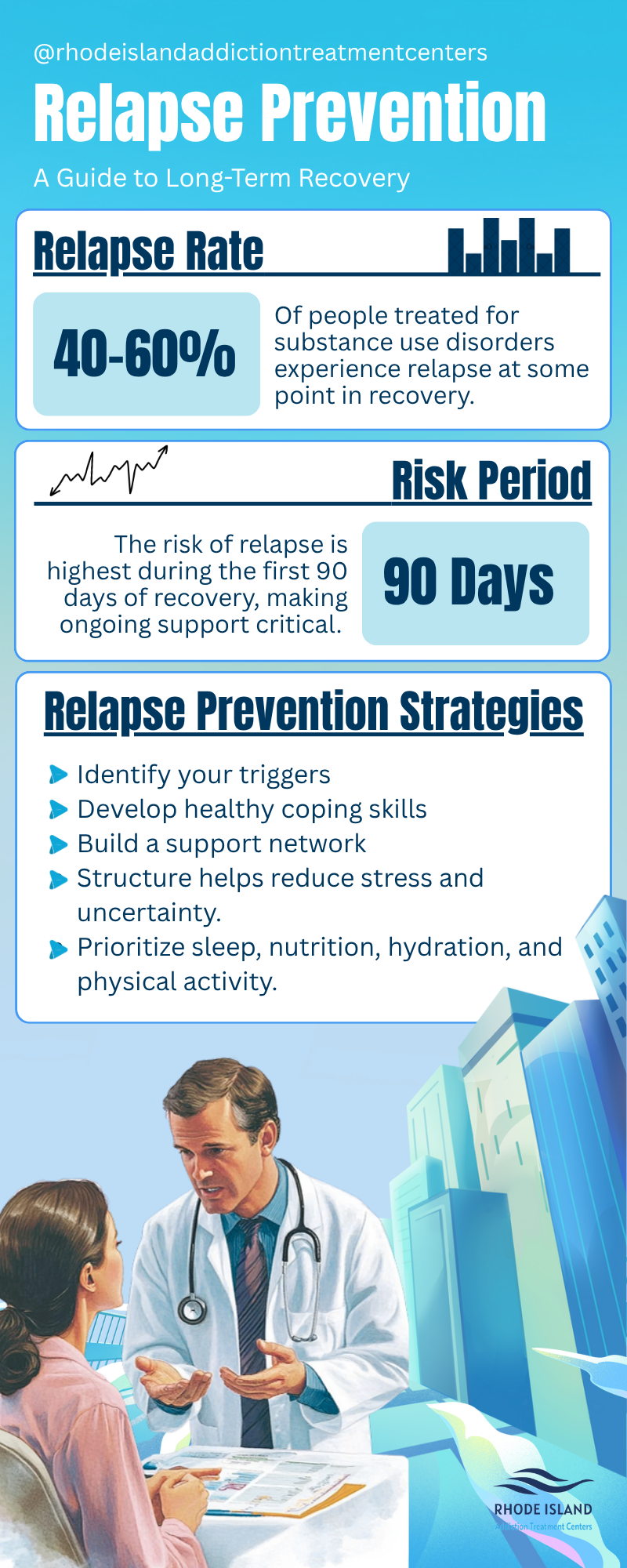
The first ninety days out of treatment carry the sharpest risk of all. This is the window when physical withdrawal has usually passed, but psychological cravings are still loud, and the brain’s reward system hasn’t caught up to a life without the substance in it. It’s also, not coincidentally, the exact window when someone is most likely to feel like they’ve “got this” and start skipping the very support that’s keeping them upright.
Zoom out, though, and the picture actually gets more hopeful. The odds of relapse are about 40 to 60 percent in the first year but fall to closer to 7 percent for people who make it to the five-year mark. That, too, is no accident. This is what sustained engagement with support looks like when given time to work. Recovery isn’t a cliff with a single drop-off point. It’s a slope that gets less steep the longer you stay on it, and aftercare is what keeps people from quitting early.
How Aftercare Can Prevent Relapse
Aftercare works because it replaces structure with structure, instead of replacing structure with nothing.
Continued therapy keeps cravings and triggers from festering in private until they turn into something bigger. Peer support groups replace the isolation that addiction thrives on with people who understand what the last stretch cost. Regular check-ins, whether with a therapist, a sponsor, or a case manager, create accountability at a time when internal motivation is still finding its footing.
Living situation matters more than people expect, too. A person who returns home to active substance use or ongoing family conflict is up against much tougher odds than a person returning to a stable, sober environment. That’s part of why sober living arrangements and family-inclusive planning are treated as more than optional extras. They change the environment someone is recovering inside of, not just the person doing the recovering.
None of this is about assuming the worst is coming. It’s about noticing the early signs of a slip before it becomes a fall. A second look is a lot easier to take than a second rock bottom.
The Part No One Markets: Benefits of Addiction Aftercare
Aftercare gets talked about like it’s mostly relapse insurance. That undersells it.
That harder, quieter work helps you build a life that doesn’t require white-knuckling sobriety every day. Even better, it can even aid in repairing broken relationships. You no longer have to go back to work or school and pretend the last few months didn’t happen. You finally find a version of a normal Friday without a hole in it.
In research, this is sometimes referred to as “recovery capital,” the stockpile of stable relationships, steady income, purpose, and self-trust that builds up the longer someone stays engaged in their own recovery. It’s not flashy. Nobody throws a cap in the air over a stretch of boring, stable weekdays. Yet, that stockpile is exactly what makes sobriety durable instead of exhausting.
How Rhode Island Addiction Treatment Helps You Unlock Real Benefits of Addiction Recovery
We don’t treat discharge day as the finish line, because it isn’t one. Aftercare planning should start well before a person leaves treatment, and it should be based on what their normal life looks like on the other side, not a generic checklist.
That means continuing therapy, connecting people with alumni and peer support groups, and staying involved with families, as recovery rarely happens in a vacuum, and rebuilding trust takes more than one person’s effort. We pay particular attention to that first fragile stretch after discharge, since that’s when engagement tends to quietly slip, often for the most understandable reasons.
Things feel fine, so the appointment gets skipped, and then the next one does too. We stay engaged past the point most programs consider their job finished, specifically because that’s when the risk is highest, and the support tends to disappear.
Final Words
You don’t frame a diploma and call it the achievement. The achievement is everything built afterward, with the tools that piece of paper represented.
Treatment works the same way. It hands someone the tools. Aftercare is where those tools actually get used, tested, and turned into a life that holds. The ceremony was never the point. What comes after it is.
Reach us at 888.541.4028 or visit Rhode Island Addiction Treatment Centers to get started.