
Benzodiazepine Withdrawal and Tapering: Why Medical Detox in Cumberland, RI is Essential
“There is no one-size-fits-all tapering schedule,”
said Emily Brunner, MD, who chaired the committee behind ASAM’s 2025 benzodiazepine tapering guideline. The FDA warns that stopping suddenly can cause withdrawal seizures. So why can’t you just quit benzos on your own?
Why Is Medical Detox Important for Benzodiazepine Withdrawal in Cumberland, RI?
Stopping benzodiazepines abruptly can cause seizures, severe anxiety, insomnia, and rebound symptoms that last weeks or longer. A slow, clinician-guided taper lowers that risk. Some people need medical detox first. Never quit alone. Here’s how tapering works and who needs closer monitoring.
Key Takeaways
- The FDA says abrupt stops or fast dose cuts can cause life-threatening withdrawal reactions, including seizures (FDA).
- Withdrawal symptoms can last weeks and sometimes up to 12 months, per the FDA.
- ASAM’s guideline suggests cutting the dose 5-10% every 2-4 weeks. Some long-term users need a year or more (ASAM).
- Call the center to confirm what level of withdrawal care is available before you start.
Let’s look at why these drugs are so hard to stop.
Why Is Stopping Benzodiazepines So Risky?
Benzodiazepines such as Xanax, Klonopin, and Ativan calm the nervous system. Your body adapts to them faster than most people expect. The FDA says physical dependence can develop when they’re taken steadily for several days to weeks, even as prescribed. Then the brain leans on the drug to stay calm. Take it away too fast and the system overshoots. Keep these facts in mind:
- Seizures: abrupt stops or fast dose cuts can trigger them.
- Rebound symptoms: anxiety and insomnia often return harder than before.
- Long tail: the FDA says symptoms may last weeks to as long as 12 months.
- Dependence without misuse: you can get here by following your prescription.
How Does a Safe Benzodiazepine Taper Work?
A taper is a slow staircase down rather than a cliff. The goal is to give the brain time to rebalance. Two pieces of the guideline matter most.
What Are the Guideline Basics?
ASAM’s guideline suggests beginning with a “5-10% reduction in total daily dose every 2-4 weeks,” then adjusting to how you respond. It says to never abruptly stop benzodiazepines in people likely to be physically dependent. People who’ve taken them for years “may need to slowly taper for a year or more.” That timeline surprises many patients. It shouldn’t scare them. Slow is the point.
Who Runs the Taper?
Your prescriber leads. You share in the decisions. The pace flexes with your symptoms. Therapy can help with the anxiety and sleep trouble that tend to flare. A team that includes counseling, such as CBT, gives you tools while the dose drops. Never adjust the schedule on your own, even if you feel fine. Feeling fine on Tuesday doesn’t guarantee Friday.
When Is Medical Detox the Right Level of Care?
Many people taper at home with their prescriber. Others need a more watched setting. A clinician decides based on your whole picture, not a single rule.
What Raises the Risk?
Your dose, how long you’ve taken it, and your medical history all count. So do other substances, since mixing benzodiazepines with alcohol or opioids makes withdrawal and overdose riskier. A past rough withdrawal matters too. Unstable mental health or an unsafe home can tip the decision toward more supervision. An honest, complete history at your first visit helps the team pick the right setting.
What Does Supervision Look Like?
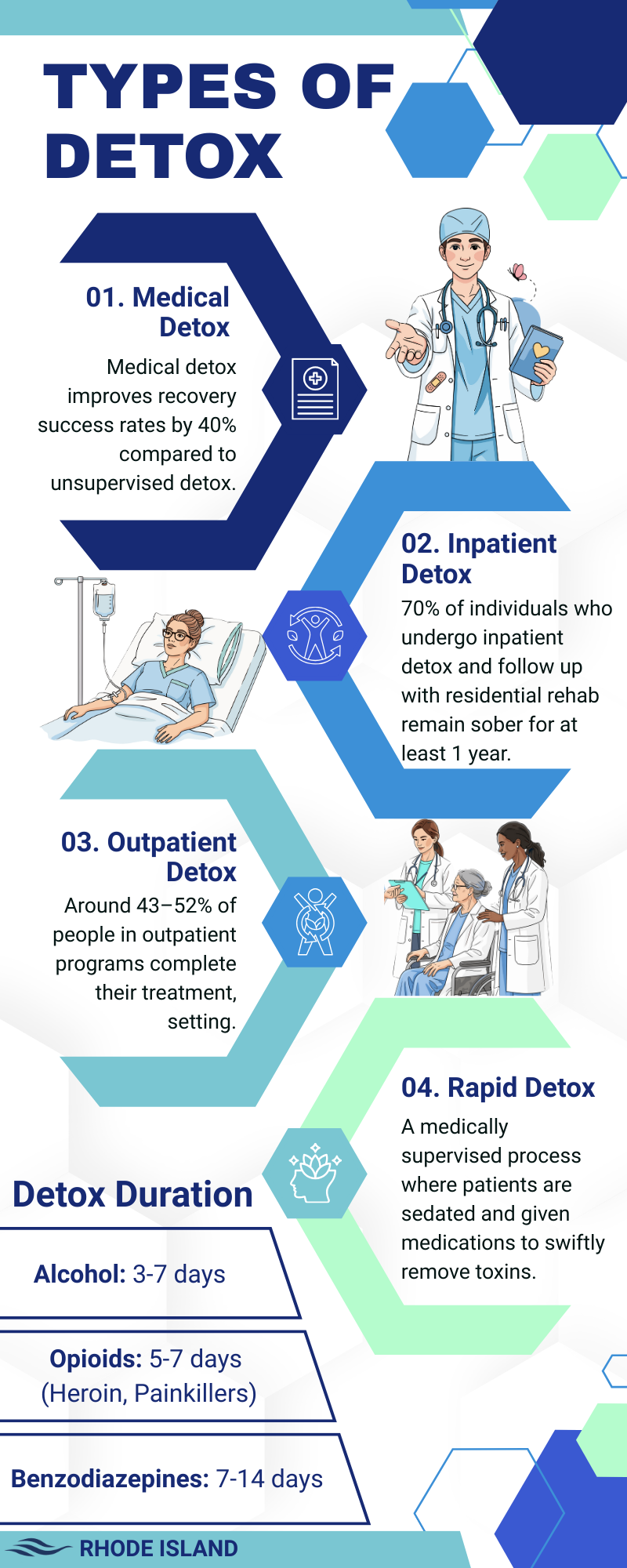
Medical supervision means someone is watching how your body responds. Staff monitor symptoms, manage discomfort, and adjust the plan if things change. After that, you step down to a lower level of care, such as an intensive outpatient program. Here’s how the two paths compare:
Slow Outpatient Taper | Medically Supervised Detox | |
Who it fits | Stable health, no other heavy substance use | Higher-risk situations decided by a clinician |
Setting | Home, with regular visits | A watched setting with staff monitoring |
Pace | Small cuts over weeks to months | Plan set by the medical team |
Next step | Ongoing therapy and follow-up | Step down to IOP or outpatient care |
Wondering if you can take protected leave during your supervised detox? Read “How to Keep Your Job and Utilize FMLA During Addiction Treatment in Rhode Island” to learn more.
What Warning Signs Mean You Need Help Right Now?
Most tapers are uneventful when done slowly. Still, know the red flags. Think of them like a smoke alarm in your own home: you hope it stays quiet. You’d never remove the battery.
- A seizure: call 911 immediately.
- Severe confusion or hallucinations: get emergency care.
- Thoughts of self-harm: call or text 988 at once.
- Rapid worsening after a dose cut: call your prescriber the same day and ask about slowing down.
Don’t wait out a scary symptom to avoid bothering anyone.
What Comes After Detox or During a Taper?
The pills often covered something real: panic, poor sleep or years of stress. Once the dose falls, those problems step forward. So treatment doesn’t end when the last tablet does. Counseling, relapse prevention and sleep support carry the work forward. DBT teaches skills for intense emotions. Aftercare planning keeps a safety net under you.
Our guide to Vivitrol vs. Suboxone in Rhode Island shows how medication-guided recovery works for other substances.
A Real-World Case: The FDA’s 2020 Safety Review
The FDA didn’t add its strongest warning on a hunch. In September 2020, it required the boxed warning on all benzodiazepines to be updated. Its review of adverse-event reports found cases of dependence and withdrawal even when people took the drug as prescribed. It also described serious withdrawal reactions after benzodiazepines were stopped suddenly.
The agency told clinicians to use a gradual taper and to build a patient-specific plan. It told patients not to stop suddenly without first talking to their health care professional. That’s a regulator saying the same thing as the guideline: slow, planned, and supervised. The reports don’t give exact rates. They do show the problem is real and not rare.
Where Can I Find Benzodiazepine Treatment Near Cumberland?
Rhode Island Addiction Treatment Centers is at 110 Jefferson Blvd, Unit G in Warwick, RI 02888. Its benzo addiction rehab page says the program begins with medically supervised detoxification, then moves to counseling and aftercare. Call to confirm what fits your situation. Then take these steps:
- Call 888.541.4028 to talk with an admissions specialist.
- Bring a list of every medication and supplement you take.
- Verify your insurance before you book.
- Ask how the team coordinates with your prescriber.
Slow and Supervised Is the Safe Way Down
Benzodiazepine dependence can happen to careful, responsible people. It’s not a moral failing. Plenty of patients started with one honest prescription for sleep or panic and woke up years later wondering how they got here. The way out is slow, steady, and watched. You deserve a plan that treats your body with respect.
Ready? Call 888.541.4028 or verify your insurance. Worried about work while you get care? Read our guide to using FMLA during addiction treatment in Rhode Island. If you’re in crisis, call or text 988.