
The Tipping Point: Signs Standard Outpatient Therapy Isn’t Enough
In general, residents of Rhode Island are known for their resilience. But when it comes to mental health challenges or substance use disorder, they often struggle with the symptoms alone. In fact, over 30% of adults have reported feeling severe symptoms of anxiety or depression disorder. Yet, many automatically assume that simple weekly counselling sessions are enough.
The problem is, sometimes standard outpatient therapy falls short, and you require structured treatment with supervision to get help with recovery. In such scenarios, Rhode Island Addiction Treatment Centers offers a robust clinical alternative in Warwick. We provide the intensive stabilization that weekly therapy falls short of. Read on to discover the signs that you need a higher level of care.
The Danger of Barely Managing
Standard outpatient therapy is an excellent tool for maintaining mental wellness and processing minor life transitions. However, when you are dealing with a severe clinical crisis, the basic math of a single weekly session simply does not work in your favor.
Surviving Between Sessions
There are 168 hours in a week. If you are spending one hour in a therapist’s office, you are spending the other 167 hours navigating the intense pressures of your life in Rhode Island completely alone. This creates a dangerous clinical void.
You might find clarity and relief during your session, but the moment you leave the office and face a stressful email or a family conflict, your nervous system becomes completely dysregulated. Weekly therapy lacks the robust clinical padding necessary to protect a highly fragile, reactive nervous system from the barrage of daily triggers.
The Escalation of Co-Occurring Disorders
We frequently see individuals attempting to treat highly complex, overlapping conditions with minimal support. The escalation of co-occurring disorders is a massive red flag. If your severe clinical depression is actively compounding an underlying alcohol dependency, the disease will rapidly outpace a single weekly check-in.
The biological urge to self-medicate a trauma response requires intense, continuous intervention. A weekly therapist simply does not have the bandwidth to monitor your physical withdrawal symptoms, manage your psychiatric medications, and process your trauma all in one hour.
The Illusion of Progress
For high-achieving individuals, the illusion of progress arises when they feel motivated immediately after a therapy session. This illusion causes individuals to believe they are improving and healing when you are actually not healing.
Surface-level talks fail to address the structural trauma that actually drives your distress. It requires deep clinical intervention, structured treatment, and sustained therapeutic support, which demand more clinical time than what a standard outpatient care can provide.
Recognizing the Tipping Point
You must objectively recognize when your current clinical safety net has failed. Identifying the tipping point requires total honesty about your daily functioning and your physical health.
When Baseline Safety is Compromised
A clear, undeniable sign that you need a higher level of care is a visible decline in your executive functioning and baseline safety. If you are entirely unable to focus on basic tasks, missing crucial workplace meetings, or letting basic personal hygiene slip, your brain is actively shutting down to protect itself.
You are no longer just dealing with standard stress. When weekly therapy cannot restore your ability to function safely and productively, escalating your clinical strategy becomes an absolute medical necessity.
The Need for Physical Separation
Sometimes, the environment you live or work in is so highly triggering that healing within it is biologically impossible.
If your home life is chaotic or your workplace is completely toxic, weekly therapy will not be enough to override that constant exposure to stress. You have reached a tipping point that requires physical separation.
Full-day clinical immersion provides a necessary geographical and psychological buffer. Stepping away from your triggers and into a completely controlled, supportive sanctuary allows your nervous system to finally power down its defensive alarms.
Increased Tolerance and Use
Another major problem is that when you are attending weekly counselling for substance use, it doesn’t really help with the cravings because triggers are actively accelerating your consumption alongside. This increased tolerance for substance use results in escalation, which causes symptoms to worsen despite therapy appointments.
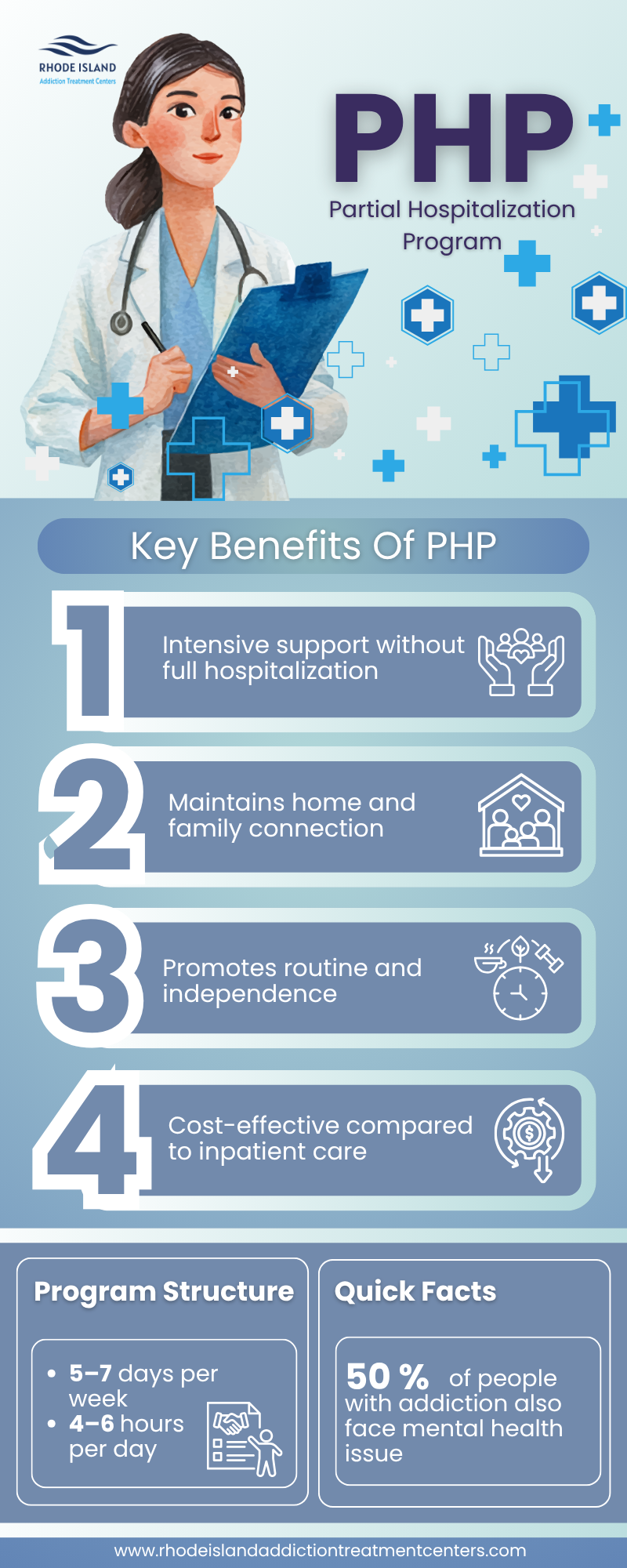
To break this cycle, you need to step up care and enroll into a program with medically supervised intervention. Otherwise, the physical dependency conditions can cause withdrawal symptoms to worsen.
Stepping Up to PHP or IOP in Warwick
You do not have to choose between a brief weekly therapy appointment and abandoning your entire life for a residential lockdown facility. There is a highly effective, structured middle ground.
Immersive Healing
Rhode Island Addiction Treatment Centers bridges this massive gap with our Partial Hospitalization Program (PHP) and Intensive Outpatient Program (IOP) in Warwick. These programs offer immersive healing.
You receive the profound clinical rigor and daily, rigorous structure of a hospital-level program while preserving your autonomy. You attend intensive stabilization sessions during the day or evening, but you retain the vital comfort of sleeping in your own bed at night.
Dual Diagnosis Excellence
We provide the time, resources, and clinical depth required to treat complex cases. Our intensive programs feature dual diagnosis excellence.
We provide continuous psychiatric oversight to stabilize your brain chemistry while our clinical team addresses the underlying trauma or mental health disorder driving your substance use. We treat both sides of the coin simultaneously, ensuring a robust and comprehensive reset of your entire nervous system.
Intensive Skill Acquisition
We move far beyond passive talk therapy by focusing on intensive skill acquisition. Our clients have daily opportunities to practice advanced modalities like Cognitive Behavioral Therapy (CBT) and Dialectical Behavior Therapy (DBT).
We give you the immediate, actionable skills required to manually lower your heart rate, challenge catastrophic thoughts, and ground your physical body. Because you practice these skills multiple times a week in a clinical setting, they rapidly become automatic habits that protect you in the real world.
Secure a Higher Standard of Care
You do not have to remain trapped in a frustrating holding pattern while your health deteriorates. Elevating your level of care is a strategic decision to protect your executive function and your family.
Reach out to Rhode Island Addiction Treatment Centers for a compassionate level of care assessment. Our Warwick team will determine exactly what support you need right now and facilitate a seamless clinical transfer from your current therapist directly into our program.
We handle all stress-free insurance upgrades and adjustments to ensure your intensive care is fully covered. Call (888) 541-4028 or visit rhodeislandaddictiontreatmentcenters.com to secure a higher standard of care today.