
Alcohol Awareness After Summer: Outpatient Alcohol Treatment in Warwick, RI
Rhode Island has become the 18th worst state for alcohol consumption by adults. Approximately 58,000 Rhode Islanders qualify for alcohol use disorder. Unfortunately, only 1 in 10 of them gets treatment for it.
Summer is when that number quietly grows. The season hands people a script: cookouts, beach days, boat trips, and a drink in hand as a kind of punctuation to every plan. Nobody questions it in July. Nobody questions it in August, either. Then September comes, and the calendar goes back to normal, but the habit doesn’t always go with it.
That’s the moment worth pausing on. Not the crisis moment. The quiet one, right after the season ends, when a person notices the drinking didn’t taper off the way the parties did.
You Don’t Have to Put Your Life on Pause
The biggest myth about getting help for alcohol use is that it requires stepping out of your life completely. Outpatient treatment in Warwick was built around a different premise: that recovery doesn’t have to compete with your job, your kids’ school schedule, or your rent.
Sessions are structured around your week, not the other way around. You keep showing up to work. You keep making dinner. You keep being present for the parts of your life that were never the problem. The treatment fits into the life you already have instead of asking you to set it aside.
Support That Meets You Where You Are, Not Where You “Should” Be
There’s no universal threshold for who deserves help. Some people arrive at outpatient treatment after a single hard summer. Others arrive after years of managing quietly. Both are valid starting points.
Outpatient alcohol treatment is built to flex with severity. Depending on what a person needs, it might mean a few hours a week or a more intensive daily commitment for a short stretch. The point isn’t matching a rigid formula. It’s matching the actual shape of what you’re carrying right now, not what it looked like in July, and not what someone else’s version of “bad enough” requires.
Real Accountability, Without Losing Your Independence
Isolation is where a lot of drinking quietly escalates. No one is keeping in touch with you. No one is asking you the hard questions. Outpatient recovery programs provide a structured counterbalance for that by introducing regular appointments, group sessions, and a therapist who will understand your history and also detect any changes in your life.
This form of supervision and support does not take away your freedom. Your lifestyle is not handed down to another person. Instead, you get to keep living your life while having added this new component of self-honesty. For many people, this mix of a well-defined program and personal freedom is the key to finally getting off the addiction track instead of just clinging to that path.
Treatment That Treats the Whole Person, Not Just the Drinking
Alcohol use disorder rarely shows up alone. It often travels with anxiety, depression, unresolved grief, or the residue of a summer that was harder than it looked from the outside. Outpatient programs in Warwick are typically built around evidence-based approaches that address what’s underneath the drinking, not just the behavior itself.
This matters more after summer specifically. A season built around performance, showing up, looking fine, and keeping the mood light, can bury what someone was actually feeling underneath the routine. Treatment that looks at the whole picture gives that feeling of somewhere to go besides going back into a glass.
The Therapies and Interventions Behind the Program
None of this works as a vague promise. It works because of specific, researched methods, applied to a specific person.
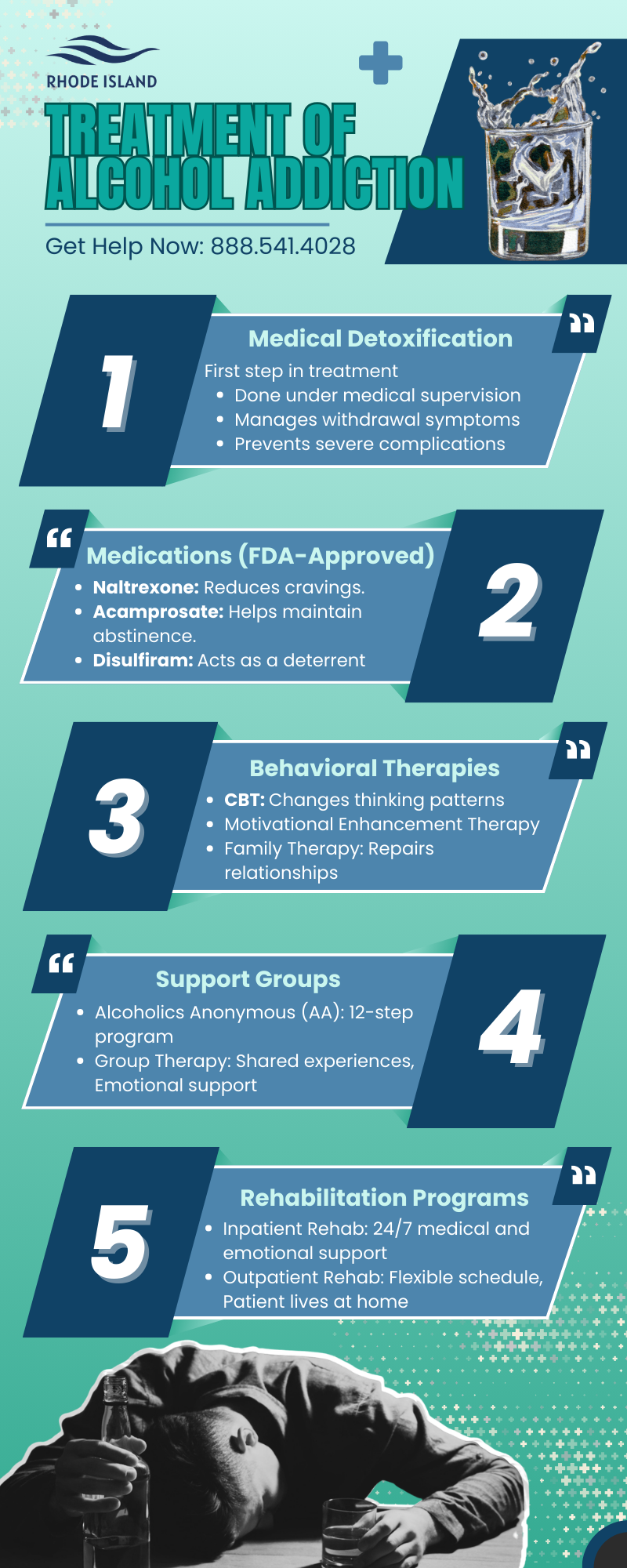
Cognitive behavioral therapy (CBT) is usually central, helping identify the thought patterns and triggers, a certain friend group, a certain kind of stress, and a certain time of night that turn a single drink into a pattern. Motivational interviewing often runs alongside it, especially early on, for the person who’s still unsure whether they’re ready to change anything at all; it meets ambivalence with curiosity instead of pressure.
Group therapy has a distinct advantage over one-to-one counseling in the sense that you’re bound to feel at ease listening to your problems in somebody else’s words. Family (or couples) counseling is also usually included since the issue of alcohol abuse hardly ever affects one individual in isolation, and repairing the aftermath is part of the healing process, not a separate endeavor.
Medication-assisted treatments are also available for certain cases as an obligatory or optional method of curbing alcohol abuse, alleviating cravings, or preventing relapses, prescribed by doctors in complex cases. The relapse prevention plan is interwoven throughout the whole treatment course, building the specific, practical skills a person will need on an ordinary Tuesday, long after the structured sessions end.
A Plan That Doesn’t End When the Program Does
The hardest part of recovery is rarely the program itself. It’s the Tuesday six months later, with no structure and no one checking in, when the old habit quietly resurfaces. Good outpatient treatment plans for that moment start from day one.
Aftercare isn’t an afterthought bolted onto discharge. It’s built into the process from the beginning: relapse prevention planning, ongoing support groups, and a clear sense of what comes next before the formal sessions end. The goal was never just getting through the program. It was building something durable enough to hold up past it.
Final Words
Nobody plans to carry a summer habit into the rest of the year. It happens slowly, one occasion folding into the next, until the occasion isn’t the reason anymore. Outpatient alcohol treatment in Warwick exists for exactly that turn, the point where a season’s worth of drinking starts asking to become something else.
Getting help doesn’t mean the summer was a mistake. It means noticing what’s still here now that the season’s gone and choosing not to carry it any further than you have to.
If this is where you are, reach out to speak with our team about outpatient alcohol treatment in Warwick, RI. The season ended. What you do next doesn’t have to look like it did in July.