
What to Expect During the First 48 Hours of Alcohol Detox in Rhode Island
Your body has been negotiating with alcohol for a long time. It reconfigured itself to the drink, dampening its own calming signals, learning to work with a regular supply coming in. Then the supply goes out and the house is left with wiring that no longer matches the power. That mismatch is what detox is like, and it’s most acute in the first 48 hours.
Knowing what is coming won’t make it hurt less. It will make it less frightening and help you distinguish between “this is miserable” and “this is an emergency.” These are two very different things.
Hours 0 to 12: The House Notices the Power Cut
Symptoms can begin to show within the first 6 hours of the last drink. However, if you are a heavy daily drinker, it can begin sooner. In the initial stages, you may start to feel some uncomfortable symptoms, including nausea, shaking hands, headaches, sweating, anxiety, and insomnia. It may seem like an endless hangover.
Alongside the physical symptoms, you may feel a constant low level of dread. Your brain will be telling you that having one drink will make it all stop. That voice is not weakness. Your mind learned to rely on alcohol to stay calm, and it is now asking for the thing it trusts. Expect it, name it, and do not argue with it alone.
Hours 12 to 48: When the Wiring Pushes Back
This is the stretch where symptoms can often get worse. It can increase your heart rate and blood pressure, make you more likely to vomit, and worsen the shakes. Moreover, anxiety can become agitation. Thinking can be foggy or confused. Many people also feel the worst somewhere in this window, and this is why it is the point when they are most tempted to drink again.
During these hours, some people develop alcoholic hallucinosis. They see, hear, or feel things that aren’t there, often while still being alert and aware that something is off. It is scary, but it is a recognized part of withdrawal and is one more reason why a clinician should know what is happening.
This window also includes seizures. They are most likely within 48 hours and can occur earlier. They are not common, but they are serious, and there is no way of knowing who will have one. Those who have experienced withdrawal or a withdrawal seizure in the past are at greater risk.
Warning Signs That Mean Call 911
Most withdrawal is miserable but survivable. A smaller number of people develop something far more dangerous, and the early hours are when you learn which path you are on. Call 911 or go to the nearest emergency room if you or someone near you has any of the following:
- A seizure, meaning a sudden collapse with stiffening and jerking
- Severe confusion, or not knowing where you are or who is around you
- Hallucinations paired with disorientation
- A high fever or drenching sweats
- A racing heartbeat that will not settle
These signs can point toward delirium tremens, or DTs, the most severe form of withdrawal. DTs usually begin between 48 and 72 hours after the last drink, which means the first 48 hours are also your window to get medical eyes on you before things escalate. If someone has a seizure, move hard objects away, turn them onto their side if you can, and never put anything in their mouth.
Why Detoxing Alone Is a Gamble
You may have heard that you can ‘ride out’ withdrawal at home. Some people with mild drinking histories will only experience mild symptoms. However, no one can accurately predict who will fall into this category. If you are a heavy long-term drinker, have had previous withdrawals, or have other health conditions, this will affect your chances.
Rhode Island has a high number of binge drinkers. Around 19% of adults binge drink (higher than the national average). This means many people in your local area, workplace, and family may need to stop drinking.
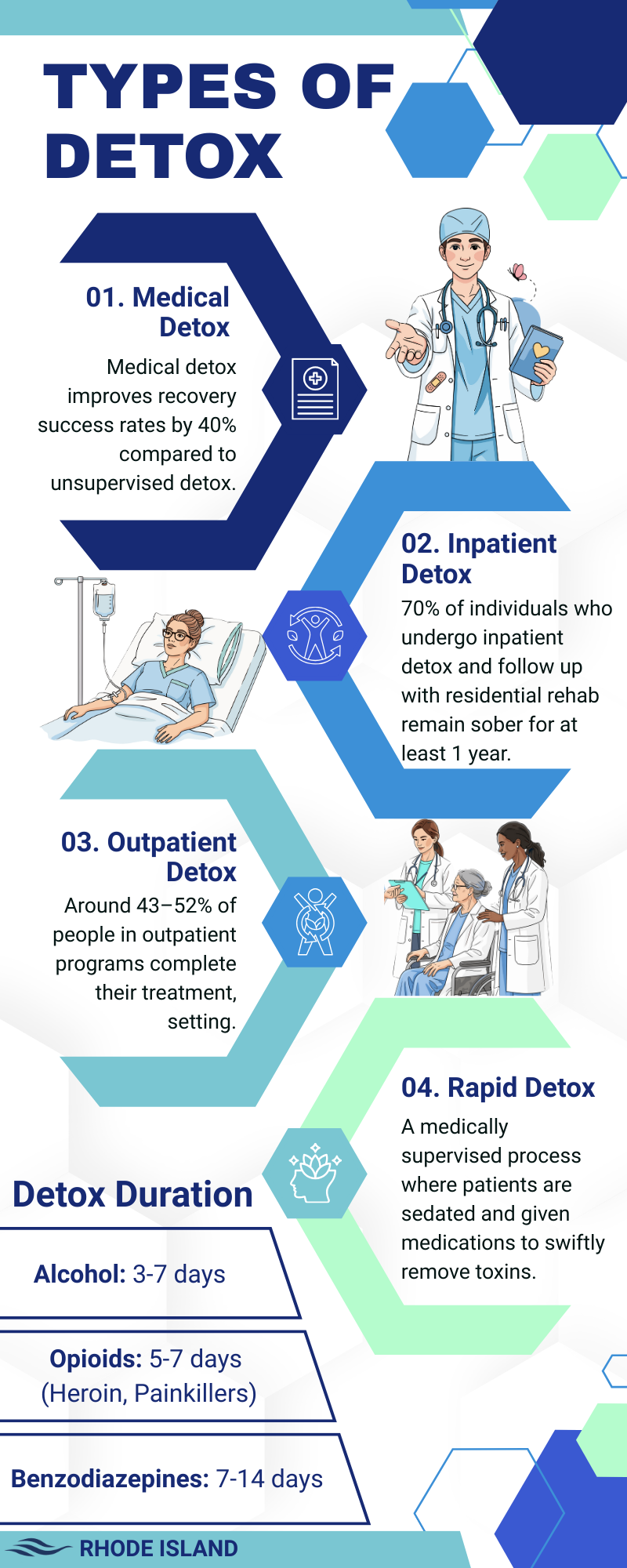
Medical detox will remove the guesswork. You will be regularly monitored by clinicians, given the correct medication at the correct time to help your body. You will be well hydrated and monitored for the symptoms above. Rhode Island will not leave you to struggle alone in the middle of the night.
How Rhode Island Addiction Treatment Centers Support You
Detox is the beginning of recovery, not the whole of it. Once your body has steadied, the harder and more lasting question arrives: why was alcohol doing so much of the work in the first place?
At Rhode Island Addiction Treatment Centers in Warwick, treatment begins with a thorough evaluation of your medical history, the severity of the drinking problem, and what you hope to achieve in recovery. From there, the team builds a plan around you. Detoxification is the first step in that process and is managed in a medically supervised setting to ensure withdrawal is handled safely and with as much comfort as possible.
After that, the work shifts to what keeps people sober. Therapies such as cognitive-behavioral therapy (CBT), dialectical behavior therapy (DBT), and motivational interviewing help you understand the patterns behind the drinking. Holistic options such as yoga, meditation, and art therapy offer you ways to cope with stress that don’t come in a glass. Finally, relapse prevention and aftercare planning maintains support as treatment concludes, because recovery does not end when the program does.
Final Words
Remember the house from the beginning? The first 48 hours will have electricians coming in. They will be loud and disruptive, but they are essential. The sparking and flickering can feel like something is wrong. Often this is a sign that the rewiring has started.
You do not have to go through this in the dark. If you or someone you care about is thinking about stopping drinking, speak to a medical professional. Call Rhode Island Addiction Treatment Centers on 888.541.4028.
Read Next: Managing Co-Occurring Anxiety and Depression During Addiction Recovery in Coventry, RI