Co-Occurring Depression and Addiction Treatment in Warwick, RI
Some doors have two locks. You work the first one open, feel the click, push, and nothing moves. Sobriety is one lock. Depression is the other. If you’ve been treated for only one, you already know how that door feels.
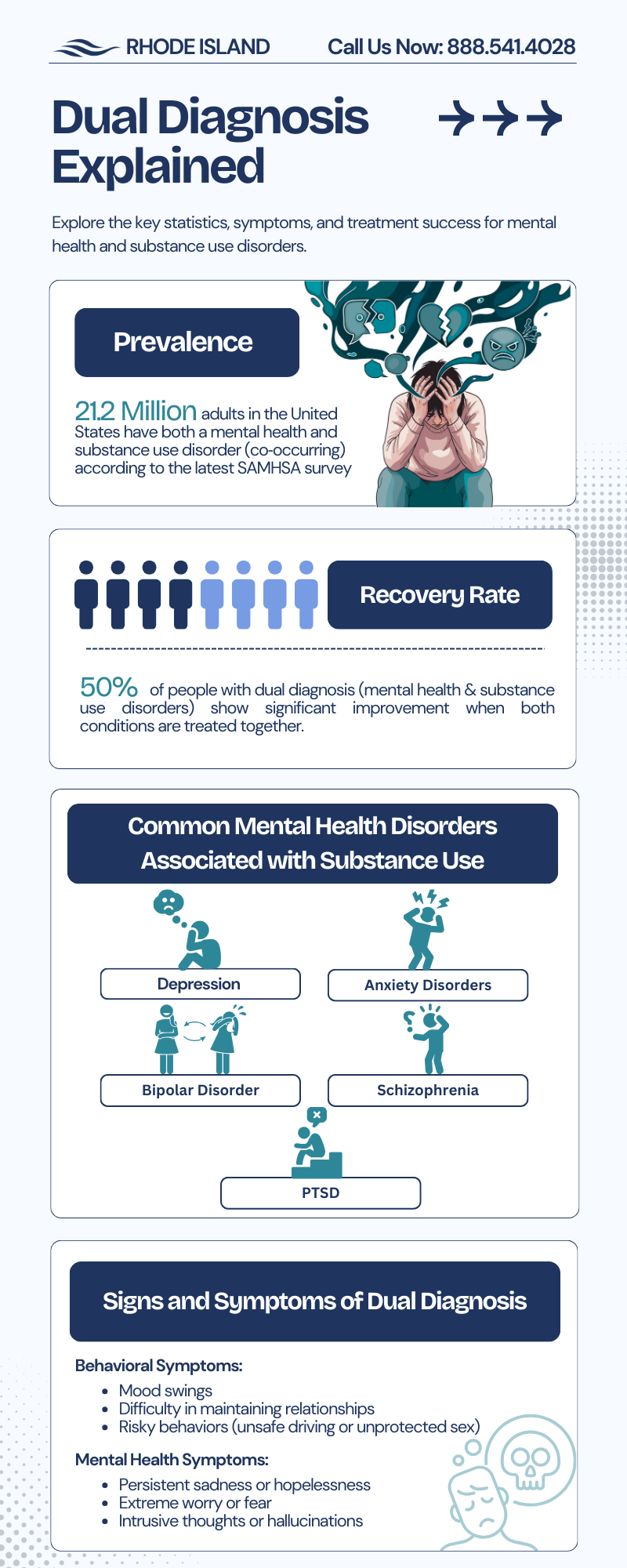
In 2024, it is estimated that 21.2 million US adults have experienced a mental illness and substance use disorder, but only 14.5% of them have received treatment for both issues. Nevertheless, 41.2% of people have not been treated in any way.
Most people who have comorbid conditions receive one intervention and have to manage the other condition independently. Hence, dual diagnosis Treatment in Warwick, RI, is here to offer you both required interventions.
How Depression and Addiction Continuously Reinforce Each Other
Pills and alcohol can make a heavy day feel lighter for an hour. Then the substance wears off and takes your mood down with it. The low gets lower, the guilt gets louder, and the fastest way to quiet either one is the thing that caused them. That loop is not weakness. It’s chemistry meeting pain, and it runs in both directions. Depression can push you toward substances, and heavy use can deepen depression.
Rhode Island knows the cost of this loop. The state lost 219 people to accidental overdoses in 2025, down from 329 in 2024. The decline is real progress. Yet, it’s also 219 families who lost someone, which is why getting the right kind of care matters.
Signs of Dual-Diagnosis Disorder: Recognizing Their Impact
From the outside, co-occurring disorders can look like a bad habit or a rough patch. Inside, you are feeling chronically tired with a veil of shame. You might end up consuming alcohol to get to sleep and then waking up feeling even emptier. Getting to work is more difficult. Interpersonal relationships suffer. Essentially, you began to feel like you were missing out on all the things that were important to you.
Other signs include
- mood swings after use
- pulling away from loved ones
- neglecting your responsibilities
- sleeping and eating too much or too little
- using to cope with painful emotions.
If you are thinking about hurting yourself or feel hopeless, please call the suicide prevention lifeline 988.
The Limitations of Addressing Conditions Individually
Treating depression and addiction one at a time turns recovery into ping-pong. This is where it breaks down:
Revolving-Door Care
One clinic wants you stabilized before it will treat the other problem, so you bounce back and forth between them while the unaddressed problem keeps tugging you back toward relapse.
The Abstinence Barrier
Many mental health programs won’t treat people who are still using, and many addiction clinics aren’t equipped for a psychiatric crisis. You get caught in between systems.
Clashing philosophies
Two specialists working in parallel often follow different clinical approaches and rarely compare notes, so you get mixed messages about what recovery should look like.
Too Much To Manage
Two sets of appointments, two systems, and different insurance rules is a lot to ask of someone already dealing with low motivation or a crisis. Many people drop out.
How Integrated Treatment Functions Effectively in Real Life
Good co-occurring care starts with a thorough assessment: your history, your symptoms, what you use, and how the two connect. From there, the plan is built around you, not a template.
Individual therapy gives you space to untangle where the depression and the substance use began and how they’ve wrapped around each other. On the other hand, group therapy puts you in a room with people who understand without needing the backstory, which is often the first time shame loosens its grip. Additionally, family therapy brings loved ones in so the people around you can understand what’s happening and stop walking on eggshells.
Psychotherapies also play their significant roles. Cognitive behavioral therapy is a common tool here. It helps you catch the thought patterns that drive both low mood and cravings, then practice responding differently. Dialectical behavior therapy adds skills for riding out intense emotions without reaching for something to dull them. Lastly, medication management, guided by a psychiatrist, can steady depression and support recovery, with regular check-ins to make sure it’s working.
Intensity matters as well. Some people need the structure of a partial hospitalization program, with several hours of treatment a day. Others do well in an intensive outpatient program that fits around work and family. The right level is the one that supports you now and can step down as you get stronger.
Co-Occurring Disorder Treatment at Rhode Island Addiction Treatment Centers
Rhode Island Addiction Treatment Center’s dual diagnosis program is built on the integrated model described above. Treatment covers both the mental health and substance use sides at once through individual, group, and family therapy, plus medication management with a psychiatrist. The center also offers holistic therapies such as mindfulness practices, art therapy, and nutritional counseling, because recovery involves your whole life, not only the hard parts.
The process starts with an assessment, which shapes a personalized treatment plan. It continues through aftercare planning, including ongoing therapy, support groups, and regular check-ins, so the end of the program doesn’t mean the end of support. If you’re not sure where you fit, the team can verify your insurance and walk you through the options when you call 888.541.4028.
Taking the First Step in Warwick, RI
Getting started is often the hardest part, and it doesn’t have to be dramatic. Discuss with your primary care doctor. Have somebody you trust sit with you when you make the call. Support groups, like AA or NA, can be an additional community to professional treatment. If you are considering a program, ask if both conditions will be treated by the same team. If a psychiatric prescriber will be involved, what will your coverage pay for. Those answers will let you know pretty quickly whether you’re looking at integrated care or two treatments stapled together.
Final Words
Remember that door with the two locks? You never had to pick which one to work on first. Depression and addiction can seem like a trap, but they are treatable, and the right team of professionals will treat both simultaneously. If you are in Warwick and you are ready, call Rhode Island Addiction Treatment Centers at 888-541-4028. You’ve held on to both locks long enough.
Read Next: Addiction Treatment for Nurses and Healthcare Workers in Providence, RI