
Domestic Violence Awareness Month: Trauma and Addiction Treatment in Rhode Island
“Victims and survivors are our family, our friends, our coworkers, our neighbors, our loved ones.” Lucy Rios, executive director of the Rhode Island Coalition Against Domestic Violence, told the Warwick Post that in 2024. Read that list again. It describes people you already know.
The same article reports that nearly half of Rhode Islanders have experienced domestic violence, citing CDC data released in late 2023. That includes 46.7% of women and 40.7% of men. For some survivors, the pain doesn’t stay in the past. It shows up as drinking or drug use.
So can you get addiction treatment if you’ve lived through abuse? Yes. The best-supported path treats trauma and substance use together, with safety at the center. In Rhode Island, that can mean outpatient or intensive outpatient care alongside domestic violence advocacy. October is Domestic Violence Awareness Month.
Here’s what to know.
How Are Domestic Violence and Addiction Connected?
The link runs in more than one direction. Careful language matters here, because the wrong framing can hurt survivors. Two points stand out.
Does Substance Use Cause Abuse?
No. The National Domestic Violence Hotline says substance use doesn’t cause abuse. It says abuse is about power and control. Claudia Garcia-Rojas puts it this way on the Hotline’s site: drugs or alcohol “certainly play a role but they are not the root cause of the violence.” Substance use can make a situation worse. It never excuses violence. Plenty of people drink or use drugs and never harm a partner.
Why Do Survivors Turn to Substances?
For many survivors, the answer is coping. The Hotline notes that “the stress of the abuse might cause victims to turn to drugs or alcohol as coping mechanisms.” Alcohol can dull fear for an evening. Pills can quiet a racing mind at 3 a.m. Over time, relief becomes dependence. None of this is a moral failure. It’s a predictable response to ongoing danger.
What Should Trauma-Informed Addiction Treatment Include?
Treating addiction without asking about trauma often misses the root. A good program asks gently and moves at your pace. Look for these features.
- Safety first. Staff ask about your current situation and don’t pressure you to share.
- Choice. You help shape your plan and can say no to any activity.
- Integrated care. Substance use and mental health get treated together.
- Respect for privacy. Your story belongs to you.
No program can promise it will never feel uncomfortable. A good one explains each step in advance and lets you pause. If a program pushes you to retell your story in detail on day one, that’s worth questioning.
What Should I Know About Safety First?
Treatment doesn’t replace safety services. If you’re in danger now, safety comes before everything else. These contacts can help today.
- Immediate danger: Call 911.
- Rhode Island helpline: Call the RI Coalition Against Domestic Violence at 1-800-494-8100.
- National hotline: Call 800-799-7233 or text START to 88788.
- Device safety: Use a phone or computer your partner can’t access.
You can call a hotline without leaving your relationship or committing to anything. Advocates can help you build a safety plan at your own pace. They can also talk through how treatment appointments might fit around your safety needs.
How Does Co-Occurring Treatment Work at RIATC?
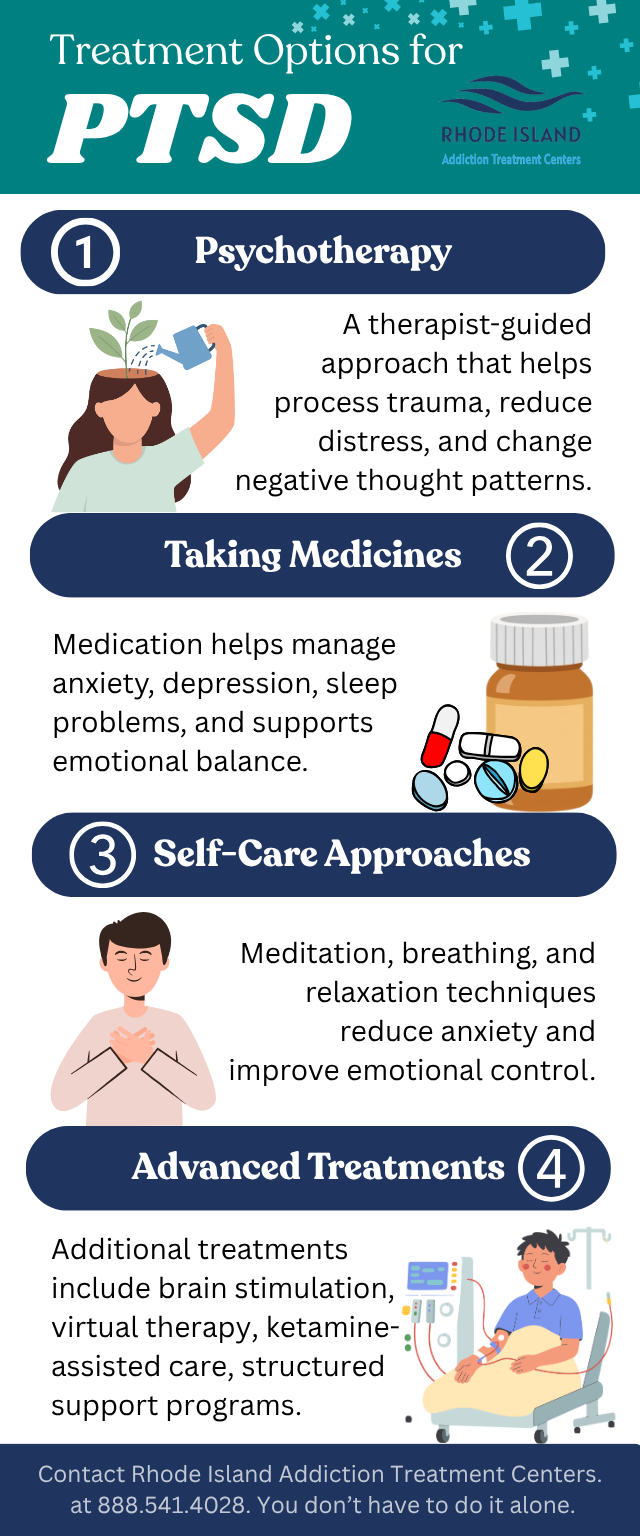
Rhode Island Addiction Treatment Centers offers programs for people who face substance use and mental health challenges together. The team doesn’t claim to replace advocacy services. It adds a layer of clinical support.
What Does Integrated Treatment Involve?
The center’s co-occurring page describes an “integrated treatment model that addresses both mental health and substance use disorders.” It says treating only one “often leads to ineffective outcomes.” The page lists an initial assessment, individual and group therapy, family therapy, and medication management with a psychiatrist. Aftercare follows. The page notes that many people with dual diagnosis have a history of trauma. Ask any program how it handles that history.
What About Women’s and Men’s Programs?
RIATC runs separate women’s and men’s tracks. Its women’s page says women-focused programs often address issues such as trauma, domestic violence, and family responsibilities. Some survivors feel safer in a gender-specific group. Others prefer a mixed setting. Remember that men experience abuse too. Our guide to substance use treatment for mothers in Rhode Island covers support for parents.
A Real-World Case: One Day of Rhode Island Domestic Violence Services
Here’s a snapshot you can verify. On September 10, 2025, all nine Rhode Island domestic violence programs took part in the National Network to End Domestic Violence’s 20th annual DV Counts survey.
In a single 24-hour period, they served 1,057 adults and children. Of those, 570 stayed in shelters, transitional housing, hotels, or motels. Another 487 received non-residential services.
Hotlines logged 135 contacts, roughly six an hour. Yet 62 requests went unmet because of limited resources, funding, or staffing. About 79% of those were requests for housing.
The count doesn’t track substance use. It does show how much need exists on one ordinary day. Many survivors wait for help. That wait is part of why other supports matter.
Where Can I Get Help in Rhode Island?
Rhode Island Addiction Treatment Centers sits at 110 Jefferson Blvd, Unit G in Warwick, about 10 minutes from Providence. Calls are confidential. You don’t need to explain everything on the first call. Tell the specialist what feels safe to share. Ask about scheduling, privacy, and how they handle trauma history. Then decide whether the fit feels right.
- Call 888.541.4028 to talk with an admissions specialist.
- Read about our co-occurring disorders program.
- Explore cognitive behavioral therapy and dialectical behavior therapy.
- Verify your insurance before you book.
You Deserve Safety and Support
You didn’t cause the harm that was done to you. Healing from trauma and addiction takes time. It also takes the right people. Start with whatever step feels safest today, whether that’s a hotline call or a conversation with a treatment team.
Ready? Call 888.541.4028 or verify your insurance. Wondering what treatment timelines look like?
Read our guide to how long IOP lasts in Rhode Island. If you’re in crisis, call or text 988.