
What Happens If You Relapse During IOP in Rhode Island?
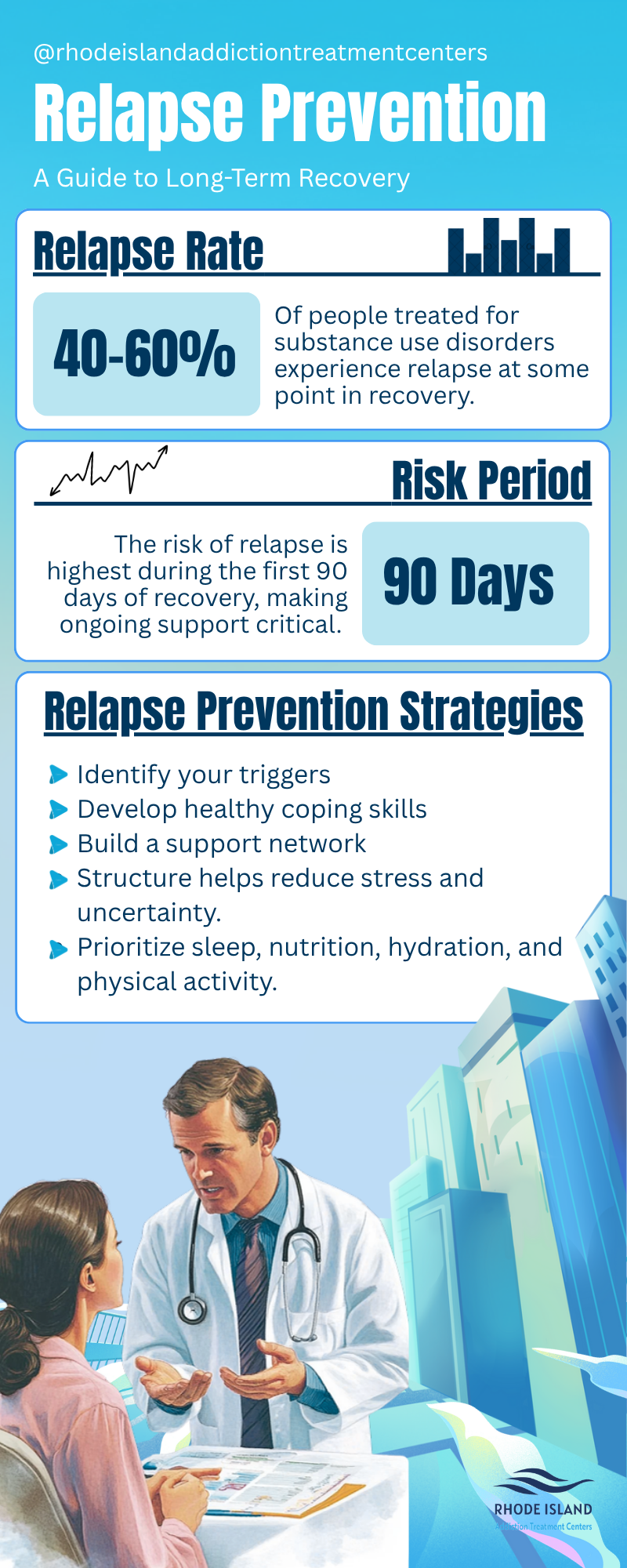
Experiencing a slip in early recovery often triggers overwhelming shame and panic. When a Rhode Island resident experiences a setback during treatment, their instinct is usually to hide it out of fear of clinical expulsion. Data indicates that between 40-60% of individuals in recovery experience a relapse at some point.
In order to reduce stigma, we need to dismantle the punitive myth surrounding addiction treatment. The reality is the fact that substance use disorder is a chronic brain disease functioning much like asthma or hypertension. It’s not just a bad habit or moral failing that can be overcome without professional treatment.
At Rhode Island Addiction Treatment Centers, your honesty around substance use earns support rather than punishment. If you experience a slip or relapse during outpatient care, we’d rather that you share it so that our clinical team responds with compassionate medical intervention to safely stabilize your recovery.
The Uncomfortable Reality of Relapsing and Cravings in Early Recovery
Understanding That a Slip of Judgment is a Symptom, Not a Moral Failure
When it comes to recovery, the human brain requires significant time to physically heal from alcohol or stimulant dependency. The neural circuits of the central nervous system’s reward pathways undergo complex structural changes that do not magically reset overnight. Therefore, experiencing a sudden craving and acting on it does not mean failure. It represents a clinical symptom of the underlying disease with biological causes and consequences rather than a character flaw.
Our clinicians are trained to treat the biological reality with objective medical correction rather than moral judgment. We understand how addiction mechanistically overrides the prefrontal cortex, where logical decision-making and impulse control occur. So when craving is triggered, the brain essentially forces a survival response that prioritizes acquiring the substance over all other rational priorities.
A recurrence of symptoms simply indicates that the current treatment plan needs calibration. It never means the patient is broken or incapable of achieving permanent sobriety.
The Life-Threatening Danger of Hiding a Slip in Rhode Island
In Rhode Island, illicit drug supply often contains contaminants and contains lethal doses of synthetic fentanyl and xylazine. This unpredictability causes individuals to risk their lives for the sake of relief. Widespread contamination of the drug supply turns a minor slip into an immediate medical emergency for individuals in recovery. The problem is, hiding a setback from your clinical team can create an unprecedented risk of an accidental overdose for you.
Your physical tolerance drops significantly after entering an outpatient program. Consuming the exact same amount of drugs you previously used can quickly cause respiratory failure and cardiac arrest. Disclosing a slip immediately lets our medical team protect your physical safety and monitor your vitals.
Secrecy is the most dangerous component of early recovery. We prioritize your biological survival and ongoing stability over arbitrary program rules or outdated disciplinary models.
How RIATC Responds to a Setback During Outpatient Care
Zero-Punishment and Supportive Clinical Reassessment
We understand how difficult it is to be honest when a relapse is involved. But you need to understand that our staff – or any medical professional – doesn’t treat relapse as a failure. In fact, coming forward about a relapse triggers a supportive clinical response from the treatment team rather than disciplinary action.
Our clinicians conduct a calm biopsychosocial reassessment along with medical evaluation to evaluate your current emotional and physical baseline. We are committed to focusing entirely on gathering objective data to understand the mechanics of the slip.
The primary goal is understanding the exact mechanical trigger behind the behavioral setback for you. Clinicians investigate whether the relapse event stemmed from an unmanaged anxiety spike, a specific interpersonal conflict, or sleep deprivation. We also aim to evaluate whether physical cravings were under-medicated during a vulnerable transition.
Identifying the root cause provides a clear roadmap for clinical correction. We investigate the mechanical failure so we can reinforce your coping toolkit and prevent future occurrences.
Stepping Up from an IOP to a PHP Level of Care
Sometimes the current level of care lacks the required clinical density to intercept complex triggers. Clients often discover that the scheduling of an IOP leaves them with too much unstructured downtime. Idle time in early recovery creates a dangerous breeding ground for intrusive thoughts and romanticizing past substance use.
You receive maximum therapeutic oversight while continuing to sleep in your own bed in Rhode Island. We provide the clinical intensity of a residential facility without the major life disruption.
Adjusting Your Treatment Plan for Long-Term Stability
Re-evaluating Medication-Assisted Treatment (MAT)
A physical relapse frequently indicates that your neurochemistry requires further medical stabilization. Our psychiatric providers will immediately review your Medication-Assisted Treatment (MAT) protocol to assess its current efficacy. The brain needs adequate chemical support to fight the biological urge to drink or use illicit substances.
Optimal medication management gives your prefrontal cortex the biochemical energy needed to focus on behavioral therapy. We balance your internal chemistry so you can participate actively in your own recovery rather than fighting withdrawal.
Deepening Behavioral and Dual Diagnosis Therapies
Our therapists view a setback as a vital learning opportunity to refine your long-term strategy. We utilize Cognitive Behavioral Therapy to dissect the exact thought patterns that preceded the physical relapse. You learn to intercept the mental bargaining process before it dictates your physical actions.
We seamlessly integrate Dialectical Behavior Therapy to rebuild your emotional resilience and somatic grounding. Clinicians help you unpack the specific emotions that drove the sudden urge to self-medicate. You acquire advanced distress tolerance skills to navigate similar environmental triggers safely in the future.
Comprehensive dual diagnosis care ensures we treat the root trauma alongside the chemical dependency. Treating the whole person prevents the same localized stressors from causing another collapse down the road.
Honesty is the First Step to Getting Back on Track
Recovery rarely follows a perfectly straight line. The only true failure in treatment is allowing temporary shame to push you back into permanent isolation. You have the power to drop the burden of perfectionism and ask for the support you deserve.
Reach out to the compassionate and zero-judgment clinical team at Rhode Island Addiction Treatment Centers today. Whether you need to restart treatment or simply require immediate help navigating a slip, our admissions coordinators are ready. We will rapidly verify your commercial insurance or Rhode Island Medicaid benefits and coordinate immediate care.
You can contact us at 888-541-4028 or visit rhodeislandaddictiontreatmentcenters.com to get a better idea of our programs.
Read Next: Cocaine Addiction Treatment in Cranston, RI: Breaking the Cycle