
Alcohol Use Disorder in Rhode Island Parents: Confidential Outpatient Options
Did you know that roughly 10% of children in New England have at least one parent battling alcohol use disorder? Substance use disorder has many side effects on different families, but it is worst for those who have children. The exhausting guilt of battling alcohol dependency in silence isolates countless loving parents across Rhode Island.
You might assume that asking for professional psychiatric help will trigger legal consequences or public exposure. Professional healthcare systems operate under strict privacy laws designed exclusively to protect families. You do not have to choose between keeping your household together and getting the medical intervention you need.
Keeping this delicate situation in view, Rhode Island Addiction Treatment Centers have built multiple discreet outpatient programs designed to help parents heal while protecting their home life.
The Hidden Crisis of Parental Alcohol Dependency in Rhode Island
The Trap of “Wine Culture” and High-Functioning Alcoholism
Modern marketing normalizes daily drinking as a standard coping mechanism for parental stress. The cultural acceptance of unwinding with multiple drinks after a chaotic workday creates a dangerous neurobiological trap. What begins as a temporary escape quickly rewires the brain’s dopamine reward circuitry.
The central nervous system eventually stops producing its own calming neurotransmitters. Parents begin relying on the depressant effects of alcohol just to bring their baseline cortisol levels down at night. This biological adaptation forces the liver to produce excess enzymes, driving an ever-increasing physical tolerance.
This biological reliance frequently morphs into high-functioning alcoholism. A parent might successfully navigate corporate meetings and youth soccer games in Cranston while battling crushing morning anxiety. The cycle of morning withdrawal sickness and evening drinking traps the individual in a state of chronic physiological stress.
The Silent Impact on the Family Dynamic
Children possess an incredible capacity to sense subtle neurological shifts in their caretakers. A parent might never miss a school drop-off or a medical appointment while still being emotionally unavailable. Alcohol artificially suppresses the prefrontal cortex and destroys the capacity for genuine empathetic connection.
Untreated addiction silently creates an unpredictable living environment. The entire family begins walking on eggshells to avoid triggering a disproportionate emotional reaction from the stressed parent. Through a process called mirror neurons, children subconsciously absorb their caregiver’s dysregulated nervous system.
Spouses take on the heavy burden of managing these sudden mood shifts. Everyone in the household’s bodies keep a biological score of this chronic tension. Over time, this shared toxic stress degrades the psychological health of the entire family unit.
Also Read: You might have realized that you need treatment, but how do you even manage treatment with your responsibilities, job, etc.? Click here to read if it’s even possible at all.
Overcoming Fear: Privacy, Discretion, and Legal Protections
Strict Confidentiality Laws (HIPAA and 42 CFR Part 2)
The terrifying fear of losing custody or facing neighborhood gossip keeps vulnerable parents away from clinical care. We must dismantle this dangerous barrier with concrete legal facts. Federal privacy regulations explicitly protect individuals seeking addiction treatment from unwanted exposure.
The Health Insurance Portability and Accountability Act works alongside the even stricter 42 CFR Part 2 regulations. These specific federal guidelines prohibit our facility from sharing any clinical records or attendance logs with employers, neighbors, or state agencies. We cannot release your medical data to a third party without your explicit written consent.
The clinical environment acts as a protected medical sanctuary. Your decision to seek professional behavioral health support remains a private matter between you and your clinical team. You can focus on your recovery without looking over your shoulder.
How Outpatient Treatment Preserves Parental Presence
Traditional residential rehab models often force parents to leave their families behind for a month or more. A long absence creates logistical nightmares for child care and disrupts the daily routine of the household. Our sophisticated outpatient structure provides a highly effective alternative to that isolation.
Parents receive rigorous clinical care during the day or evening at our Warwick center. They then return to their own homes to cook dinner and help their children with homework. This continuity prevents the child from experiencing abandonment anxiety.
Sleeping in your own bed protects your natural circadian rhythm and accelerates the neurological repair process. You get to maintain your active parental role while engaging in deep psychological healing.
Tailored Outpatient Programs at RIATC in Warwick
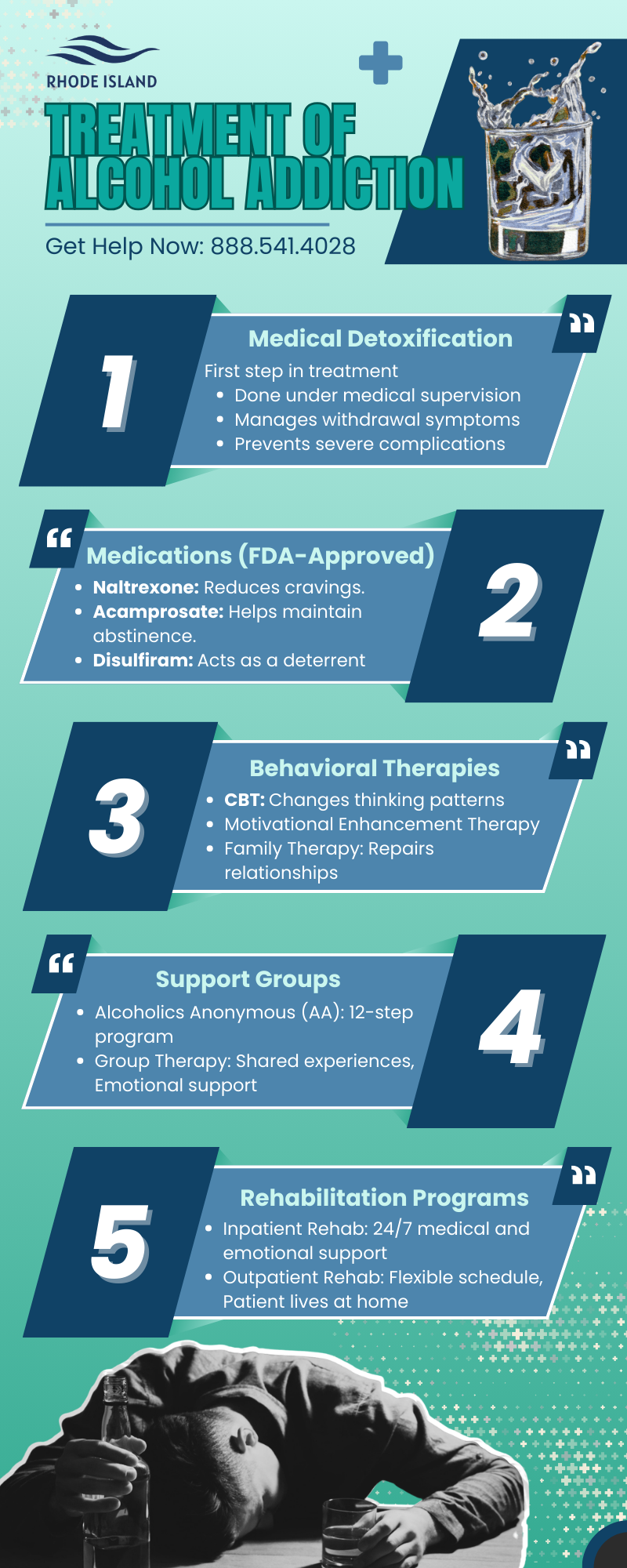
Medication-Assisted Treatment (MAT) to Safely Manage Cravings
Alcohol withdrawal triggers a dangerous surge of excitatory chemicals in the brain. Attempting to stop cold turkey without medical oversight is physically agonizing and statistically ineffective. Our psychiatric team utilizes FDA-approved Medication-Assisted Treatment to manage this neurochemical chaos safely.
Non-addictive medications like Naltrexone and Vivitrol occupy specific receptors in the brain to block the euphoric effects of alcohol. These targeted prescriptions effectively neutralize physical cravings and stabilize your volatile brain chemistry. They extinguish the biological reward previously associated with drinking.
Medical stabilization removes the agonizing distraction of withdrawal sickness. Parents regain the cognitive energy required to focus on behavioral therapy instead of white-knuckling through their daily responsibilities.
Evidence-Based Modalities (CBT & DBT) to Process Parental Stress
Medication provides a biological foundation, but lasting recovery requires advanced psychological skill building. Our master-level clinicians rely on Cognitive Behavioral Therapy to intercept destructive thought loops. CBT teaches your brain to logically challenge feelings of parental inadequacy before they dictate your behavior.
We seamlessly integrate Dialectical Behavior Therapy to build robust distress tolerance. Parenting inherently involves unpredictable stress and sudden emotional spikes. DBT equips you with practical somatic tools to regulate your nervous system during a toddler meltdown or a teenage conflict.
You learn to process your underlying burnout and trauma without relying on a chemical escape hatch. These clinical interventions teach you how to remain present and grounded during times of family chaos.
Comprehensive Dual Diagnosis and Family Counseling
Alcohol dependency rarely exists without co-occurring conditions like clinical depression or chronic anxiety. Our dual diagnosis approach treats the chemical habit and the underlying mental health condition at the exact same time. Treating the whole person ensures a reliable foundation for lifelong stability.
We also extend our clinical support to the surrounding family unit. Our programs incorporate structured family therapy sessions to safely repair damaged communication channels. We provide a neutral space to address the unspoken resentments that accumulate during active addiction.
Clinicians guide partners through the difficult process of rebuilding shattered trust and establishing healthy boundaries. Educating the family transforms the entire household into an educated and supportive environment. This comprehensive care model breaks the cycle of generational trauma.
Take the Brave Step to Protect Your Family’s Future
Remember that acknowledging a struggle with alcohol is never a sign of parental failure. It is, in fact, the ultimate act of love and courage for your children. As the leader of the family, it is your duty to ensure that every member is able to take control of their neurological health.
If you, yourself, are struggling, know that you do not have to fight the grip of alcohol alone for another day. Please reach out to the compassionate admissions team at Rhode Island Addiction Treatment Centers today. We offer a zero-judgment intake evaluation to discuss flexible scheduling that fits your family life.
You can contact us at 888-541-4028 or visit rhodeislandaddictiontreatmentcenters.com to get a better idea of our programs.