
Taking the First Step: What to Expect on Your First Day of IOP in Rhode Island
Stepping into an IOP (Intensive Outpatient Program) is a monumental victory for any individual suffering from addiction. Yet the overwhelming fear of walking through clinic doors on day one often leaves individuals paralyzed. Research data from 2026 shows that in Rhode Island, over 50% of adults who needed substance use treatment delayed seeking care due to intense fears surrounding the clinical environment.
Entering our outpatient rehab does not mean you will be locked away or stripped of your dignity. Knowledge dissipates fear.
At Rhode Island Addiction Treatment Centers, we prioritize transparent care from your very first moment with us. Knowing exactly what to expect on day one helps you drop your defenses and focus solely on your clinical healing.
Step 1: The Welcoming Intake and Clinical Assessment
A Warm, Respectful Welcome
Your surroundings and physical environment dictate how your nervous system responds to incoming stress. When you arrive at our modern clinic, we provide an immediate sense of relief. To achieve this goal, we intentionally designed our space to feel like a private sanctuary rather than a cold institution.
A discreet, compassionate staff will greet you and support your comfort. Through a biological process called neuroception, your brain constantly scans your surroundings for potential threats. Our calm atmosphere signals to your vagus nerve that you are finally safe.
This physical safety is a mandatory prerequisite for true psychological healing. Our team ensures you feel respected from the exact moment you walk through the door. We handle the initial logistics smoothly so you can breathe and settle in.
Completing Your Bio-Psycho-Social Evaluation
The next phase involves a comprehensive clinical intake. A master-level clinician will sit down with you for a collaborative conversation. We want to explicitly state that this evaluation is never an interrogation.
The clinician works to understand your personal history with substance use and trauma. We actively screen for co-occurring mental health conditions like generalized anxiety or clinical depression. Identifying these underlying drivers is central to our dual diagnosis philosophy.
We evaluate your specific medical needs and establish your unique recovery goals. This detailed assessment allows us to customize your care plan with clinical precision. We map out your specific neurological baseline to ensure you receive the most effective interventions.
Step 2: Medical Review and Medication Management Setup
Ensuring Physical Safety and Comfort
Detoxing from drugs or alcohol takes a heavy physical toll on the human body. Our clinical team evaluates your physical baseline to guarantee you are safely stabilized. We actively address any lingering post-acute withdrawal symptoms.
Your brain is currently attempting to rebalance its neurochemistry without the presence of illicit substances. This often triggers severe insomnia, body aches, and debilitating cravings. You cannot focus on psychological therapy if you are battling intense physical discomfort.
Integrating Medication-Assisted Treatment (MAT)
Proper medical support acts as the biological foundation of your intensive outpatient care. Our psychiatric team carefully reviews your current prescriptions and health history. We then discuss whether FDA-approved Addiction Management options are appropriate for your specific needs.
FDA-approved medications, like Suboxone or Vivitrol, are known to play a vital role in stabilizing your central nervous system. These specialized prescriptions bind directly to the opioid receptors in your brain to eliminate physical cravings. They are also effective in blocking the euphoric effects of illicit opioids to prevent a future relapse.
So, by stabilizing your brain chemistry via medication, we remove the constant distraction of physical withdrawal. This medical intervention gives your prefrontal cortex a reserve of biological energy required to engage in deep trauma resolution.
Step 3: Introduction to Your Peer Community and Group Therapy
Your First Group Therapy Session
The anticipation of group therapy frequently causes significant social dread for new clients. We want to demystify this clinical experience right away. Group therapy is never a place for public shaming or forced exposure.
It operates as a deeply supportive and professionally facilitated space. You are encouraged to listen and share at your own comfortable pace. Observing the vulnerability of others actually stimulates the mirror neurons in your brain.
This biological reaction naturally builds deep empathy and decreases your internal sense of isolation. Clients quickly realize they are surrounded by local Rhode Island peers who understand their exact struggles.
Establishing Trust and Community Boundaries
Authentic healing requires a foundation of deep psychological safety. Our master-level facilitators enforce strict rules regarding client confidentiality and mutual respect. We maintain a zero-judgment environment at all times.
These firm community boundaries ensure every single group member feels secure enough to be vulnerable. Knowing your privacy is protected actually lowers your daily cortisol levels. You get to practice new emotional regulation skills within a secure local network.
This peer support system becomes a vital asset for navigating early recovery. You build authentic connections that reinforce the distress tolerance skills learned in your individual sessions.
Step 4: Co-Creating Your Customized Treatment Roadmap
Pairing with Your Dedicated Primary Therapist
Individual therapy plays a crucial role in your overall recovery trajectory. You will meet with your dedicated primary therapist during your first week. This initial one-on-one session focuses on building rapport and establishing clinical trust.
You and your therapist will set actionable and realistic goals for your time in the program. This personalized roadmap targets your specific trauma triggers and cognitive distortions. Our clinicians utilize evidence-based tools like Cognitive Behavioral Therapy to rewrite your destructive thought loops.
We ensure your therapy aligns directly with your personal ambitions. You learn how to intercept negative thoughts before they dictate your physical behavior.
Outlining Your Weekly IOP Schedule
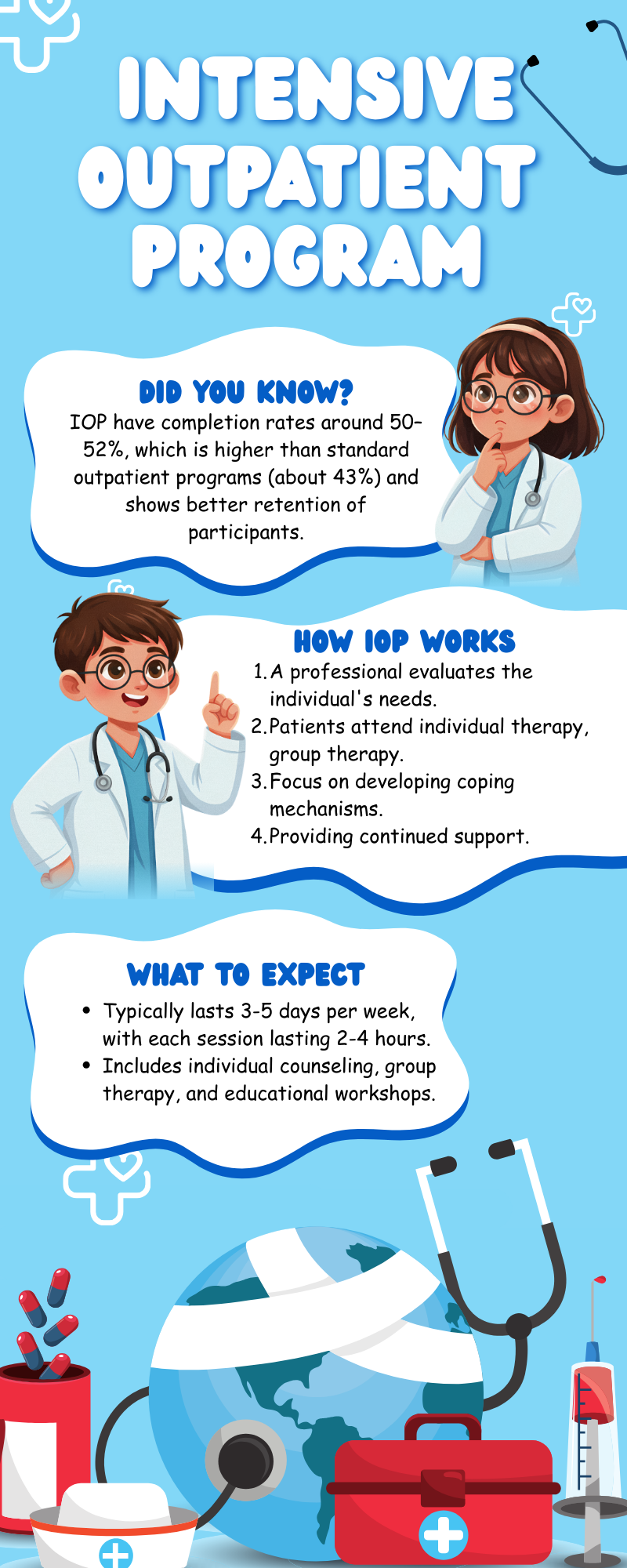
Clarity removes anxiety and restores your executive function. We provide a transparent outline of your logistical structure before your first day concludes. Our staff walks you through the typical daily flow of group sessions and individual counseling blocks.
We detail your scheduled break times and answer any remaining logistical questions. This flexible scheduling delivers rigorous clinical intervention while allowing you to return home to your family every evening. Sleeping in your own bed protects your natural circadian rhythm.
You get to practice your newly acquired emotional regulation skills directly within your actual living environment. Bringing those real-world stressors back to your therapist the next morning allows for rapid clinical adjustments.
Begin Your Recovery Journey with Confidence Today
Walking through our clinic doors on your first day requires immense courage. That initial step marks the exact moment your trajectory shifts from chronic survival toward lasting freedom and emotional stability. You can break the cycle of dependency and reclaim your future.
Please contact our compassionate admissions directors in Warwick today. We will help you complete a rapid, stress-free pre-assessment to secure your intake date.
Reach out to Rhode Island Addiction Treatment Centers at 110 Jefferson Blvd, Warwick, RI 02888, by calling (888)-541-4028 or visiting our website, rhodeislandaddictiontreatmentcenters.com.
Read Next: How to Pay for Rehab in Rhode Island: Insurance, Medicaid, and Financing Options