
Developing Healthy Coping Skills
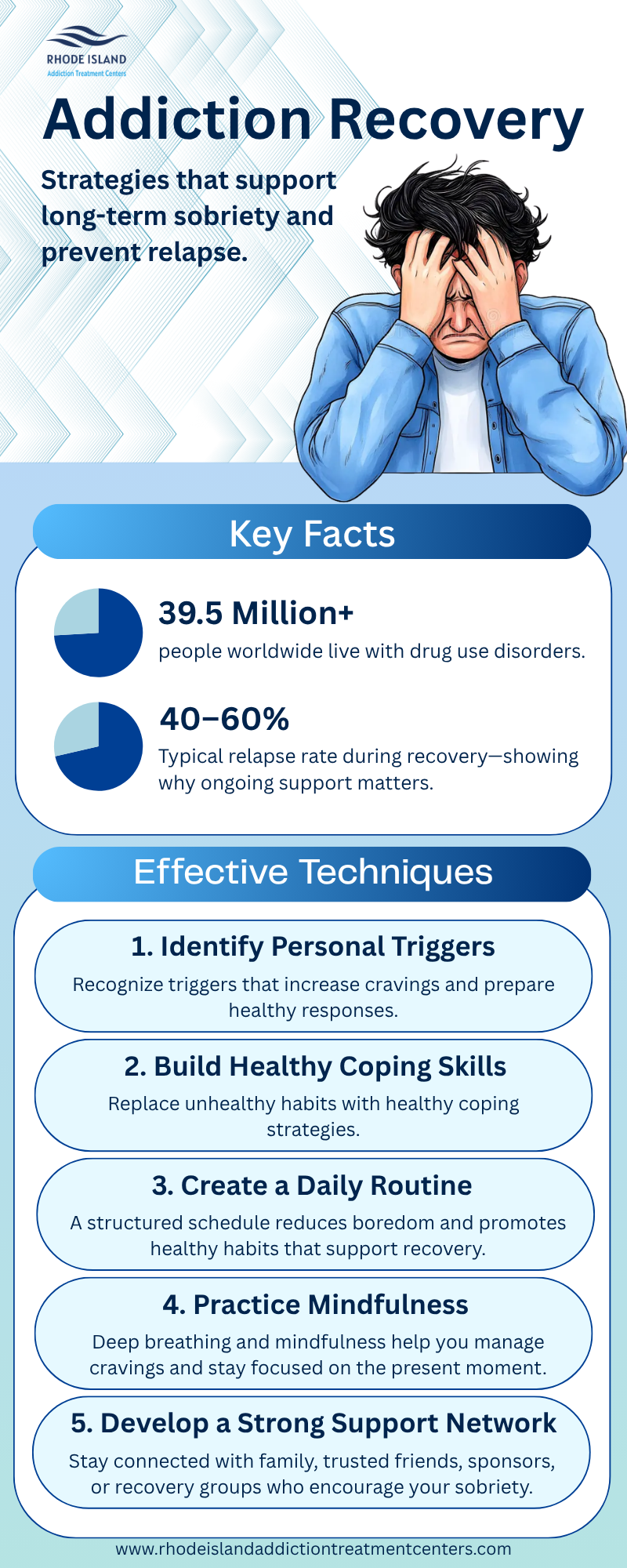
Riding out an addiction craving through sheer willpower is exhausting. The intense seasonal shifts from bustling Ocean State summers to isolating New England winters add a heavy layer of stress. In Rhode Island, over 30% of adults report experiencing symptoms of anxiety or depression during the year. Many people think healthy coping mechanisms just mean taking a walk or doing breathing exercises. We need to reframe these skills as robust neurobiological tools designed to intercept your brain’s trauma loops.
At Rhode Island addiction treatment centers, we do not just tell you to stay sober. We actively train you in the evidence-based modalities required to build emotional resilience and thrive in the real world.
The Difference Between Distraction and True Emotional Regulation
Simply keeping yourself busy is not the same thing as regulating your nervous system. Distraction might work for a few hours while you endure a craving. The underlying tension will eventually return if the root issue goes unaddressed.
Working in the local maritime or hospitality industries brings unique daily pressures. A bad shift can easily send your nervous system into overdrive. White-knuckling through that stress forces your body to rely heavily on adrenaline and cortisol.
Your brain eventually fatigues from this constant state of high alert. True emotional regulation means teaching your central nervous system how to calm itself down organically. We help you build a new neurological baseline that does not require a chemical escape.
The Role of Dual-Diagnosis Care
Effective coping skills must address both the substance use trigger and the underlying mental health condition. You cannot treat an alcohol dependency without looking at the severe anxiety driving it. Dual-diagnosis care treats these issues as two sides of the same coin.
Untreated depression often creates a heavy cognitive fog. This makes it very difficult to remember your coping strategies during a crisis. Our clinicians actively treat the mood disorder so your brain has the energy to utilize new tools.
A high-stress moment will quickly expose any gaps in your recovery plan. Integrated care ensures you have a reliable strategy for managing panic without turning to substances. This dual approach gives your central nervous system a much better chance at achieving lasting stability.
How CBT and DBT Rewire the Brain’s Response to Stress
Cognitive Behavioral Therapy acts as a primary tool for dismantling catastrophic thought patterns. A craving often begins with a single negative thought that spirals out of control. CBT helps you identify that specific thought before it dictates your behavior.
You learn to challenge the validity of your own internal narrative. If you believe one bad day ruins your whole recovery, you are far more likely to pick up a drink. We train your brain to view setbacks as temporary hurdles rather than permanent failures.
This therapy literally rewires the neural pathways in your prefrontal cortex. You regain the ability to pause and evaluate a situation logically. It prevents a minor trigger from turning into a severe behavioral response.
Building Distress Tolerance with DBT
Dialectical Behavior Therapy serves as your anchor for emotional regulation. It is specifically designed for individuals who experience feelings with extreme intensity. DBT teaches you how to sit with deeply uncomfortable emotions without needing an immediate exit strategy.
Life in the Ocean State will inevitably bring unexpected challenges. You might face a sudden financial stressor or a difficult family confrontation. This therapy gives you practical skills to tolerate that distress without making impulsive decisions.
You learn radical acceptance of your current reality. Fighting against a painful moment often creates more suffering than the actual event itself. Accepting the moment allows you to navigate it safely and soberly.
Healing the Root Cause: Integrating EMDR and Family Systems
Sometimes a lack of coping skills stems directly from unresolved past trauma. A traumatized brain operates in a chronic state of hypervigilance. Standard talk therapy is not always enough to calm an overactive amygdala.
Our clinicians utilize Eye Movement Desensitization and Reprocessing to address these deep emotional wounds. EMDR allows your physical body to safely let go of trapped psychological pain. The therapy guides your eye movements to reprocess painful memories into neutral events.
Once you process this root trauma, everyday stressors become much more manageable. Your nervous system stops overreacting to minor inconveniences. You finally gain the emotional bandwidth needed to learn advanced coping mechanisms.
Extending Skills to the Family Unit
Healthy coping skills cannot be limited to just the individual in recovery. The entire family unit must learn how to communicate and manage stress effectively. In tight-knit Rhode Island neighborhoods, addiction rarely impacts only one person.
Families often develop their own maladaptive coping mechanisms over years of chaos. Walking on eggshells or enabling destructive behavior becomes the normal routine. We guide your loved ones through structured workshops to break these generational cycles of dysfunction.
You and your family will learn how to set healthy boundaries together. This replaces years of hidden resentments with transparent and open dialogue. A unified family creates a powerful support system that reinforces your new clinical tools.
A Boutique Sanctuary for Rebuilding Your Life in Warwick
Trying to learn vulnerable emotional skills inside a crowded state-run institution is very difficult. Those environments are often loud and highly impersonal. Patients frequently worry about being judged or becoming just another case number on a clipboard.
Rhode Island Addiction Treatment Centers offers a very different experience. We intentionally built a private sanctuary right on Jefferson Boulevard. Our clinician-led environment provides the psychological safety you need to lower your guard.
A smaller setting ensures you receive highly individualized attention. Our compassionate staff truly takes the time to understand your unique story. You get to practice these new skills in a dignified and supportive community.
Practicing Your Skills in Real-Time
Our flexible step-down levels of care fit smoothly into your regular life. We offer a highly structured Partial Hospitalization Program for individuals requiring intensive stabilization. We also provide Intensive Outpatient and standard Outpatient programming.
These outpatient models allow you to engage in deep clinical work during the day. You then return to your local community in the evening. This structure allows you to immediately test your new coping tools against real-world pressures.
Bringing those real-world experiences back to your therapist allows for immediate clinical adjustments. You learn to navigate the unique stressors of Rhode Island living with support from our staff. The skills you learn here are built to hold up in your actual daily routine.
Equip Yourself for a Resilient Future
You do not have to keep relying on temporary fixes to survive the week. Committing to a clinical recovery program gives you a permanent toolkit for emotional growth.
Please take the first step toward true resilience by calling our clinician-led admissions team today. Reach out to Rhode Island Addiction Treatment Centers by calling 885-541-4028. You can also explore our boutique recovery hub online at rhodeislandaddictiontreatmentcenters.com.