
Dual Diagnosis Treatment in Rhode Island: Healing Mental Health and Addiction Together
“You can’t fix one side of the coin without fixing the other.”
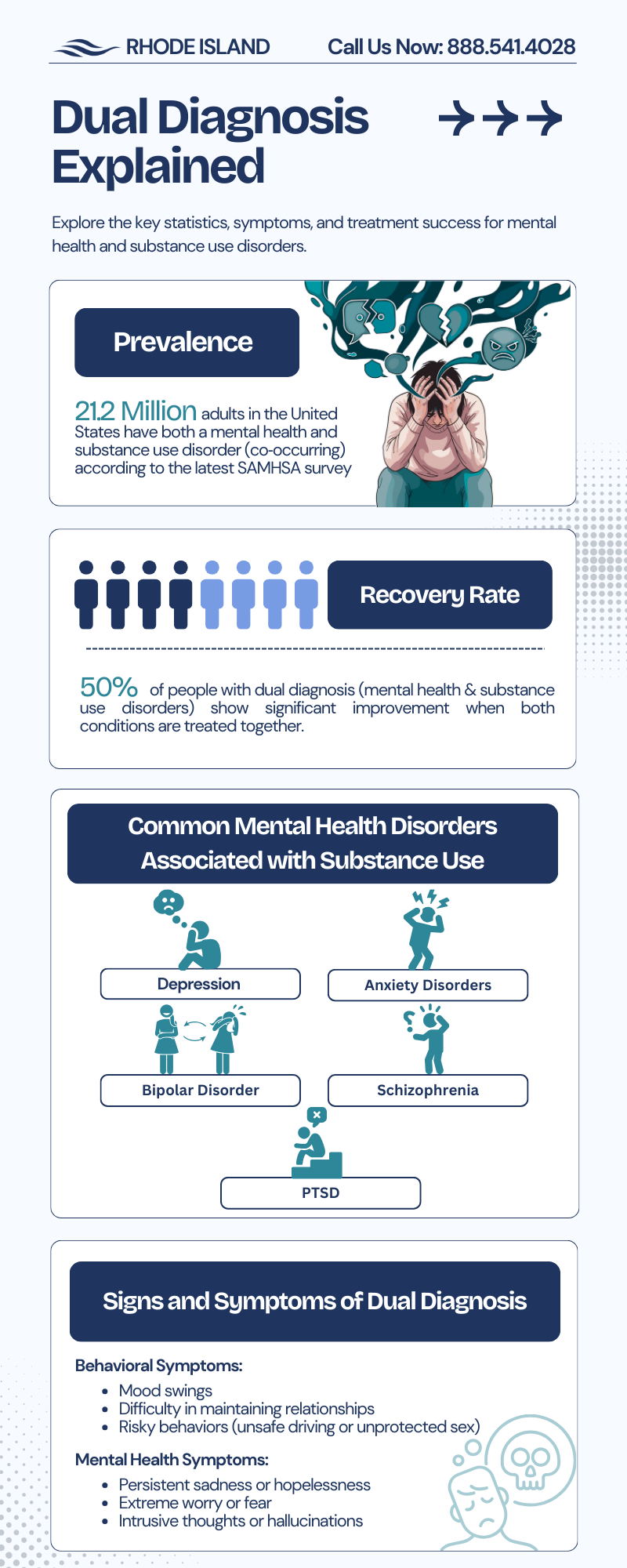
Over 9 million U.S. adults faced both a substance use disorder and a mental illness last year, yet fewer than 15% got treatment for both at the same time.
That gap leaves too many people stuck in a cycle of relapse and pain. If you or someone you love is struggling in Rhode Island, dual diagnosis treatment in Rhode Island offers a clearer path forward. We, the experts at Rhode Island addiction treatment centers, are here to help you understand how treating co-occurring disorders together leads to real, lasting healing.
In this article, you’ll learn what dual diagnosis really means, how integrated care works, the therapies that help, and a real-life story showing why this approach changes lives.
What Is Dual Diagnosis?
Dual diagnosis, also called co-occurring disorders, happens when someone battles a mental health condition and a substance use disorder at the same time. Think of it like trying to run with one shoe untied – you’ll trip over and over until both feet are ready.
Common mental health issues include depression, anxiety, bipolar disorder, PTSD, or schizophrenia. These often pair up with alcohol abuse, drug addiction, or misuse of prescription medications.
Mental Health Condition | Common Co-Occurring Substance |
Depression | Alcohol |
Anxiety | |
Bipolar Disorder | Stimulants (e.g., cocaine) |
PTSD | Marijuana or opioids |
Schizophrenia | Nicotine or cannabis |
Untreated mental illness can push someone to self-medicate with substances. In turn, addiction worsens psychiatric symptoms. This cruel loop needs integrated treatment to break.
Key Components of Dual Diagnosis Treatment
Great dual diagnosis treatment in Rhode Island doesn’t split problems apart. It treats the whole person with coordinated care that hits both issues at once.
Integrated Care
Integrated care means mental health and addiction treatment happen together, not in separate rooms. Imagine two doctors talking daily instead of guessing what the other is doing. This unified approach keeps therapy, meds, and support in sync.
“When care is split, recovery stumbles. When it’s united, healing takes flight.”
Behavioral Therapies
Therapy is the heart of recovery. Here’s what works best:
- Cognitive Behavioral Therapy (CBT): Helps spot bad thought patterns and swap them for healthy habits that support sobriety and mental stability.
- Dialectical Behavior Therapy (DBT): Teaches emotional regulation, cuts down on self-harm, and manages triggers for substance use.
- Other therapies: Mindfulness, art therapy, yoga, and relapse prevention boost emotional wellness and spiritual balance.
Medication Management
Medication management uses prescriptions wisely. Some meds calm depression while cutting cravings for nicotine or opioids. Psychiatrists watch closely to avoid new dependencies. It’s like tuning a guitar – every string must be just right.
Support Systems
Recovery is tougher alone. Peer support groups share stories, hope, and practical tips for staying clean. Family counseling repairs trust and reduces home triggers. Think of support as a safety net under a tightrope walker.
Detoxification and Residential Care
Medically supervised detox makes withdrawal safe. Residential care or inpatient programs offer 24/7 help in a calm, structured setting. These structured environments mix therapy, medical care, and mental health support, slashing relapse risk early on.
Benefits of Dual Diagnosis Treatment
Why choose dual diagnosis treatment in Rhode Island? The payoff is real.
|
Benefit |
Why It Matters |
|
Lower relapse rates |
Treating root causes stops the cycle Before it starts |
|
Accurate diagnosis |
Symptoms aren’t hidden by substance use anymore |
|
Better long-term outcomes |
Coordinated care = sustained sobriety and joy |
Young adults (18–25) face the highest co-occurring disorder rates, over 10%. Yet many never get specialized treatment. Don’t let stats be your fate.
Discover how to break free from dependence in our latest blog, “Prescription Drug Abuse Treatment in Rhode Island (Benzos, Painkillers),” and take the next step toward your recovery today.
Duration and Accessibility
How long does dual diagnosis treatment last? It depends on you. Programs run 30 days to several months, covering detox, residential, and outpatient phases.
Good news: Many Rhode Island treatment centers take insurance plans. This makes accessible care possible without breaking the bank. No one should skip healing because of cost.
Real-Life Case Study: How Integrated Care Changed a Life
Let’s talk about “Mark,” a real-style case from SAMHSA. Mark, 35, had major depressive disorder and alcohol use disorder. At first, he only treated drinking. Spoiler: He relapsed again and again. His depression sat untouched.
Then he joined an integrated dual diagnosis program. His plan included:
- Antidepressants to steady mood
- CBT to rewiring negative thoughts
- Group therapy for peer support
- Family counseling to fix home tension
After six months, Mark was sober, less depressed, and had new coping strategies. Treating both at once worked wonders.
Why Rhode Island Is Leading the Way
Rhode Island gets it. Small state, big heart. Many centers here offer dual diagnosis treatment with certified therapists, medication experts, and family programs. You won’t find cookie-cutter care. You’ll find personalized plans that fit your life.
Conclusion
Dual diagnosis treatment in Rhode Island isn’t just another option. It’s the smart, humane way to heal mental health and addiction together. With integrated care, behavioral therapies, medication management, and strong support systems, you can break the cycle for good.
You don’t have to walk this road alone. Reach out to a Rhode Island addiction treatment center today. Real recovery starts when both sides of your coin are fixed – together.