
Alcohol Detox Program In Rhode Island

Alcohol Detox Program In Rhode Island

Alcohol Detox Program In Rhode Island What To Expect, Timeline, And Next Steps Alcohol Detox in Rhode Island: What Really Happens in the First 72 Hours

Alcohol Detox in Rhode Island: What Really Happens in the First 72 Hours

“Alcohol withdrawal syndrome (AWS) is a common, heterogeneous, and life-threatening complication of alcohol use disorder,” which is why detox should never be treated like a DIY project. 

In many cases, symptoms can begin within hours and then peak around days 1–3, so planning early makes the process safer and calmer. 

An Alcohol Detox Program in Rhode Island provides medical monitoring, symptom scoring, and support that helps you stabilize first and then transition into real treatment. 

In this guide, we explain what happens in detox, how long it usually lasts, what medications may be used, and what smart next steps look like after discharge.

What An Alcohol Detox Program In Rhode Island Really Is

An Alcohol Detox Program in Rhode Island is medically guided care designed to manage withdrawal safely while the body adjusts to life without alcohol. In plain terms, detox focuses on immediate stabilization because alcohol withdrawal can escalate and become medically dangerous without proper monitoring.

At Rhode Island Addiction Treatment Centers, we treat detox as the starting point, not the finish line. That mindset matches clinical guidance describing detox as a process that includes evaluation, stabilization, and helping someone enter ongoing treatment instead of stopping at symptom relief.

  • Evaluation: Substance screening plus medical, psychological, and social assessment.
  • Stabilization: Monitoring and symptom relief while risks are highest.
  • Planning: Linkage into the next level of care before discharge.

Who Typically Needs Medically Supervised Alcohol Detox

Some people can reduce drinking and recover with low-intensity support, but others face a higher chance of severe withdrawal and need closer care. Clinical risk factors include prior withdrawal seizures, delirium tremens history, older age, and serious medical conditions.

Placement should be decided clinically, not emotionally, because alcohol and sedative withdrawal can turn quickly. When benzodiazepines are involved, risks can rise, which is one reason supervision matters even more for some profiles.

  • Seizures: Past withdrawal seizures or severe shaking episodes.
  • Delirium: Prior delirium tremens or severe confusion with withdrawal.
  • Vitals: Unstable blood pressure, heart rate, or major health conditions.
  • Sedatives: Alcohol use plus benzodiazepines or similar depressants.

What Happens In An Alcohol Detox Program In Rhode Island

The first 24 hours usually include intake, vital checks, a full history, and symptom scoring to estimate withdrawal risk and guide the care plan. Many programs use structured assessments so staff can respond fast when symptoms rise.

Days 2–7 often include ongoing scoring, supportive care (sleep, hydration, nutrition), and daily reassessment as symptoms peak and then ease. The goal is steady stabilization, with a plan for what happens next already forming while you are still in care.

Phase

What Happens

Why It Matters

Intake & Evaluation

History, vitals, withdrawal risk screening

Matches you to the safest level of care.

Stabilization

Symptom scoring (often CIWA-Ar), supportive care, medication if needed

Reduces risk of seizures and delirium.

Transition Planning

Aftercare plan, next appointments, outpatient or residential referral

Detox alone isn’t full treatment.

Alcohol Withdrawal Timeline And What It Feels Like

Alcohol withdrawal timing follows a pattern for many people: symptoms may start within hours after stopping or reducing alcohol. For some, symptoms peak around days 1–3, and a smaller group may experience symptoms that last longer, sometimes up to 14 days.

Even with typical timelines, withdrawal is still personal. Your drinking history, overall health, and prior withdrawal episodes can change what you feel and how long symptoms last.

Time Window

Common Pattern

Clinical Note

First Day

Early symptoms may start

Severity varies widely.

Days 1–3

Symptoms often peak

Higher monitoring needs.

Days 4–7+

Symptoms often ease

Ongoing support still matters.

➡️ If you’re comparing withdrawal options beyond alcohol, read our latest blog “Drug Detox Center in Rhode Island” for a clear look at safe detox support and how it connects with the next steps covered in this guide.
Medications Used During Alcohol Detox

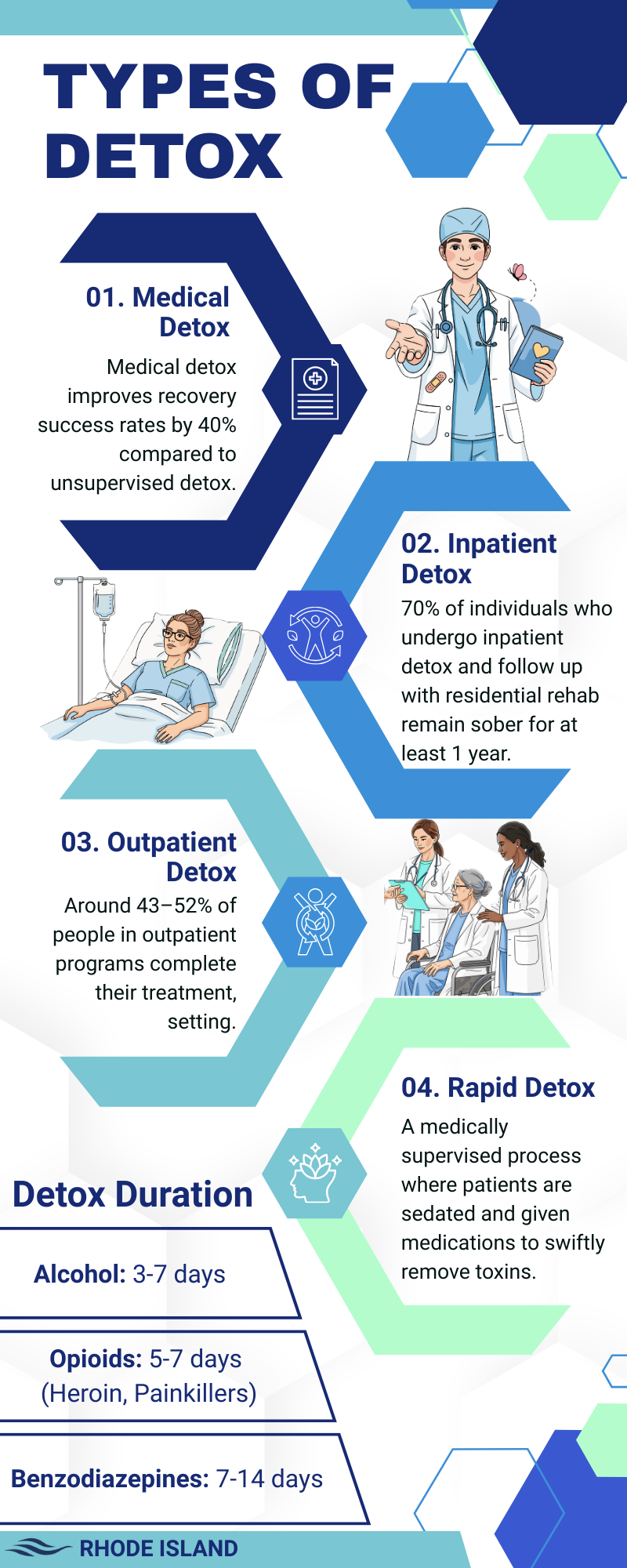
Medication can reduce withdrawal intensity and lower complication risk, and dosing is often adjusted based on what symptoms show up and how severe they are. This is one reason symptom scoring matters, because it supports safer, more targeted use instead of guessing.

Evidence reviews describe benzodiazepines as a mainstay of alcohol withdrawal treatment, especially for preventing severe symptoms such as seizures. In real-world care, medication decisions still remain individualized, because safety depends on health history and current risk.

  • Benzodiazepines: Examples used in many protocols include diazepam, chlordiazepoxide, and lorazepam.
  • Supportive: Medications may be used for nausea, sleep disruption, or agitation when clinically appropriate.
  • Vitamins: Supportive care can include nutrition and vitamins as part of safe management.

How Long Is The Detox Process For Alcohol?

The most intense symptoms often peak within 1–3 days, yet detox support commonly continues beyond that based on risk and how symptoms evolve. Some people stabilize quickly, while others need longer monitoring, especially if symptoms are severe or complicated.

The real goal is medical stability, not “speed.” Clinical guidance emphasizes stabilizing the patient and building effective linkages to follow-up services, because detox without a next step leaves relapse risk wide open.

  • Typical: Many people need several days of monitoring.
  • Extended: Some symptoms can persist longer in certain cases.
  • Ready: Discharge happens when you are stable and a plan is set.

What Happens After Alcohol Detox (The Part That Protects Progress)

Detox removes alcohol from the body, but it does not teach relapse prevention, coping skills, or long-term recovery structure. That is why a strong step-down plan often includes options like residential care, partial hospitalization, intensive outpatient, or outpatient counseling depending on your needs.

We focus on continuity because momentum matters most right after stabilization. Rhode Island Addiction Treatment Centers supports adults 18+ with evidence-based outpatient services and coordinated next steps, and we are about 10 minutes from Providence for easier follow-through.

  • Outpatient: Therapy and structured sessions while living at home.
  • IOP: More weekly support when relapse risk is higher.
  • Aftercare: Alumni support, check-ins, and ongoing accountability.

Case Study: Protocol-Based Detox Improves Care

A hospital implemented a symptom-based alcohol withdrawal protocol using CIWA-Ar scoring to guide medication decisions. After implementation, average daily diazepam dosing and cumulative diazepam dosing were significantly lower in the post-protocol group compared with pre-protocol care.

Length of stay was similar overall, yet the duration of benzodiazepine use decreased in the post-protocol group. This case supports a practical point: structured monitoring can improve medication efficiency without sacrificing safety, which is exactly what a well-run detox program aims to do.

How To Choose An Alcohol Detox Program In Rhode Island

Start by confirming medical oversight and whether the program follows standardized symptom monitoring. In hospital settings, protocols built around CIWA-Ar scoring have been used to support safer, more consistent treatment decisions.

Next, make sure transition planning is built into care, not added as an afterthought. Clinical guidance describes detox as incomplete if it does not include evaluation, stabilization, and active linkage into ongoing treatment.

  • Oversight: Clear physician and nursing availability for escalation.
  • Monitoring: Standardized scoring and documented protocols.
  • Aftercare: Written plan with scheduled next appointments.
  • Insurance: Transparent verification and admissions steps.

Frequently Asked Questions (FAQs)

What happens in an alcohol detox program?

A quality program starts with evaluation, including medical history, vitals, and withdrawal risk screening. Next comes stabilization using monitoring and symptom-based support. Finally, it includes transition planning, because detox should actively connect you to treatment and follow-up care.

How to fully detox your body from alcohol?

“Fully” means medically stable and able to move into ongoing treatment, not just having alcohol leave your bloodstream. Since symptoms can last beyond the first days and sometimes up to 14 days, follow-up care protects progress and reduces relapse risk during the vulnerable early phase.

How long is the detox process for alcohol?

Many people feel the worst symptoms around days 1–3, although timing varies by history and health. Some symptoms can continue longer, and that is why discharge should be based on stability and a plan, not a fixed number of days on a calendar.

What are the 7 steps of sobriety?

A practical seven-step path is: acknowledge the problem, get a clinical assessment, stabilize safely, learn coping skills, build support, treat root causes, and maintain progress with aftercare. This sequence aligns with the idea that stabilization must lead into treatment rather than stopping at detox.

Next Step With Rhode Island Addiction Treatment Centers

Alcohol withdrawal is serious, but it becomes more manageable when care is structured and monitored. Detox works best when it includes evaluation, stabilization, and a clear bridge into treatment, because relapse prevention starts before discharge. If you want support that prioritizes safety and continuity, Rhode Island Addiction Treatment Centers can coordinate next steps, including outpatient care for adults 18+. Call 888.541.4028 or visit our website to discuss options and begin planning with a team that stays with you past day one.