
Alcohol Addiction Treatment in Rhode Island: Programs and Options

Alcohol Addiction Treatment in Rhode Island: Programs and Options

Alcohol Addiction Treatment in Rhode Island: Programs and Options

Alcohol Addiction Treatment in Rhode Island: Programs and Options

“Recovery is not a straight line. It’s deciding to take the first turn.”

In 2014, 431,000 women and 1.1 million men received alcohol addiction treatment, showing many still wait too long while their health and family life suffer. 

If you are searching for Alcohol Addiction Treatment in Rhode Island, Programs and Options, here’s the clear answer: local care starts with a clinical assessment to match your needs—detox for withdrawal risks, inpatient rehab for severe cases, outpatient programs (PHP, IOP, standard) for milder use with stable home life, plus therapy, medications like naltrexone, and aftercare.

This guide breaks down warning signs, program types, how to choose wisely, and what recovery looks like after rehab. Do not let shame or doubt steal more time. Help works when you start now.

When Alcohol Treatment Becomes Necessary

People often wait because they hope drinking will settle down on its own. That is understandable, but alcohol use can become harder to manage with time. What starts as “just a way to unwind” can slowly turn into a pattern that affects sleep, health, relationships, and daily responsibilities.

Alcohol addiction treatment in Rhode Island may be the right step when drinking starts causing cravings, tolerance, withdrawal, missed work, family stress, or repeated attempts to cut back without success. If alcohol is taking more from your life than it gives, that is a sign to look closer.

Common Warning Signs

  • Strong urges to drink.
  • Needing more alcohol to feel the same effect.
  • Shaking, sweating, anxiety, or nausea when not drinking.
  • Trouble at work, school, or home.
  • Drinking more than planned.
  • Losing interest in normal routines.

Alcohol Addiction Treatment in Rhode Island: Programs and Options

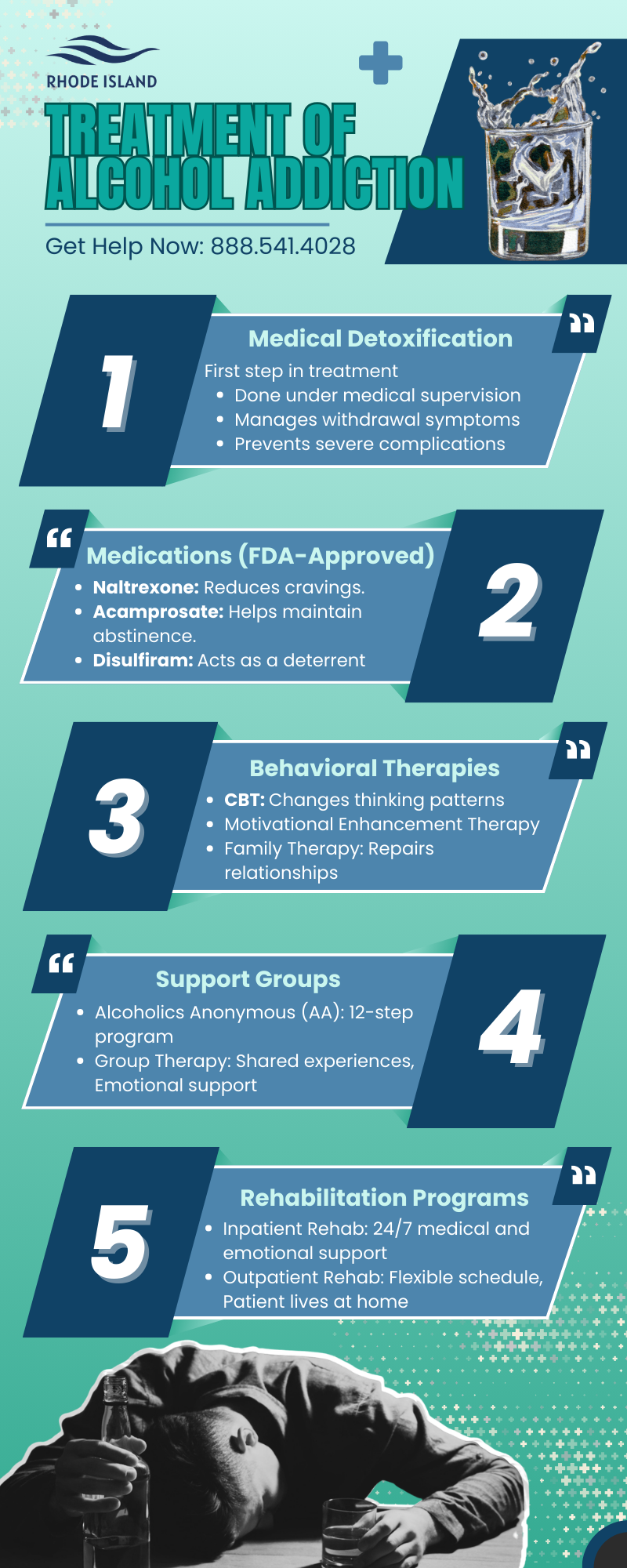
Treatment looks different for each person. Some need detox first. Others do better in residential care. Many move to outpatient treatment once life feels a little steadier.

  • Detox: Medical support during withdrawal for people with physical dependence or risky symptoms.
  • Inpatient / Residential: Live-in care with daily structure for people who need close support and fewer triggers.
  • PHP: Day treatment with strong clinical support, but no overnight stay.
  • IOP: Several sessions each week for people who need structure while living at home.
  • Standard Outpatient: Fewer weekly sessions for stable recovery or step-down care.

At Rhode Island Addiction Treatment Centers, we see treatment like a ladder. Some people start high and step down later. Others begin with lighter support. Either way, the goal is progress that lasts, not a perfect pace.

Treatment Approaches Used in Alcohol Programs

Good alcohol treatment goes deeper than stopping drinking. It helps people learn how to handle stress, cravings, grief, anger, and shame without reaching for alcohol. That is where therapy and skill-building matter.

Programs will incorporate individual therapy, group counseling, family therapy, and medications for alcohol use disorder as needed. Typically, the most effective plans are those that combine multiple supports—not just one.

Common Tools in Treatment

  • Cognitive Behavioural Therapy (CBT): It helps to reframe harmful thoughts and behaviours.
  • Motivational Interviewing: Builds motivation to change.
  • Family Therapy: To repair trust & regains support from home.
  • Medication Support: Can decrease cravings and help to rapidly restore stability.
  • Relapse Prevention: This helps people learn to manage triggers and high-risk situations.

How to Choose the Right Program

Choosing a treatment center can feel overwhelming. Every program says it can help, and that can make the search feel foggy. So slow down. Ask direct questions and look for clear answers.

A good program should explain what it offers, who it helps, and what happens after treatment ends. It should also be open about cost, insurance, and staff qualifications. If a center sounds vague or too polished, that is a reason to ask more questions.

Questions to Ask Before You Commit

  • Is the program licensed and accredited?
  • Does it offer detox or detox placement?
  • What levels of care are available?
  • Does it treat mental health issues too?
  • What does aftercare look like?
  • Is family support part of the plan?
  • Do you accept insurance?
  • How is progress reviewed during treatment?
Rhode Island Treatment Of alcohol Addiction

How Long Treatment May Last

Here, people want a nice and neat answer, but recovery is not that straightforward. Detox may last several days. Typically, a short-term rehab will run for approximately 28 days. In fact, longer care can take up to 90 days or more for someone in need of extra time to learn new habits.

Longer treatment is generally beneficial as it provides individuals with the opportunity to practice coping skills, work through triggers, and acclimate to a new lifestyle. That time can be more important than people hope for.

What Happens After Rehab Ends

Recovery does not stop when formal treatment ends. In many ways, that is when the real practice begins. This is why aftercare matters so much.

Aftercare can include therapy, medication check-ins, sober living, peer support groups like AA or SMART Recovery, and family support. A step-down plan often works better than a sudden stop because it keeps support in place while life starts moving faster again.

➡️ Read our latest blog, “Substance Abuse Treatment Near Newport, RI for Alcohol and Drug Use”, to explore local care options and take the next step with confidence. 

Real-World Case Study

A strong local example comes from Brown University Health’s Addiction Medicine Consult Liaison Service at Rhode Island Hospital. The team helps patients who are already admitted for medical, surgical, or trauma care and are also struggling with alcohol or drug use. 

They offer empathic support, education about symptoms and medications, and guidance toward treatment options inside and outside the health system. That matters because recovery does not always start in a rehab lobby. 

Sometimes it starts on a hospital floor, when someone is scared, hurt, and finally ready to listen. A well-timed consult can turn a crisis into a real next step. 

Closing Thoughts on Getting Help

Alcohol addiction treatment in Rhode Island is not about finding a perfect program on the first try. It is about finding the right level of help for where you are right now. 

At Rhode Island Addiction Centers, we believe care should fit the person, not the other way around. 

Take a breath, write down your biggest concerns, and use that list as your starting point. One honest step can lead to a very different future.