
What UnitedHealthcare Actually Covers for Addiction Treatment
Discouragement always seems to strike at the worst possible moment. Not when someone is still in denial, not when they are not yet ready, but after the shift has already happened. After the part of them that wanted recovery finally won the argument. They have made the decision. And then they look up what rehab costs in Rhode Island.
The average cost of residential drug rehab in Rhode Island is $58,755. That number does not care that someone just spent weeks building up the courage to make a call. It lands like a door slamming shut.
Nonetheless, that number tells an incomplete story. It describes what treatment costs without insurance. For Rhode Islanders who carry UnitedHealthcare coverage, the real cost is often a very different figure. This article is for anyone trying to understand what UHC covers here, how to use it, and what to do when the process feels like it is working against you.
Does UnitedHealthcare Cover Addiction Treatment in Rhode Island
It does. Your UHC Rhode Island plan must cover treatment for substance addiction to alcohol, marijuana, opioids, heroin, cocaine, and prescription drugs. That’s not a technicality or a loophole someone discovered.
In fact, the Affordable Care Act counts addiction treatment as an essential health benefit. Hence, the Mental Health Parity and Addiction Equity Act requires addiction treatment coverage to be no more restrictive than coverage for other medical conditions. Some states like Rhode Island have patient protections at the state level in addition to federal laws.
What UHC Covers: The Continuum of Care
Addiction does not fit into a single treatment format, and the coverage reflects that. UnitedHealthcare provides a range of services to treat addiction. Facilities include medical detox, inpatient rehab, outpatient programs, intensive outpatient programs (IOP), and partial hospitalization programs (PHP). Co-occurring disorders are also treatable within the same behavioral health benefits.
Medication-Assisted Treatment is covered too. This matters more than it might seem. Under Rhode Island’s parity laws, UHC cannot make it harder to access addiction medication than it would be to access medication for diabetes or heart disease.
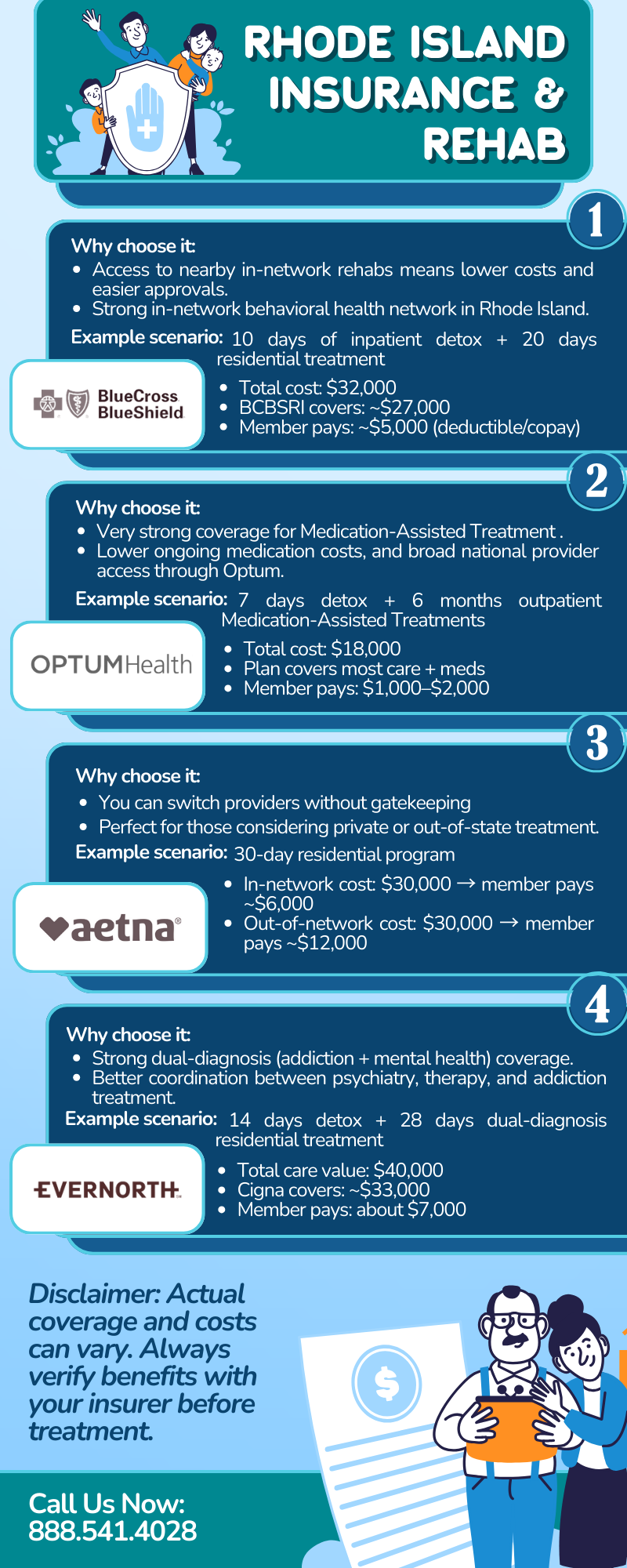
Most generic forms of buprenorphine are classified as Tier 1 drugs, with co-pays that can be as low as $0 to $10 per month. For those who need methadone, UHC covers dosing at certified opioid treatment programs across the state.
MAT is not a compromise or a shortcut. It is evidence-based care, and it is covered as such.
The Protections Rhode Island Has Built
Some states meet the federal floor on mental health parity and stop there. Rhode Island did not.
Rhode Island requires that when insurers review substance use disorder claims for medical necessity, they must apply criteria consistent with American Society of Addiction Medicine standards. That means UHC cannot use a set of internally developed, more restrictive guidelines to quietly deny care that should be covered. The standard is set by clinicians who specialize in addiction medicine, not by whoever designed the insurer’s cost-containment policy.
The state also explicitly bans frequent, short-duration concurrent reviews unrelated to a patient’s clinical condition. In other words: once treatment begins, UHC cannot run ongoing administrative interference that has nothing to do with how someone is doing. The reviews have to be clinically grounded.
Those protections are there because people needed them. They are not bureaucratic footnotes, but the result of years of advocacy by people who saw the system fail patients and decided it had to change.
What Is Prior Authorization and Why It’s Not a Barrier
Most UHC plans require prior authorization before addiction treatment can begin. The insurer must first find that the level of care proposed is medically necessary before paying. For someone who’s finally decided to get help, that one more step can feel like the system second-guessing you at the worst possible time.
In practice, treatment centers handle this. Once you’ve decided to use your UHC coverage, program staff work directly with the insurance company to secure prior authorization before the admissions process begins. You do not need to become a benefits expert overnight. The people who work admissions at treatment facilities do this every day. They know what documentation UHC needs, how to submit it, and how to follow up.
The prior authorization step is real. It is also manageable, and you do not have to manage it alone.
Do Not Lose Hope When Coverage Is Denied
A denial is a document, not a verdict.
Patients here have some of the strongest mental health parity protections in the country. If UHC denies coverage for drug or alcohol rehab, the law ensures there is recourse. When UHC’s review process results in a denial or reduction of services, both providers and members have the right to appeal. Those appeals are often successful, particularly when a treatment center is involved, and the clinical picture is clearly documented.
A denial is the beginning of a process. Not the end of one. The law is on your side, and the people at the facility you are working with have navigated this before.
Verifying Your Benefits: The Practical First Step
Call Member Services at the number on the back of your UHC card. Ask about which addiction treatment services your specific plan covers. Which Rhode Island facilities are in-network if prior authorization is required? And what your deductible and out-of-pocket maximum look like. In-network care keeps costs down significantly. Yes, out-of-network coverage also exists, but it will cost more.
The easier path, for most people, is to let the treatment center verify your benefits directly. Most facilities do this before any commitment is made, so the financial picture is already clear when you call. You do not have to piece together your own coverage summary from a phone call with an insurance representative before you feel ready to have any other conversation.
Final Words
The $58,755 sticker price for rehab in Rhode Island is real. So is the UHC coverage that can make that number almost unrecognizable by the time it reaches you. What sits between those two figures is information, and getting that information does not have to be another obstacle.
If you hold UnitedHealthcare and want to understand what it means for your situation, reach out to Rhode Island Addiction Treatment Centers. We verify UHC benefits directly before your first real conversation, so that part is already handled. Call us at 888.541.4028 or visit Rhode Island Addiction Treatment Centers online.