
Rehab Without Isolation: Understanding Outpatient Recovery in Warwick
Many people avoid asking for help because they believe rehab means they’ll have to stay in a rehab center for at least 30 days. They fear being locked in a room to get better and getting disconnected from their life. But luckily, that’s just not true anymore because there are options like an outpatient alcohol rehab in Warwick.
These programs make sure you don’t have to choose between keeping your job and getting sober because there’s always a middle ground. Warwick recovery and outpatient services are effective and meant to work around your responsibilities. So if you don’t want to quit drinking without getting admitted to a center full-time, keep reading to find a suitable route.
The Myth: You Must Get Admitted to Quit
We see rehab as disappearing into a sterile facility, cut off from the world. That all-or-nothing mentality may make you think that you can’t ask for help because your family relies on you, or your workplace won’t let you take a break.
The Reality: There are More Options
Thankfully, the reality of alcohol rehab in Warwick is that you don’t have to lose your life to save it. Alcoholism treatment has evolved to accommodate your non-negotiable duties and comfort. Now, there is a full spectrum of professional care between doing it alone and checking in, known as outpatient alcohol rehab in Warwick.
How Does an Outpatient Alcohol Rehab in Warwick Work?
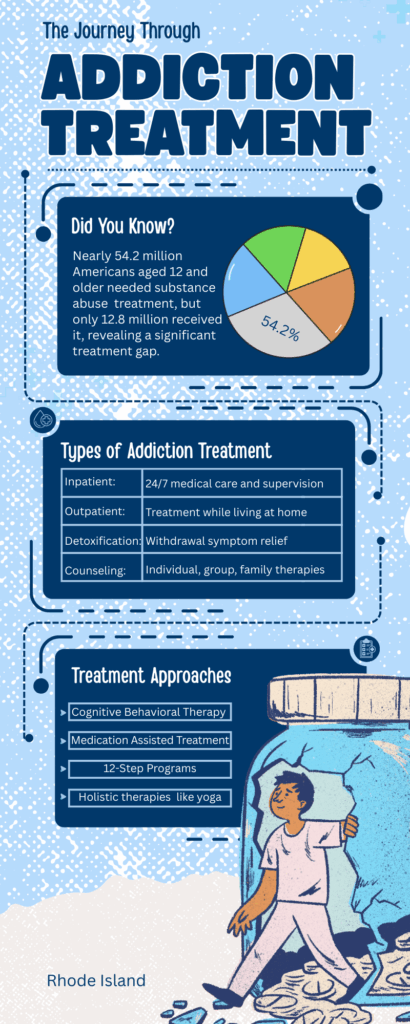
Outpatient alcohol rehab in Warwick is a program where you receive treatment for addiction while living at home. This model is important because even though places like the Rhode Island Addiction Treatment Center make treatment manageable and practical, there is an isolating aspect of inpatient rehab. That said, here is how the outpatient services of an alcohol rehab in Warwick work:
Clinical Assessment and Custom Map
At the beginning of an outpatient alcohol rehab in Warwick, you attend a strategic session to build your path out of addiction. You meet with a doctor and a therapist so they can evaluate your physical health and understand factors like your addiction history and life stressors. Since your situation can trigger your urge to reach for the bottle, the rehab team asks important questions to determine a suitable level of care.
Based on that assessment, the team decides if you need a high-intensity schedule of 20 hours a week or a lighter track of 9 hours. These experts want to offer enough medical and emotional support to help you stay sober; hence, this detailed assessment is crucial.
A Medical Plan for Cravings Management
When your body is screaming for a drink, it is nearly impossible to focus on therapy or long-term goals—the experts acknowledge that. That’s why the center’s priority is to stop that physical noise through Medication-Assisted Treatment (MAT). During alcohol rehab in Warwick, a medical provider works with you to prescribe FDA-approved medications that stabilize your brain chemistry.
Note that this doesn’t mean swapping one addiction for another. Instead, clinicians use safe drugs to quell the intense cravings that can force you to relapse. Once your physical symptoms are under control, your brain gets the breathing room it needs to learn new habits that you’re taught during rehab. Over time, this medication assistance makes it possible for you to engage in the program without being constantly distracted by a body in withdrawal.
Cognitive Skill-Building
Alcohol rehab in Warwick aims to make you strong enough to handle relapse triggers, whether you’re admitted to a center or attending as an outpatient. Therefore, once your body is stable, the focus shifts to how your mind handles the urge to drink. This is the core phase of the alcohol rehab in Warwick, where therapists help deconstruct your addiction loop.
Methods like CBT help pinpoint your craving’s trigger, what you think after it takes over, and your final action of reaching for a drink. Because of that breakdown, you learn to intercept thoughts before they turn into a relapse.
Peer Accountability and Social Rewiring
The strength of the outpatient alcohol rehab in Warwick is that you aren’t learning these skills in a vacuum. Experts believe addiction thrives when you are alone, and recovery is built on connection. Therefore, to break the cycle of isolation, the center schedules moderated group sessions where you work with others on the same path.
Those meetings almost work like a social lab where you get to be honest about your struggles and receive feedback from others who understand your pain.
The accountability aspect of these sessions during rehab helps rewire how your brain handles stress. Instead of instinctively reaching for a drink if things feel heavy, you reach out to people. Sharing your experiences and hearing from others also helps you realize that you don’t have to carry the weight of recovery by yourself.
The Maintenance and Aftercare Protocol
A good alcohol rehab in Warwick phases out as you get stronger and the center slowly steps down your hours. It essentially means that you get the steering wheel back to you in stages rather than all at once. Such a plan means that you don’t feel abandoned when you transition from support back to independence. That controlled handoff builds your confidence while keeping your safety net in place.
The experts at a rehab center also give you a tactical relapse prevention plan as your manual for the future. This document will list your high-risk situations, who to call if you feel a strong craving, and what to do when stressed. That toolkit means you stay in control of your sobriety long after your last session.
You CAN Quit, Let’s Show You How
Rhode Island Addiction Treatment Centers wish to make rehab as simple as treating a physical illness. That’s why we offer programs like outpatient rehab and partial hospitalization, where you don’t feel bound or isolated. If you want to live a sober life where nothing holds you back, call us today, and let’s build a plan out of this mess.