
Detox Isn’t the Finish Line: The Role of Step-Down Care in Rhode Island
Did you know that according to NIDA, relapse rates for drug addiction are as high as 60% in Rhode Island?
Sadly, relapse is more common than you think. Where we, as a society, go wrong is that we think detox is enough for any addiction. This assumption is untrue. While detox is a critical first step for any substance use disorder recovery, it is only the first step. It helps individuals in safely managing their withdrawal symptoms and stabilizing them physically; but detox, itself, does not address behavioral patterns or emotional triggers of any individual.
There is a very real need for step-down care after detox in Rhode Island, and today, we will discuss why:
Why Step-Down Care After Detox Is Essential?
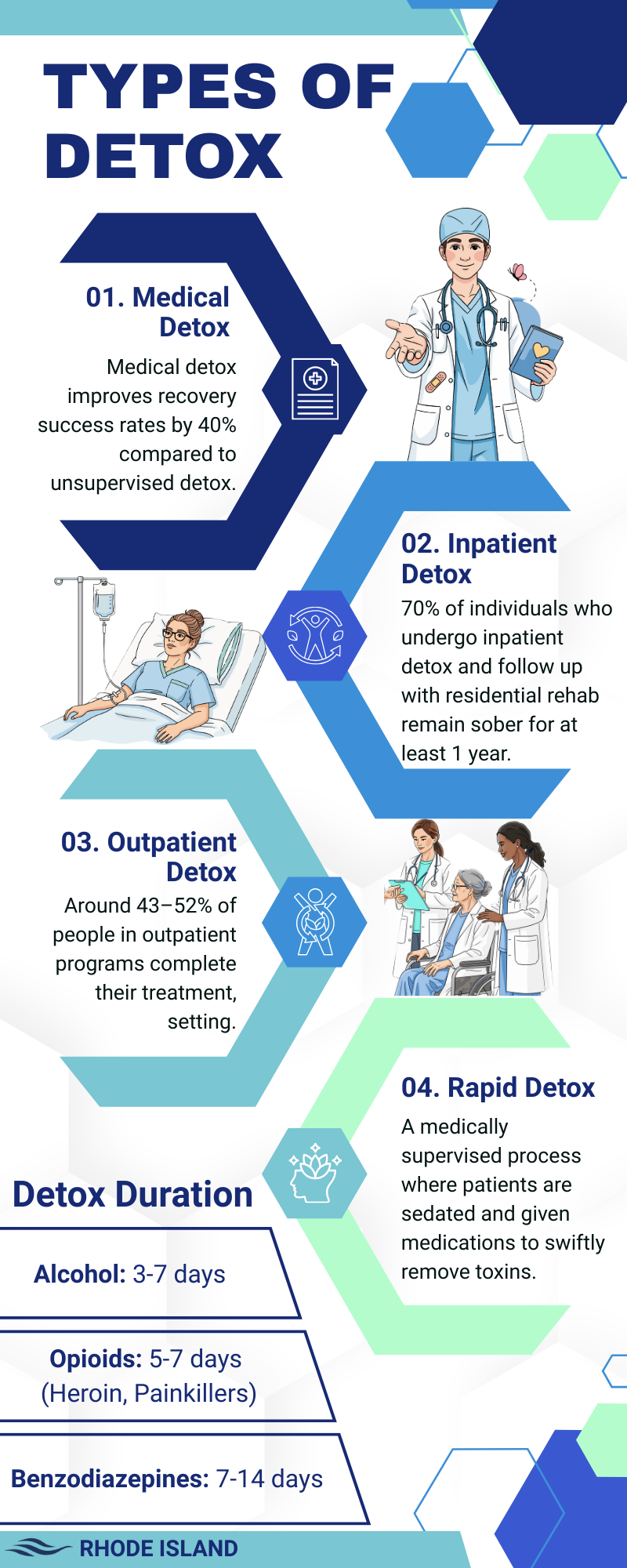
Research shows that 80 – 90% individuals are prone to relapsing if detox is not followed immediately by structured addiction therapy. It is important to understand what detox is; it is a medically supervised procedure that helps manage the physical process of withdrawal through monitoring, medication, and medical support.
The problem is that detox does not address the mental, emotional, and behavioral aspects of said addiction.
1. Detox Doesn’t Change Learned Behaviors:
It is important to understand that any addiction is not just physical dependence on a drug. Rather, it is a learned pattern of behaviors, habits, coping mechanisms, and emotional responses built over a passage of time to help self-soothe.
While detox can stabilize physically and manage withdrawal, it cannot undo those deep-rooted patterns, which is why individuals battling addiction also need help in therapy so that they can unlearn the self-destructive behaviors and replace the old habits with healthy coping skill-based responses.
2. Emotional Triggers Reappear After Detox:
Did you know that up to 60% of people in early recovery experience heightened emotions and strong emotional triggers? These triggers can range from anxiety and depression to stress and isolation.
The problem is that when the body stabilizes from detox, emotions tend to resurface, especially for those who have been using substances to cope with stress, grief, loneliness, or anger…and in such cases, a lack of support can drive them right back to substance use.
3. People Need Structure and Routine to Stay Sober:
There is a real need for structure in order for clients to be able to navigate real life again after detox. This includes work pressures, family responsibilities, and even relationships.
Unfortunately, without structure, it becomes very easy to fall back into old routines; the ones that first cause relapse. Detox is excellent for stabilization, but it cannot help individuals stay sober without the accountability of aftercare.
4. Community Support is a Predictor of Long-Term Recovery:
Did you know that people getting ongoing peer support are twice as likely to remain sober at the one-year mark as compared to those recovering without guidance?
It is not surprising though, because we are social animals. Isolation is, in fact, one of the biggest risk factors for the risk of relapse, which causes people to disconnect.
Step-Down Care After Detox in Rhode Island: The Solution for Long-Term Recovery
Since 2023, Rhode Island has made some progress in reducing overdose fatalities among residents through prevention efforts and harm-reduction. We have seen an 18.6% decrease in opioid overdose-related deaths. Yet, an unmet treatment need still remains.
It is crucial to understand that a reduction in overdose death numbers doesn’t mean we have solved the addiction problem entirely. Untreated addictions cause people to relapse, and step-down care directly addresses this very gap by providing structured care for long-term recovery. Here is how:
1. Continuation of Support:
Licensed treatment facilities, like Rhode Island Addiction Treatment Centers, offer step-down care that allows clients to stay connected with clinical support.
As a result, clients are able to stabilize emotionally, which brings consistency for the continuation of recovery.
2. Improved Engagement:
Individuals who have not received overdose treatment before detox often show a disconnect between their need and ongoing engagement. Step-down programs help these individuals by offering routine, accountability, and guidance.
Such structured care influences them to stay involved in the process of treatment, which in turn increases their likelihood of completing therapy and accessing local community resources for support.
3. Peer Support:
For individuals struggling with substance use, the biggest barrier is isolation. Step-down programs understand this challenge, and which is why these programs offer peer-based recovery support.
The peer-led networks are essential for clients to connect and build sober lifestyles outside the walls of clinical settings in the long-term.
Why Rhode Island Addiction Treatment Centers Stand Out in Step-Down Care After Detox in Rhode Island
It may seem like a biased statement, but the truth is that when it comes to long-term recovery, not all treatment programs offer the same level of care. You need a step-down program that goes beyond symptom management, and focuses on a whole-person approach rather than surface-level treatment.
Rhode Island Addiction Treatment Centers stand out in this regard because:
- Evidence-Based Care: Our programs for step-down care after detox in Rhode Island are built with research-driven treatment modalities. We use CBT, DBT, trauma-informed therapy, and relapse prevention planning as tools for intervention to help build long-term stability for you.
- Holistic Approach to Healing: At Rhode Island Addiction Treatment Centers, we believe that addiction affects every part of your life, which is why our step-down care also includes holistic modalities. These practices focus on supporting an overall healing journey, from mindfulness practices to breathwork, and from stress-management techniques to nutrition guidance. The end goal is to strengthen the resilience of clients and improve their quality of life.
- Dedicated Family Therapy: This after-care program focuses on connection. We offer guidance with a comprehensive family therapy framework to help families rebuild trust, resolve conflict, and improve communication. These sessions also allow families to learn how they can support their loved one without enabling harmful behaviors, and such a support system is crucial.
Final Thoughts
We need to understand that recovery doesn’t end with detox; that’s just the beginning. Battling addiction is an ongoing process, and it requires commitment, consistency, and patience. Step-down care allows individuals to continue with structure, clinical support, accountability, and therapeutic guidance so that they can turn early recovery into lasting stability.
Rhode Island Addiction Treatment Centers understand this deeply, which is why our step-down care after detox is evidence-based, family-centered, and adopts a whole-person approach to ensure that you are not alone.
Know that the help you need is here, and it is just one call away. Feel free to dial 888-541-4028 and achieve the recovery that you truly deserve.