
Safe & Confidential Detox Near Providence, RI

Safe & Confidential Detox Near Providence, RI

How To Choose Safe & Confidential Detox Near Providence, Rhode Island

How To Choose Safe & Confidential Detox Near Providence, Rhode Island

Detox is hard for two reasons at once: first, you may fear withdrawal symptoms; second, you may fear people finding out. The good news is that How To Choose Safe & Confidential Detox Near Providence, Rhode Island comes down to a few clear checks: medical coverage, privacy rules, and a real plan after detox. 

Federal rules like 42 CFR Part 2 exist to protect the confidentiality of substance use disorder treatment records, which helps many people feel safer reaching out. 

In this guide, we share what “safe” and “confidential” should look like, what questions to ask, and how to move from detox into long-term care without a risky gap.

What “Safe” Detox Near Providence Really Means

Safety means medical oversight, consistent monitoring, and fast response when symptoms change. Withdrawal can shift quickly, especially with alcohol, opioids, or benzodiazepines, so the safest settings are the ones that can reassess and adjust care as needed. ASAM guidance describes frequent reassessment in inpatient withdrawal management, especially early on when symptoms are most dynamic.

At the same time, safe detox is not only about comfort. It is risk management through vital sign monitoring, symptom scoring, hydration, nutrition, and medication support when clinically appropriate. When people hear medically supervised detox near Providence, this is the standard they should expect, not vague promises.

  • 24/7 Clinical Coverage: Ask who is onsite overnight, who can prescribe, and how escalation works if symptoms worsen.
  • Withdrawal Protocols: Ask how symptoms are tracked and how often patients are reassessed in the first 24 hours.
  • Co-Occurring Support: Ask what happens if panic, depression, or trauma symptoms spike during detox, and whether mental health support is available.

What “Confidential” Detox Near Providence Should Include

Confidential means your information is protected, your records are handled correctly, and staff communicate carefully. Many people assume confidentiality is only a “privacy form,” but it is bigger than that. 42 CFR Part 2 is a federal regulation designed to protect the confidentiality of substance use disorder patient records.

Privacy should also show up in daily operations. That includes discreet scheduling, limited disclosures, and respectful boundaries with family, employers, and outside providers. If you are searching for a confidential detox near Providence or a private detox in Rhode Island, you deserve a clear explanation of how the facility protects your information.

  • Private Admissions Process: Ask who you speak with first, what information is collected, and how it is stored.
  • Family Communication Rules: Ask who can receive updates and how consent is documented before anyone is told details.
  • Work and Legal Concerns: Ask how to request documentation without revealing more than necessary, and what the facility will and will not share.

Signs You Need Detox Now (Not “Later”)

Dependence can build quietly, and then the moment you try to stop, your body may react fast. People often tell us they did not think they “needed detox” until sleep disappeared, anxiety spiked, or shaking started. That shift is not a weakness. It is physiology.

Because withdrawal can become serious, it should be treated as a medical issue, not a willpower contest. When symptoms are escalating, choosing a safe detox near Providence RI becomes a protective decision, especially if there is a history of seizures, blackouts, or mixing substances.

  • Body Signs: Shakes, sweating, nausea, racing heart, sleep collapse.
  • Behavior Signs: Can’t stop once starting, using to feel “normal,” hiding use.
  • Safety Signs: Past withdrawal complications, seizures, blackouts, mixing substances.

Detox Options Near Providence: What Level Fits?

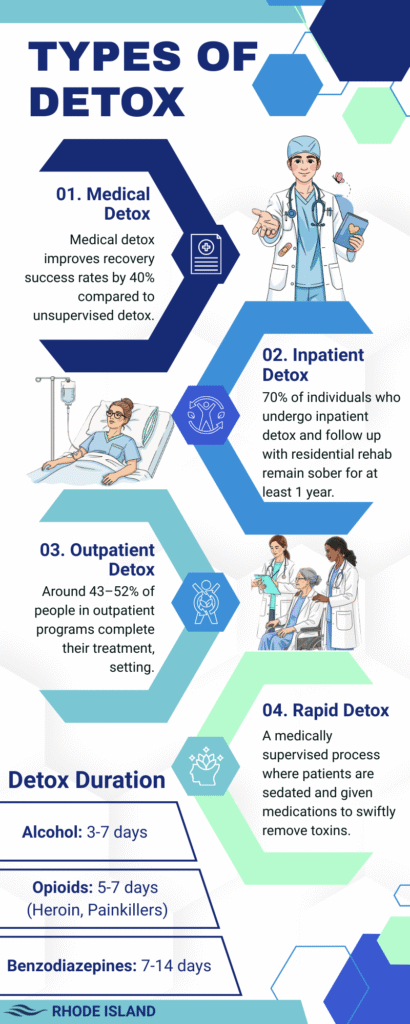
Detox is not one-size-fits-all. Some people need hospital-level medical intensity. Others do well in a structured live-in detox setting. Still others may qualify for outpatient detox with frequent check-ins and strong support at home. A good provider helps match the level of care to medical risk and real-life stability.

This “right fit” approach matters because the safest plan is the one that matches your risks. If home is unstable or triggers are constant, a structured environment may protect progress early on. If medical risk is severe, higher intensity may be the safest first stop.

Level

What It Looks Like

Best Fit When

Hospital-Based Detox

Highest medical intensity

Severe medical risk or unstable vitals

Residential Detox

Live-in, structured, monitored

Moderate risk, unstable home, high relapse risk

Outpatient Detox

Scheduled visits, home at night

Lower risk, strong support at home

How To Choose Safe & Confidential Detox Near Providence, Rhode Island (Step-By-Step)

Here is the simple screening system we recommend: safety first, privacy second, and continuity third. That order matters because you cannot protect privacy well if you are medically unstable, and you cannot protect recovery if detox ends without a plan.

The “best” detox is the one that transitions smoothly into treatment, not the one that only gets you through day one. This is why discharge planning and aftercare scheduling should be part of detox from the start.

Step 1: Verify Licensing And Clinical Leadership

Look for state licensing, clear medical director coverage, and addiction-trained clinicians. Avoid any “detox” that cannot explain who provides medical oversight.

Step 2: Confirm 24/7 Monitoring And Emergency Response

Ask who is onsite overnight, how vitals are monitored, and what triggers escalation to higher care. ASAM guidance highlights frequent reassessment early in inpatient withdrawal management.

Step 3: Ask About Substance-Specific Withdrawal Support

Ask whether the program treats alcohol, opioids, benzos, and stimulants differently, and what protocols guide decisions.

Step 4: Check Medication And Comfort Support Policies

Ask how medications are decided, monitored, and tapered, and what non-med supports exist (sleep support, nutrition, hydration).

Step 5: Confirm Confidentiality Practices Upfront

Ask how 42 CFR Part 2 applies, how consent works, and how records are protected and shared.

Step 6: Demand A Clear Aftercare Plan Before Discharge

Ask what happens after detox: residential rehab, PHP, IOP, outpatient therapy, psychiatry follow-up, and peer support.

Step 7: Make Sure Logistics Won’t Break Momentum

Ask about insurance verification, intake availability, what to bring, and transportation support.

Detox Decision Checklist (Quick Scan)

  • Safety: 24/7 monitoring, escalation plan, co-occurring support.
  • Privacy: clear consent rules, discreet communication, controlled sharing.
  • Continuity: scheduled follow-ups and step-down placement plan.

What To Expect On Day 1, Day 3, And Discharge Day

Day 1 is usually about assessment and stabilization. You should expect vitals, withdrawal risk review, and a plan that can change as symptoms change. If you are in a higher-intensity setting, reassessment may happen frequently early on.

By days 2–3, symptoms may intensify, which is why monitoring is so important. Discharge should happen when you are stable and when the next appointments are already set, because a gap after detox can undo early progress.

Timing

What Happens

Why It Matters

Day 1

Intake, vitals, withdrawal risk review

Sets the safest plan early

Days 2–3

Symptoms may intensify

Monitoring prevents complications

Discharge

Plan + appointments + supports

Prevents a “gap relapse”

➡️ For those already thinking beyond detox, read our latest blog “Long-Term Residential Addiction Treatment In Rhode Island” to see how extended, structured care can build on safe, confidential detox and support real, lasting recovery.

Transition Planning: From Detox To Real Recovery

Detox clears the body, but it does not rebuild coping skills, repair relationships, or treat the reasons behind use. This is why the first weeks after detox can be high-risk if care stops suddenly. Strong programs treat detox as a bridge into the next level of support, not a standalone solution.

Step-down options vary, and the right plan depends on triggers, mental health needs, and home stability. At Rhode Island Addiction Treatment Centers, we coordinate evidence-based outpatient follow-up after stabilization, and we are 10 minutes from Providence, which helps people stay connected to care while returning to life.

  • Residential Treatment: Best for high-trigger environments and repeated relapse cycles.
  • PHP/IOP: Strong structure while rebuilding work and family routines.
  • Outpatient Therapy + Psychiatry: Ongoing mental health care and relapse prevention.

FAQs

What is the most successful treatment for addiction?

The most successful treatment is usually a personalized plan that combines medical care, therapy, and long-term support. When substance use and mental health needs are treated together, people often achieve more stable progress because triggers are addressed from both angles.

How long do you sit in detox?

Many people stay several days, while others need longer – depending on the substance, health history, and withdrawal severity. The real goal is medical stability plus a next-step plan, not hitting a specific day count. ASAM notes that monitoring frequency changes as stability improves.

What are the 10 tips to prevent and control the use of gateway drugs?

  • Tip 1: Build a no-secrets home culture; honest talk beats shame.
  • Tip 2: Teach the “why” behind rules; brains remember reasons.
  • Tip 3: Delay first use; later start lowers long-term risk.
  • Tip 4: Watch stress and sleep; burnout raises vulnerability.
  • Tip 5: Set boundaries on parties and curfews; structure reduces exposure.
  • Tip 6: Know who they spend time with; peer influence is powerful.
  • Tip 7: Limit access to alcohol and medications; lock and count.
  • Tip 8: Treat anxiety/depression early; self-medication is common.
  • Tip 9: Teach refusal skills; practice scripts before pressure hits.
  • Tip 10: Get professional help fast; early screening prevents escalation.

What is the most popular program for recovering alcoholics?

The most widely known mutual-support option is Alcoholics Anonymous (AA), a 12-step peer support program. Many people also choose alternatives like SMART Recovery, and the best fit is the one a person will actually attend consistently.

Conclusion

Safe and confidential detox is possible when you screen for three things: medical coverage, privacy protections, and aftercare planning. Federal confidentiality regulations like 42 CFR Part 2 exist to protect substance use treatment records, which helps many people reach out sooner instead of waiting for a crisis. 

If you want help choosing the right detox center near Providence, Rhode Island Addiction Treatment Centers can coordinate detox referrals and evidence-based outpatient next steps with discretion. Call 888.541.4028 or visit our website to begin.