What Is Prescription Drug Misuse? Understanding the Growing Need for Painkiller Addiction Treatment in RI
Did you know that over 11% of high school students in Rhode Island admit to having misused prescription pain medicine at least once? That’s not surprising because the biggest misconception we have is that prescription drugs are safer than illicit substances. Because of this very misconception, the overdose of these same prescription medicines was responsible for over 62% of overdose-related deaths in 2009. Fact is, we take misuse as a non-serious situation, and as a result, we opt for relief without guidance.
Fortunately, we do have a solution in the form of painkiller addiction treatment in RI. Today, let’s talk about misuse and how recovery works so that lives change.
What Is Prescription Drug Misuse?
Prescription drug misuse is quite a common occurrence among patients who often start taking prescribed medications differently from how their doctor has initially recommended. This includes taking higher dosage, continuing use longer, or even using someone else’s prescription. What often begins as an unintentional, legitimate pain management solution often turns into a dependency due to tolerance.
Studies confirm that RI doctors prescribe enough medication for over 30.5% of residents for pain, which basically brings these drugs into circulation in high volume. As a result, many individuals assume they are risk-free, while others consume it for relief, which ultimately gets out of control, causing addiction.
Commonly Misused Prescription Drugs
Prescription medications are designed to affect pain and anxiety, offering relief. The problem is their misuse. According to data from the National Survey on Drug Use and Health, over 54.9% of individuals prescribed opioids for pain management or injury end up abusing them.
Some other commonly prescribed drugs include:
- Benzodiazepines – for anxiety.
- Tranquilizers/Sedatives – for sleep.
- Stimulants – for focus.
The problem isn’t medication; it is how we shift from use to cause dependency.
So, the next question is, when should one realize they are getting addicted to painkillers and need help? Let’s talk about some major signs and symptoms of addiction.
Signs and Symptoms of Painkiller Misuse and Addiction
Recognizing the signs and symptoms of addiction early on can help prevent long-term harm to health with intervention. Please note that these symptoms may vary from person to person, but some very common indicators include:
- Experiencing withdrawal symptoms such as nausea, vomiting, or sweating.
- Irritability, severe mood swings, and even anxiety if the medication is unavailable.
- Frequent fatigue, drowsiness, and confusion with slowed breathing.
- Increasing tolerance for painkillers with higher doses to feel the same effect.
When this addiction escalates, stopping without proper medical support can prove to be fatal, so it is extremely important to seek help for your safety.
Why Professional Painkiller Addiction Treatment in RI Matters
Did you know that over 70% of individuals do not receive the care they require when struggling with prescription drug misuse? This is mainly due to a lack of awareness. It is important to sign up for a professional program for painkiller addiction treatment in RI due to safety concerns. For example:
Medication-assisted treatment (MAT):
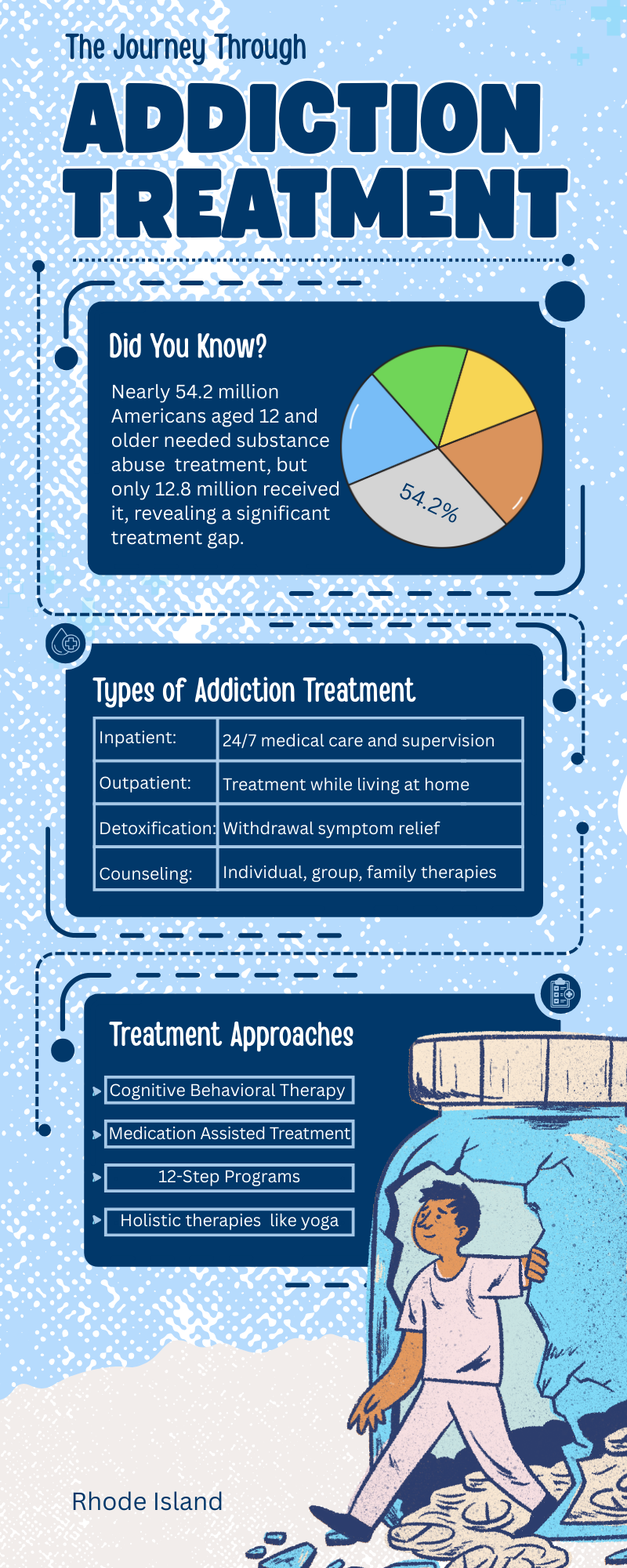
Professional programs for painkiller addiction treatment in RI include MAT, which is a standard approach for opioid addiction. When you opt for treatment, you get care with assisted detox that significantly elevates withdrawal symptoms and makes recovery safer. These treatments use FDA-approved medications with a combination of therapy, holistic care, and support that altogether work to stabilize with improved outcomes.
Evidence-based Therapy:
When you choose a licensed facility, like Rhode Island Addiction Treatment Centers, for painkiller addiction treatment in RI, you get treatment based on evidence-based therapies that are proven to reduce relapse effectively.
In fact, research confirms that clinical programs that combine medication with therapy help reduce use of illicit opioids by 80 – 90%! This is because therapies like CBT, DBT, and counseling allow clinicians to offer you tools that help you cope so you can recover in the long-run.
Personalized Counselling and Treatment Plans:
Numerous studies have confirmed that personalized treatment plans increase success rates of long-term recovery by 60% as compared to using traditional generalized programs. Doesn’t sound surprising at all because when you sign up to Rhode Island Addiction Treatment Centers, we carry out an extensive initial assessment to understand you, your triggers, your history, and your mental health profile.
This critical information allows us to build a fully personalized, tailored plan that includes evidence-based coping strategies designed to help your unique needs and challenges, which is critical for effective recovery and long-term sobriety.
Aftercare and Relapse Prevention:
In any good quality prescription drug misuse program, recovery isn’t stopped at detox or initial treatment. Instead, we extend professional support beyond rehabilitation with structured aftercare programs. These programs include relapse prevention planning, support groups, coaching, and follow-up therapy that focus specifically on maintaining sobriety and coping with triggers without any need for hospital readmission.
Final Words
Prescription drug misuse is a growing, fatal concern in Rhode Island, and its impact can no longer be ignored. You may have fallen into the habit out of curiosity or pain, but there is no denying in the fact that it needs to stop. The problem is, it is dangerous to try it yourself.
The good news? Effective programs exist to offer you painkiller addiction treatment in RI. One such program is being offered by Rhode Island Addiction Treatment Centers, which consists of us trying to understand your needs with evidence-based care and offering you compassionate support through personalized treatment plans.
So, don’t wait any longer, pick your phone and call us at 888-541-4028 to take the first step towards recovery.