
When Home Isn’t Helping: Inside Mental Health Residential Treatment in RI
“Stability Is Not A Luxury; It Is The Ground You Heal On.”
When life feels unmanageable, a safe place with steady support can change everything. If you need help right away, it matters to know that SAMHSA’s National Helpline is free, confidential, and available 24/7, 365 days a year.
Mental Health Residential Treatment in Rhode Island offers live-in care with structured days, therapy, and consistent clinical support, so symptoms can settle and daily life can rebuild.
In this guide to Mental Health Residential Treatment in Rhode Island, you will learn what residential care is, who it helps, what daily life looks like inside a program, and how to choose the right next step with confidence.
What Mental Health Residential Treatment In Rhode Island Means
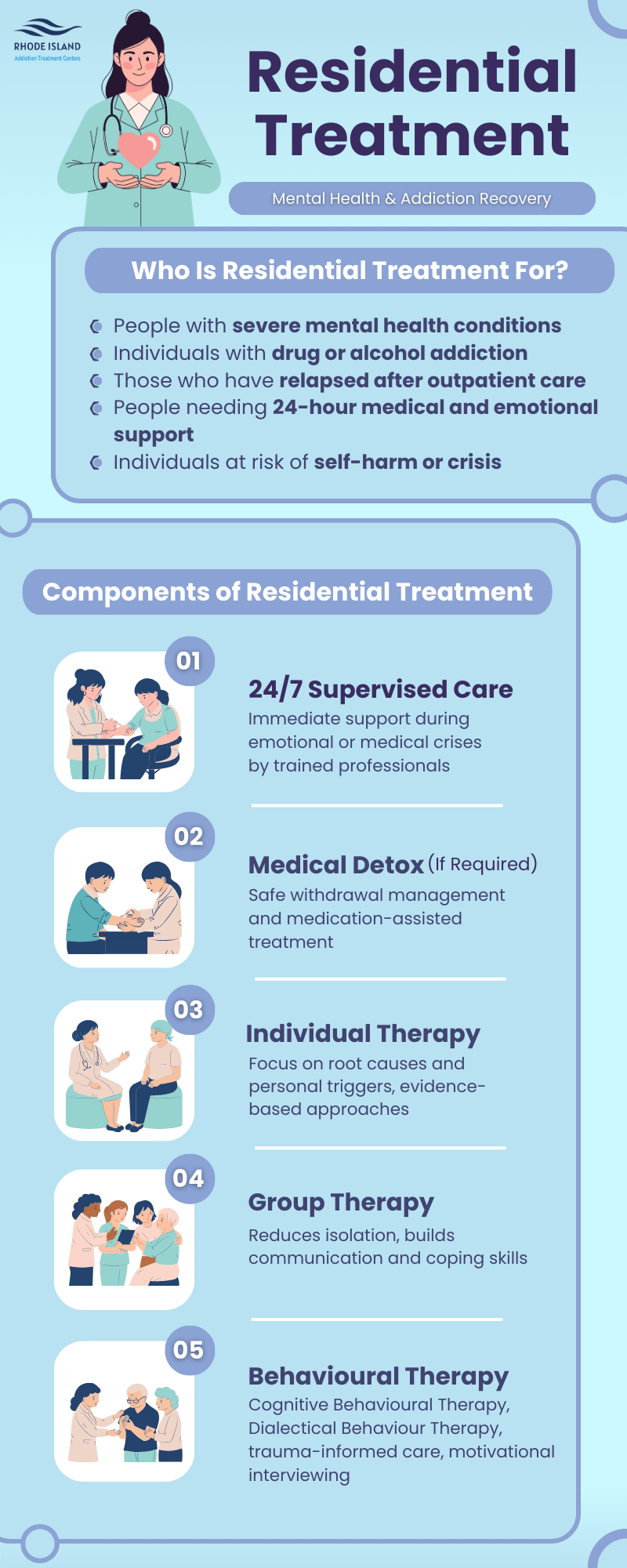
Mental Health Residential Treatment in Rhode Island is live-in care that supports people who need more structure than weekly therapy can offer. At Rhode Island Addiction Treatment Center, we provide a calm setting with 24/7 supervision, planned routines, and clinical support that helps symptoms settle.
At the same time, residential care is not meant to keep you “stuck in treatment.” Instead, the goal is symptom stabilization, stronger daily functioning, and a practical plan for stepping down into outpatient care with steady progress.
Residential Vs. Inpatient: Key Differences
Inpatient care is usually short-term and designed for urgent crisis support, often in a hospital setting. Residential care is more step-by-step and focuses on skill-building, consistency, and recovery routines that can last beyond discharge.
Here Is A Simple Comparison:
Area | Inpatient (Hospital-Based) | Residential Treatment (Live-In Program) |
Main Goal | Immediate safety and crisis stabilization | Stabilization plus daily coping skills |
Daily Life | Highly clinical and medical-focused | Structured, recovery-focused routine |
Length | Often shorter | Often longer and more gradual |
Therapy Focus | May be limited by crisis needs | Daily individual therapy and group therapy |
 for a clear next step, read our latest blog, “Residential Dual Diagnosis Treatment In RI”, to see how integrated care can support mental health recovery while addressing substance use concerns in one coordinated plan.
Who Mental Health Residential Treatment In Rhode Island Can Help
Mental Health Residential Treatment in Rhode Island can support people who feel overwhelmed by symptoms or unsafe in their current environment. Sometimes, home stress, relationship strain, or constant triggers make it hard to get better, even with good outpatient care.
Fit matters, so we always look at the full picture, not just one diagnosis. The right Mental Health Residential Treatment Center in Rhode Island matches your safety needs, your daily-life challenges, and the level of support you truly need.
Conditions Commonly Supported In Residential Care
Residential programs often support people living with:
- Depression and mood swings that disrupt daily life.
- Anxiety, panic, and constant fear responses.
- Trauma-related symptoms, including PTSD.
- Eating-related concerns that affect health and safety.
- Psychosis-related symptoms that reduce stability.
- Personality-related patterns that impact relationships and self-control.
Signs It May Be Time For Residential Treatment
You may benefit from residential support when:
- Sleep, hygiene, work, or school starts falling apart.
- You feel unsafe, or you are having frequent crisis moments.
- You keep returning to the ER or urgent services.
- Medication changes need close follow-up and consistency.
- Therapy feels helpful, but life outside keeps “undoing” progress.
What To Expect In A Mental Health Residential Treatment Center In Rhode Island
At our Mental Health Residential Treatment Center in Rhode Island, care usually begins with a detailed assessment. We look at symptoms, history, strengths, stress triggers, and daily needs, and then we build a plan that is realistic, not generic.
After that, your days follow a steady rhythm that supports healing. Structure reduces decision fatigue, while privacy and respect remain central, so you can focus on treatment without feeling exposed or judged.
Core Services Most Programs Provide
Most quality residential programs include:
- Psychiatric evaluation and medication management.
- Regular individual therapy to work on personal goals.
- Daily or near-daily group therapy for skills and support.
- Skills practice (sleep routines, emotional regulation, communication).
- Case management and discharge planning for the next level of care.
- Family support options, when appropriate and consented.
“First Week” Snapshot
- Day 1–2: Intake, assessment, goal setting, and a personal safety plan.
- Day 3–5: Therapy rhythm begins, coping tools practice, and routine building.
- Day 6–7: Progress review, plan adjustments, and step-down planning.
Levels Of Care After Mental Health Residential Treatment In Rhode Island
Mental Health Residential Treatment in Rhode Island works best as part of a full care path, not as a stand-alone solution. That is why we plan for what comes next from the start, so you do not leave with uncertainty.
A common step-down ladder looks like this: Residential → PHP → IOP → weekly outpatient therapy. The order can vary, yet the purpose stays the same: more independence with the right amount of support.
Partial Hospitalization Program (PHP)
PHP is often a step-down option where you attend structured treatment during the day. Then you return home in the evening, which helps you practice skills in real life while still getting strong clinical support.
Intensive Outpatient Program (IOP)
IOP usually meets several times per week and supports a return to work, school, and family routines. It offers structure, but it also gives more flexibility as you rebuild normal life.
Types Of Residential Programs (So You Can Choose Wisely)
Many people think residential care is “one format,” but there are different models. The American Residential Treatment Association (ARTA) describes four broad types: clinical residential programs, group residential communities, farm/work-based programs, and apartment-based communities.
Knowing these types helps you ask better questions and avoid poor-fit placements. In other words, choosing wisely is not only about location, but also about structure and daily support style.
Clinical Residential Programs
These programs are typically more intensive and include daily on-site professional treatment. They can be a strong fit when symptoms need close structure and frequent clinical contact.
Group Residential Communities
These communities often feel more family-like and focus on long-term stability, while some clinical care may happen off-site. This can work well for people who benefit from belonging and routine.
Farm/Work-Based Programs
These programs use meaningful work and a daily routine to support recovery. The structure can help rebuild confidence, motivation, and healthy habits.
Apartment-Based Communities
These communities usually offer greater independence, with regular clinician visits and planned supports. They can be a good step when you are stable but still need guidance.
How To Choose The Right Mental Health Residential Treatment In Rhode Island
Choosing Mental Health Residential Treatment in Rhode Island should feel clear, not confusing. A strong program will explain care levels, safety practices, and next-step planning without pressure or vague promises.
To help you act fast, keep a written list of questions and compare answers side by side. This simple step often reveals which programs are organized, transparent, and truly prepared.