
Medical Detox Program in Rhode Island

Medical Detox Program in Rhode Island

Medical Detox Program In Rhode Island What Safe Withdrawal Support in Rhode Island Really Looks Like

What Safe Withdrawal Support in Rhode Island Really Looks Like

“It’s time to change how we view addiction… not as a moral failing but as a chronic illness,” said U.S. Surgeon General Dr. Vivek Murthy

In that same national call to action, about 21 million Americans were reported to battle substance abuse, yet only about 10% were receiving treatment. 

A Medical Detox Program in Rhode Island Addiction Treatment Centers offers medically supervised withdrawal support that emphasizes evaluation, stabilization, and a clear transition into continued care. 

Keep reading to learn what detox really involves, what to expect day by day, and how to choose safer support with more calm and confidence.

What a Medical Detox Program in Rhode Island Really Means

A medical detox program in Rhode Island is structured medical care that helps your body adjust when alcohol or drugs leave your system. Detox focuses on short-term stabilization, not long-term recovery by itself. That difference matters because detox clears the immediate crisis while treatment changes daily life.

Detox often includes three moving parts that work together. Clinicians start with evaluation, then move into stabilization, and then help you start ongoing care. In other words, detox is a bridge from “unsafe and unstable” to “steady enough for treatment.”

  • Key goals you can expect:
  • Reduce immediate medical risk during Alcohol Withdrawal.
  • Track withdrawal symptoms with consistent Clinical Monitoring.
  • Create a next-step plan that supports real change.

Signs You May Need Medical Detox in Rhode Island

Many people wait too long because they “want to handle it alone.” However, certain patterns raise risk fast, especially with alcohol, benzodiazepines, or mixed substances. If shaking, sweating, panic, or confusion show up after stopping, it is not a moral failure. It is a medical warning sign.

A medical detox program in Rhode Island is worth considering when withdrawal has already started. It also helps when past quit attempts ended with intense symptoms. If alcohol and pills mix, risks can stack. If opioids and alcohol overlap, breathing risks can rise.

Common red flags that deserve quick help:

  • Using daily or near-daily for months.
  • Needing more to feel the same effect.
  • Waking up to drink or use “to feel normal.”
  • A history of seizures, hallucinations, or severe anxiety.
  • Using multiple substances in the same week.

What Happens During Drug and Alcohol Detox

Detox usually begins with a calm intake that gathers the facts. The team asks what you used, how often, and what symptoms started. Then, vital signs get checked because withdrawal can stress the body. That is where Clinical Monitoring becomes more than a phrase.

Next, care becomes symptom-driven and very practical. You may receive hydration support, sleep support, and comfort care. You may also meet staff who start planning what comes after detox. Detox works best when it actively fosters entry into treatment.

Here is a simple “day-to-day” snapshot many people recognize:

Detox Step

What It Often Looks Like

Why It Matters

Screening And Assessment

Substance history, health history, symptom checks

Builds a safe plan for Withdrawal Symptoms

Stabilization Support

Monitoring, comfort measures, counseling touchpoints

Helps you reach a stable, substance-free state

Transition Planning

Scheduling next care, setting goals, family involvement

Encourages treatment engagement after detox

➡️ After detox, a clear next-step plan matters—read our latest blog, “Tricare for veterans & military families in RI” to see how coverage can support ongoing care after withdrawal support.

Medications Used During Detox and Why
Medication decisions should match your symptoms, your history, and your safety needs. Some people need medication support to prevent complications. Others need comfort-focused support while the body recalibrates. Either way, the purpose stays the same: safer stabilization and less suffering.

Medication can also support ongoing recovery planning. For opioid withdrawal, some programs use options that reduce cravings and ease symptoms. When buprenorphine is part of care, it must follow applicable federal DEA rules and Rhode Island Department of Health guidance. Also, Rhode Island Addiction Treatment Centers notes it does not store buprenorphine on site and can prescribe medication only in line with those guidelines.

Examples of medication categories that may be used in detox (based on clinical need):

  • Symptom relief for nausea, pain, or sleep disruption.
  • Medicines that support safer Alcohol Withdrawal management.
  • Options that support Medication-Assisted Treatment planning when appropriate.

After Detox: Building a Plan that Lasts

Detox is a starting line, not a finish line. Once the body stabilizes, real progress comes from structure, skills, and support. That is why a practical Aftercare Plan matters so much.

At Rhode Island Addiction Treatment Centers, outpatient care can help you rebuild routines without disappearing from your life. Our programs include outpatient and intensive outpatient formats for adults 18 and older. This approach can support recovery while you keep working, parenting, or repairing relationships.

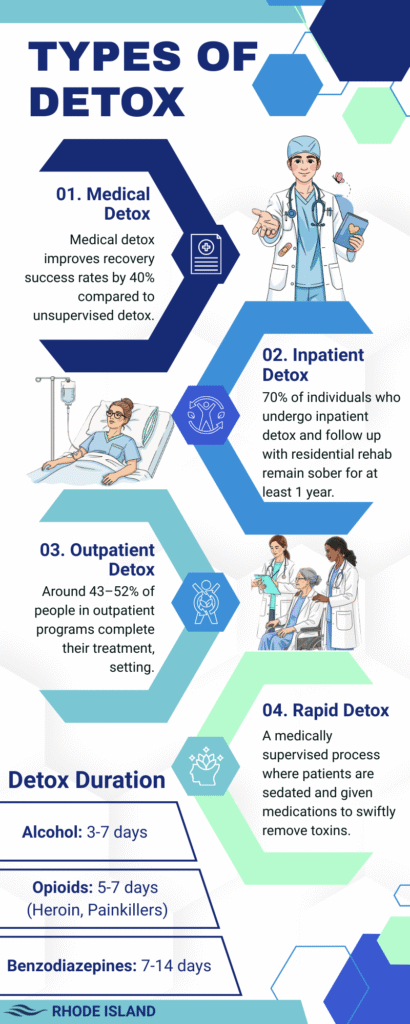
Types of Detox and stabilization rhode island addiction treatment center riatc

How to Choose a Detox Program in Rhode Island

Picking a detox option should feel like choosing safety, not guessing in the dark. Start by asking who monitors symptoms and how often. Then ask what happens if symptoms worsen at night. Clear answers signal mature clinical operations.

Also ask about what happens after detox. A strong provider prepares a next-step plan early. Detox should not end with a handshake and hope. It should end with an appointment schedule and a realistic path forward.

A quick safety checklist to use on calls:

  • Who leads care, and how is escalation handled?
  • How are Co-Occurring Disorders screened and supported?
  • What does the transition into an Intensive Outpatient Program look like?
  • How does insurance verification work, and what is explained upfront?
  • Is there a written discharge plan for the next appointments?

If you want to talk through options, call us at 888.541.4028 and ask what outpatient support can look like near Providence.

Real-World Rhode Island Case Study

In 2016, the Rhode Island Department of Corrections launched statewide screening and offered FDA-approved medications for opioid use disorder, plus linkage to community care after release.

JAMA Psychiatry analysis found post-incarceration overdose deaths dropped from 26 of 179 deaths (14.5%) to 9 of 157 (5.7%) within comparable six‑month periods, a 61% reduction.

What it Means for Detox

A Medical Detox Program in Rhode Island works best when stabilization connects to ongoing treatment, not a “one-and-done” stop. That continuity lowers relapse risk during fragile early recovery. Choose programs that plan the next appointment before discharge.

FAQs

What is medical detox from alcohol?

Medical detox from alcohol is a supervised withdrawal support that focuses on safety during Alcohol Withdrawal and symptom control. Severe withdrawal can become dangerous, so medical support can reduce risk through monitoring and timely care.

What happens during drug and alcohol detox?

Detox usually starts with assessment, then moves into stabilization with Clinical Monitoring and symptom-driven support. It also includes planning for continued treatment so progress does not stop after withdrawal ends.

What does a detox program involve?

A detox program typically involves evaluation, stabilization, and active steps that help you enter treatment afterward. These pieces often run together, not one at a time, because symptoms can change quickly.

What drugs are given during alcohol detox?

Medication choices depend on symptoms, health history, and safety risks. Ask the provider how they manage severe symptoms and what monitoring supports those decisions. For any controlled medications, prescribing must follow clinical judgment and applicable regulations.

Conclusion

Detox can steady the body, yet lasting recovery needs a plan. Medical detox focuses on evaluation, stabilization, and a safe handoff into treatment. If withdrawal feels unpredictable, why face it alone?

Our Rhode Island Addiction Treatment Centers team offers evidence-based outpatient and intensive outpatient care for adults, close to Providence. 

Call 888.541.4028 today or visit our website to talk through next steps. Ask about symptoms, medications, and aftercare options. The next right decision can be simple. 

Start now, and leave with clarity, support, and a path forward. When you’re ready, our counselors can help you match care intensity to your life.