
Choosing Inpatient Detox in Rhode Island: Safety, Stages, and Next Steps
“Withdrawal can turn deadly without warning—seizures strike within 48 hours for some,” warns the National Institute on Alcohol Abuse and Alcoholism.
Nearly 50% of heavy drinkers face moderate to severe symptoms during detox; the good news is that professional care cuts complication risks dramatically.
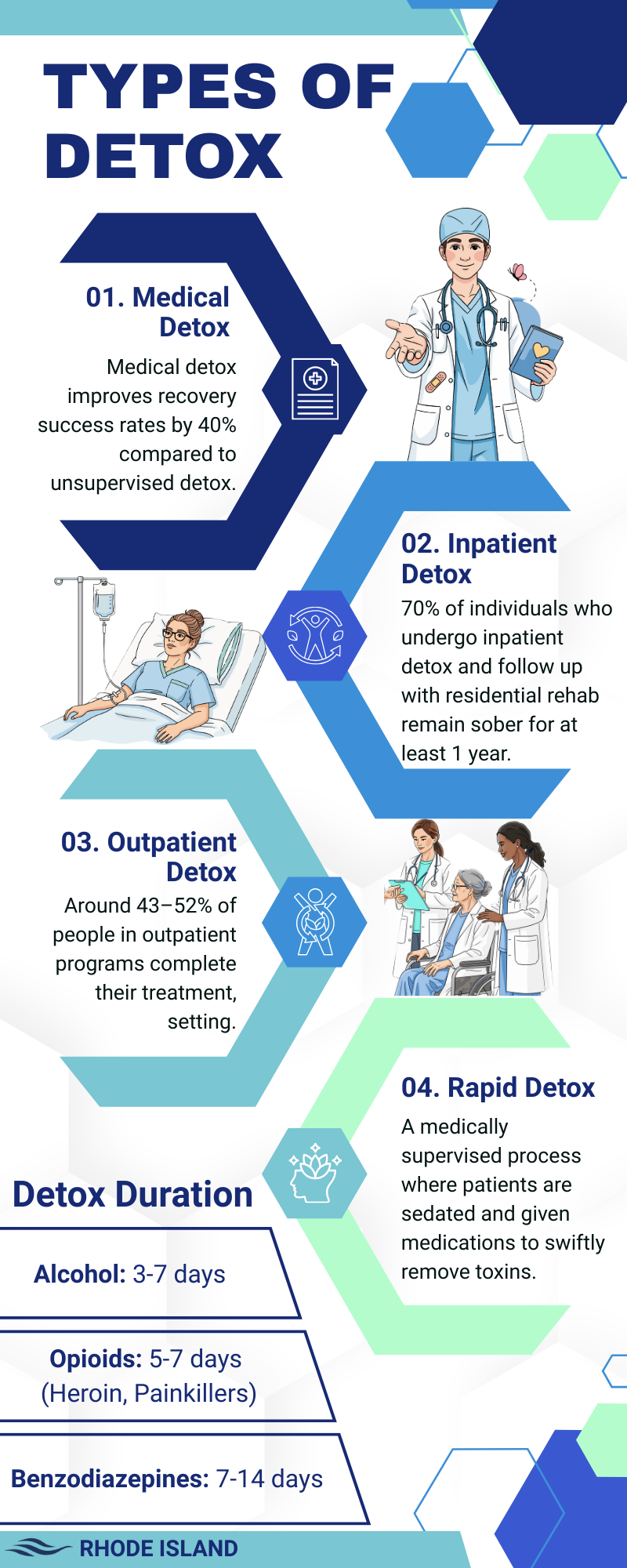
Inpatient Drug & Alcohol Detox in Rhode Island means 24/7 medical monitoring while your body clears substances safely through evaluation, stabilization, and planned aftercare.
After reading this guide, you’ll walk away knowing exact timelines, withdrawal warning signs, and how to pick programs that deliver real continuity instead of empty promises.
What Inpatient Drug & Alcohol Detox In Rhode Island Means
Inpatient care means you remain on-site during detox. That setting supports Clinical Monitoring of your body and behavior. It also lowers the chance of “white-knuckling” symptoms alone. Most importantly, inpatient detox creates a safer container when symptoms intensify quickly.
Detox has a focused job. It stabilizes the body during Alcohol Withdrawal or Drug Withdrawal. However, detox does not erase triggers or rebuild routines by itself. That is why discharge planning matters from day one.
Next, here’s who an inpatient detox is built for.
- What inpatient detox often includes
- 24/7 observation when clinically needed
- Symptom-based support for Withdrawal Symptoms
- Early Discharge Planning into continued services
Who Needs Inpatient Drug & Alcohol Detox In Rhode Island (And Who Might Not)
Inpatient detox often fits people with higher medical risk. That includes heavy alcohol use, benzodiazepine use, or mixing substances. It also includes anyone with a history of seizures, confusion, or severe withdrawal episodes. When risk signs stack up, inpatient care provides a safer buffer.
On the other hand, some people may qualify for a lower level of care after screening. A clinician looks at symptoms, history, and health needs first. Then a step-down plan may include an Outpatient Program or Intensive Outpatient Program once stability improves.
Now let’s walk through withdrawal stages.
Red Flags That Call for Urgent Medical Help
- Prior seizures or delirium-like confusion
- Hallucinations or severe disorientation
- Very high daily intake over long periods
- Mixing alcohol with sedatives
- Serious medical concerns or Co-Occurring Disorders
What Happens During Inpatient Detox Day By Day
The first day usually starts with intake. We ask what you used and how often. We also check vital signs and basic safety needs. That information helps guide symptom support. It also helps prevent surprises when withdrawal becomes more intense.
After intake, the rhythm becomes steady and practical. Monitoring continues. Hydration and sleep support may be addressed. Emotional support may begin early, too. Meanwhile, the team starts mapping what comes after detox. Withdrawal follows stages, so timing matters.
Step | What Happens | Why It Helps |
Intake And Screening | History, vitals, symptom checks | Sets a safer level of care |
Stabilization | Monitoring, comfort support, symptom response | Lowers risk during Withdrawal Symptoms |
Transition Plan | Follow-up scheduling and support plan | Prevents a “detox-only” reset |
What Are The Stages Of Drug Withdrawal?
Withdrawal often follows a pattern. Symptoms appear, build, peak, and then ease. Still, the exact curve varies by substance and personal health. Alcohol, opioids, benzodiazepines, and stimulants can all produce different symptom clusters and different risks.
Inpatient care helps because symptoms can spike when you least expect them. Sleep disruption can sharpen anxiety. Cravings can surge at night. Also, uncertainty feeds panic. A structured setting reduces chaos and supports steadier decisions.
Alcohol withdrawal has a clearer timeline, so let’s make it simple.
- Early stage: anxiety, nausea, tremors, sleep trouble
- Middle stage: stronger symptoms; higher relapse risk
- Peak stage: highest risk window, depending on history
- Recovery stage: symptoms ease; mood swings may linger
How Long Does It Take To Detox Your Body From Alcohol?
Detox timing has two layers. The first layer is physical withdrawal, which can feel loud and uncomfortable. The second layer is emotional recovery, which can feel quieter yet stubborn. That is why early stability is only one part of the story.
Timelines also vary for real reasons. Age matters. Overall health matters. Drinking pattern matters. Mixing substances matters too. Because of that, a safe plan beats a fast plan every time. Many readers also ask how to “fully detox,” so let’s answer it safely.
Factor | How It Can Change Detox |
Heavy daily use | Often increases severity risk |
Past withdrawals | Often predicts tougher symptoms |
Co-Occurring Disorders | May require closer monitoring |
Mixing substances | Can complicate symptoms |
How To Fully Detox Your Body From Alcohol (Safely)
Many people mean “How do I get alcohol out of my system fast?” However, the safer question is different. How can the body stabilize without dangerous swings? For some people, stopping suddenly can be risky. That risk rises with long-term heavy use.
Safe detox starts with medical screening and honest details. Hydration supports the body. Nutrition supports healing. Sleep support reduces stress load. Then the plan must continue after detox. That is where the Aftercare Plan becomes the difference-maker. Medication can also help in inpatient settings.
- Practical steps that often support safer detox
- Get medical evaluation before stopping
- Avoid mixing substances during withdrawal
- Follow a structured plan and consistent check-ins
- Transition into therapy and Relapse Prevention support
 For a deeper look at the first step before inpatient care, read our latest blog “Medical Detox Program in Rhode Island.”
Medications That May Be Used During Inpatient Alcohol Detox In Rhode Island
Medications are not “one size fits all.” They are selected based on symptoms and safety risks. The goal is symptom relief and complication prevention. Some medications reduce agitation. Others support sleep. Some protect against severe withdrawal complications, depending on the situation.
Medication decisions must follow clinical judgment and applicable rules. For controlled medications, prescribing must align with state and federal requirements. Rhode Island also publishes safe opioid prescribing guidance, which supports safer clinical practice. Detox is the start; next is ongoing support.
What Happens After Inpatient Detox In Rhode Island
Detox can steady the body. Still, long-term recovery requires structure after discharge. That may include therapy, skills training, and routine rebuilding. It can also include family support and relapse prevention planning. The goal is not perfection; it’s to be workable next week.
At Rhode Island Addiction Treatment Centers, ongoing support can include outpatient and intensive outpatient options for adults 18 and older. That structure helps you keep moving while life keeps happening. Continuity matters, so planning should start before you leave detox. Here’s how to choose a safer program.
How To Choose The Right Inpatient Detox In Rhode Island