
Does Rhode Island Medicaid Cover Suboxone Treatment?
FDA-approved medicines are an important part of addiction treatment because they make detox and withdrawal manageable. If one tries to quit drugs with just counseling and therapy sessions, the chemical changes in their body will feel painful. Put simply, if you’re habitual in using an addictive drug, quitting it cold-turkey will bring along severe withdrawal symptoms that can undo your recovery.
Therefore, doctors prescribe safe medicines like Suboxone to make withdrawal bearable, without making you addicted to a new chemical. However, these medicines can add another expense to your addiction treatment, which isn’t feasible for all.
Luckily, health insurance can help with this aspect; terms and conditions apply. This article explains if Medicaid insurance can help with your Suboxone treatment, and if it does, what the coverage is like. Keep reading, and you might find a way to lighten the financial burden of treatment.
What is Suboxone Used For?
Suboxone is a prescription medicine that helps people recover from opioid addiction. Opioids are a group of drugs that includes heroin, fentanyl, and prescription painkillers like oxycodone.
If a person who depends on these drugs stops using them, their body reacts with strong cravings and painful withdrawal symptoms. The withdrawal is often so difficult that it pulls them back into using again, and that’s why Suboxone is a part of Medication-Assisted Treatment (MAT). It calms one’s withdrawal discomfort and cravings to give their body a chance to start recovering.
Notably, Suboxone is made of two main ingredients: buprenorphine and naloxone. Buprenorphine acts on the same parts of the brain that opioids affect but without causing a strong high. Since Opioids work by attaching to receptors in the brain that control pain, pleasure, and cravings, buprenorphine attaches to these same receptors. However, it only activates them partially; just enough to ease cravings and withdrawal without creating the intense high that other opioids do.
Naloxone, however, is added to Suboxone to make it harder to misuse. Put simply, if someone tries to inject the medicine instead, the naloxone blocks opioid receptors and can bring on sudden withdrawal, which removes any reason to misuse it.
That said, Suboxone comes as a thin film that dissolves under the tongue, and doctors mostly prescribe it together with counseling, because medicine and support work better as a team.
Does RI Medicaid Cover Suboxone Treatment?
Addiction treatment costs you time, effort, and of course, money. While you can’t minimize the time and effort that goes into getting sober, some expenses can be taken off your plate if your insurance is good. Luckily, Medicaid in Rhode Island covers Suboxone treatment, and its coverage percentage is also generous. That said, Medicaid Suboxone coverage is mostly for the generic version, a cheaper copy of a brand-name medicine with the same active ingredients.
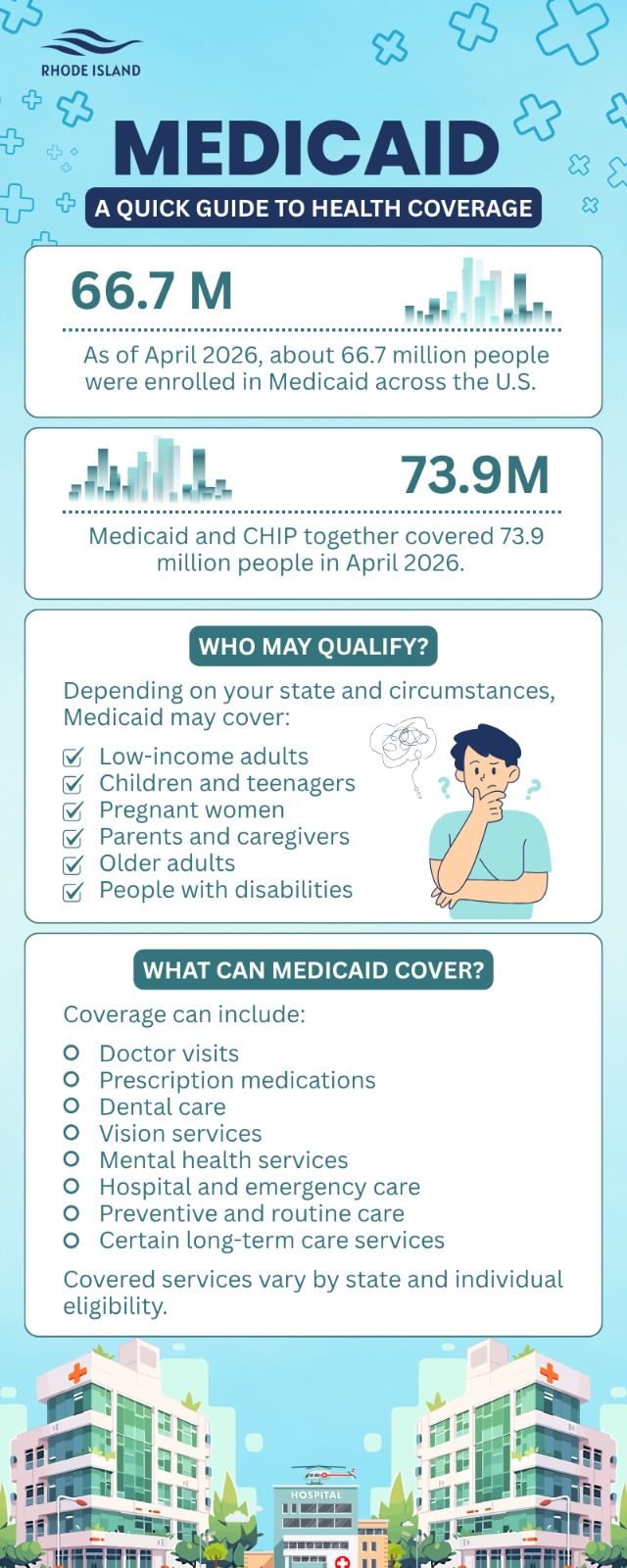
Since the Affordable Care Act (ACA) required Medicaid to include substance abuse treatment under its covered benefits, it surely helps with your Suboxone treatment. However, you must be eligible for Medicaid; this eligibility is based mainly on income. A household’s income is compared to the federal poverty level, and each state sets the exact limit. Also, your household size, age, pregnancy, and disability play a part in this decision.
That said, if you’re eligible for Medicaid, the next task is knowing whether your healthcare provider accepts patients with this insurance. The term used for such practices and providers is ‘in-network’; if one is in-network, you won’t have to search further.
How Much Coverage Does Medicaid Offer for Suboxone Treatment?
Medicaid usually covers most of the cost of Suboxone, often close to 90%, and in many cases, the patient pays little or nothing.
But before you expect this coverage, two terms should be understood: copay and deductible. In simple words, copay is a small, fixed amount you pay each time you pick up a prescription or visit a provider, and the insurance plan pays the rest.
Similarly, a deductible is the amount you must pay out of your own pocket before insurance starts paying. Luckily, Medicaid plans often have no deductible, which helps keep costs low, but some states may still charge a small copay.
The main reason Medicaid offers such generous coverage is the federal SUPPORT Act that requires every state Medicaid program to cover at least one form of buprenorphine, the main medicine in Suboxone.
But since plans often prefer the generic version, brand-name Suboxone may sometimes need extra approval. Most states cover standard buprenorphine-naloxone without prior authorization, though a few may still require it.
Prior authorization is an approval step some insurance plans require before they agree to pay for a medicine. The doctor or pharmacy sends the plan a request explaining why the patient needs it, and the plan reviews it before the prescription is filled. It’s worth mentioning that this step can cause a delay, and at the end of it, you might hear a no, although that’s not common for Suboxone. Most states cover standard buprenorphine-naloxone without a prior auth, and the doctor’s office usually handles the paperwork, so it helps to ask whether your plan needs it.
With all that said, the exact costs can depend on your state, insurance plan, and the pharmacy. Hence, the most reliable way to know what you would pay is to call the number on your Medicaid card or ask the pharmacist. Because rules change over time, it also helps to confirm before each refill.
Always Know Your Options
Health insurance can make addiction treatment possible even when your finances aren’t good. If you’re planning a rehab, figure out your Medicaid eligibility and coverage benefits to get the most out of it. And once this aspect is sorted, visit Rhode Island Addiction Treatment Centers for the most empathetic team and proven treatment models. We want to end addiction for good; let us help you with it!
Also Read: Halloween and Relapse Risk: Staying Sober Through Fall Parties in Rhode Island